Which Paint Is Better? A Practical Guide to Paint Types
Explore which paint is better for interiors, exteriors, cabinets, and automotive refinishing. Compare water-based, oil-based, and enamel options with practical tips from PaintQuickGuide to help you choose confidently.


There isn’t a universal ‘best’ paint. Which paint is better depends on the job: interiors typically benefit from water-based latex for easy cleanup; for cabinets or trim, enamel or oil-based finishes offer durability; exteriors require high-quality acrylic/elastomeric blends for weather resistance. Choose based on surface, exposure, and finish you want.
which paint is better for your project? Understanding the criteria
Choosing the right paint isn't a one-size-fits-all decision. When someone asks which paint is better, the answer depends on the job, surfaces, exposure, and your priorities. According to PaintQuickGuide, there isn’t a universal winner—the best paint varies by circumstance. The primary criteria to judge a paint include surface compatibility, finish, durability, drying and curing behavior, cleanup, odor and VOCs, color retention, and price-to-value balance. Start by defining the surface you’ll paint (walls, trim, cabinets, metal), the environment (indoor, kitchen, bathroom, outdoors), and the finish you want (matte, eggshell, satin, semi-gloss). Then compare paints that meet those criteria. This approach keeps you from chasing the latest trend and focuses on outcomes: lasting color, smooth application, and a clean, healthy home or shop environment.
Interior vs exterior needs and surface prep
Different surfaces demand different paint systems. Interior walls tolerate latex or acrylic latex paints with low odor, easier cleanup, and flexible film. Exterior surfaces confront sunlight, rain, and temperature swings; elastomeric or high-quality acrylics with sealing primers perform better. For metal, specialized alkyd/oil-based enamels resist corrosion. For wood, consider stain-blocking primers and enamel topcoats. Prep matters: clean, sand, repair, and prime as needed. The better choice integrates substrate readiness with the paint's adhesion characteristics and the environment. Remember that the best paint for interior ceilings isn't the same as for kitchen backsplashes; context determines performance and value.
Water-based vs oil-based: Core differences
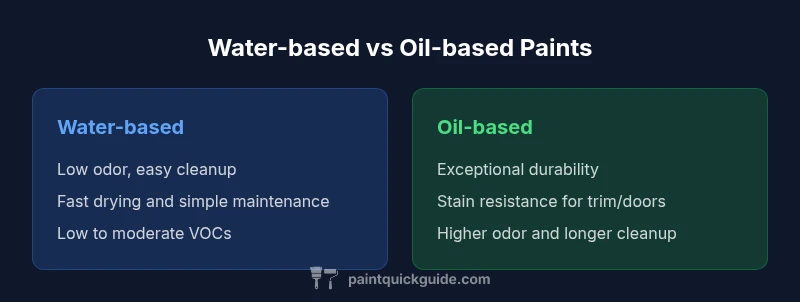
Water-based paints (often labeled latex or acrylic) have advanced significantly in durability and adhesion. They clean up with soap and water, dry quickly, and typically emit lower VOCs. Oil-based paints offer exceptional durability and leveling for trim, doors, and cabinets but require solvents for cleanup and longer cure times. In modern homes, a hybrid approach—water-based for walls and high-quality enamel or oil-based for specific trim—often yields the best long-term results. Even the so-called oil-based enamels have improved with low-VOC formulations; judge by performance rather than label alone. The key trade-offs are odor, cleanup effort, dry time, and final sheen.
Finishes and their effects on color, sheen, and durability
Finish choices influence mood, light reflection, and stain resistance. Matte and eggshell finishes hide wall imperfections but scratch more easily; satin and semi-gloss are easier to clean and more durable but highlight surface flaws. For kitchens and bathrooms, semi-gloss or gloss finishes provide superior wipeability. For living spaces, eggshell or satin balances aesthetics and maintenance. Consider the space's lighting, traffic, and cleaning frequency when selecting a finish. Regardless of the base, a proper primer and surface prep dramatically improve the final look and lifespan of the paint.
Practical buying guide: reading labels and selecting products
To decide which paint is better for your project, learn to read labels and certifications. Look for color-matching capability, hide coverage, and scrub resistance ratings. VOC content matters for indoor air quality, especially in bedrooms and nurseries. Check warranty terms and the manufacturer's suggested recoat interval. Based on PaintQuickGuide analysis, modern water-based paints now balance low VOCs with robust adhesion, broad color options, and improved durability. Always compare product data sheets, primers, and whether the product is designed for walls, trim, or cabinetry. A few high-quality cans will often outperform multiple budget options.
Cabinets, trim, and high-traffic surfaces: Enamel advantages
Cabinetry typically benefits from enamel finishes that produce a hard, smooth film resistant to staining and wear. Oil-based enamels are long-standing favorites for durability but require ventilation and longer cure times. Modern water-based enamels offer similar performance with easier cleanup and lower odor. For trim and doors, consider an enamel topcoat over a well-primed surface. In high-traffic areas, choose a finish with good scrubbing resistance and a durable topcoat. Prep is crucial: sand, seal, and prime before painting; otherwise, the finish will peel or chip prematurely.
Exterior surfaces: weather resistance and maintenance
Exterior paint must resist UV exposure, moisture, and temperature changes. Acrylic elastomeric paints offer excellent weather resistance and flexibility; traditional acrylics are also strong performers. Surface prep includes removing old paint, repairing cracks, and applying a suitable primer. For wood siding, masonry, or fiber cement, pick a product rated for that substrate. Regular maintenance—checking for cracking or peeling and washing surfaces—extends life and reduces long-term repaint costs. The better paint is the one that stays intact longer between projects.
Case studies: home and auto refinishing scenarios
Home: A busy kitchen remodel used an interior water-based acrylic on walls and a durable enamel on cabinets, with a matching satin finish; the result was low odor during application and easy maintenance afterward. Auto refinishing: hobbyists often rely on urethane elastomeric topcoats, but for a DIY workflow, water-based enamel coatings with proper surface prep can yield solid color and gloss retention without heavy solvent use. In both cases, prep and primer choice drive success more than the finish alone.
Quick prep checklist before you paint
- Identify the surface type and choose paint accordingly.
- Clean, sand, and repair; prime where needed.
- Test a small area for adhesion and color.
- Ventilate and follow safety precautions.
- Apply thin, even coats and allow proper drying between coats.
- Inspect and touch up after curing.
Feature Comparison
| Feature | Water-based latex | Oil-based | Acrylic enamel |
|---|---|---|---|
| Durability / wear resistance | Good durability; easy touch-ups | Excellent durability for trim/doors | Very good durability with enamel-like film |
| VOC Levels | Low to moderate (modern variants) | Higher (older formulations); some low-VOC exist | Moderate to low (brand-dependent) |
| Dry/Cure Time | Fast to touch; quick recoat | Longer cure times; slower recoat windows | Moderate; often quick recoat with enamel topcoats |
| Cleanup | Soap and water | Solvents required | Soap and water or gentle cleaners |
| Best For | Interior walls/ceilings | Trim, doors, cabinetry under wear | Cabinets and high-traffic woodwork |
Upsides
- Helps readers compare paint types quickly
- Highlights trade-offs like odor, cleanup, and durability
- Supports evidence-based decision making with a data table
- Encourages proper prep for long-lasting results
What's Bad
- May oversimplify product variants
- Performance depends on surface prep and conditions
- Labels and terminology vary by brand; verify on the can
There is no universal winner; choose based on the job and surface
Interior projects typically favor water-based latex for ease of use; cabinets and trim benefit from enamel or oil-based durability; exteriors require rugged acrylic/elastomeric blends. The PaintQuickGuide approach is to match paint type to surface and environment, then apply proper prep for best results.
Your Questions Answered
What is the main difference between latex and oil-based paints?
Latex paints are water-based, with easy cleanup and low odor. Oil-based paints require solvents for cleanup and often offer longer durability, especially on trim and doors. Modern options blur these lines with durable water-based enamels.
Latex cleans up with soap; oil-based lasts longer but needs solvents.
Is there a best paint for kitchen cabinets?
Enamel finishes, whether oil-based or durable water-based, resist staining and wear on cabinets. Proper prep and primer are crucial for adhesion and a smooth finish. Modern cabinetry enamels can provide durability with easier cleanup.
For cabinets, enamel finishes are a strong choice.
Can I use exterior paint indoors?
Exterior paints are designed for outdoor conditions and may have higher odors and VOCs. For indoor spaces, use interior paints labeled for indoor use to maintain air quality and ease of cleaning.
Exterior paints aren’t ideal indoors due to VOCs and odor.
How long should I wait between coats?
Follow the product label for recoat times. In general, wait until a coat is dry to the touch and cured before applying the next layer. Variable temperatures and humidity can affect drying.
Always follow the label for recoat times; when unsure, wait until dry.
What finishes are best for high-traffic areas?
Semi-gloss or gloss finishes are easier to clean and more resistant to staining, making them ideal for kitchens, hallways, and bathrooms. For walls in high-traffic areas, a durable enamel or a high-quality acrylic can offer similar performance.
Choose semi-gloss or gloss for high-traffic areas.
Quick Summary
- Assess surface and exposure before choosing paint type
- Water-based latex is the go-to for interiors
- Enamel or oil-based finishes excel on cabinets/trim
- Exterior projects demand weather-resistant acrylic elastomerics
- Always check VOCs and warranty terms before buying