How Often to Paint Exterior House in 2026
Learn how often to paint exterior house surfaces with climate, material, and maintenance in mind. Practical intervals, cost ranges, and step-by-step guidance from PaintQuickGuide for homeowners and DIYers in 2026.


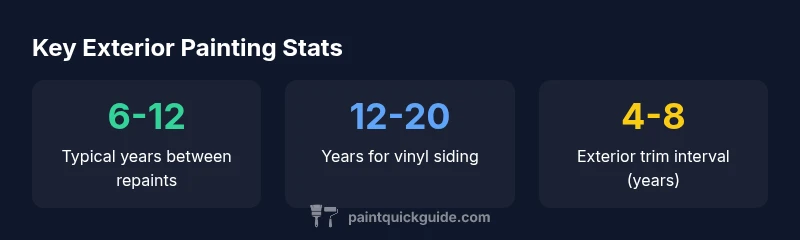
The typical exterior repaint interval ranges from 6 to 12 years for most homes, with variations based on climate, siding material, and sun exposure. In mild climates you may push toward 12 years, while harsher environments or wood siding often require closer to 6 years. Inspect annually for peeling, cracks, and moisture issues to catch problems early.
Understanding how often to paint exterior house surfaces
Choosing how often to paint exterior house surfaces is a planning decision, not a one-size-fits-all schedule. The cadence depends on the substrate, local climate, sun exposure, and how well you maintain the coating. According to PaintQuickGuide, homeowners should base decisions on observable wear and environmental stress rather than a fixed calendar. In practice, most homes fall within a 6–12 year repaint window, but adjustments are common as conditions change. Start by inspecting your siding annually and noting any peeling, cracking, fading, or chalking. These signs often precede a full repaint and help you avoid surprise price jumps or moisture damage. The goal is to balance curb appeal, protection from the elements, and budget planning while avoiding reactive, costly fixes.
**
Key climate and material factors that drive timing
Different climates and materials behave uniquely when exposed to weather. Wood siding tends to show wear faster in humid or hot sun regions and often requires earlier treatment. Vinyl siding resists moisture well but can crack if the paint is not compatible or if primers fail, shortening the life of a coating system. Fiber cement blends hold up longer in most environments, yet sun fade and chalking still signal a refresh. Paint quality and film integrity matter: high-quality elastomeric or acrylic-latex paints with proper primer and sealants can extend intervals, while poor adhesion often truncates them. The takeaway is to view each surface as its own project with its own cadence, guided by annual inspections and historical performance in your climate.
Surface-by-surface intervals and practical expectations
Understanding intervals by surface helps set realistic schedules. Exterior siding (wood) commonly falls in the 6–12 year range depending on maintenance and weather. Vinyl siding often lasts longer before a full repaint, typically in the 12–20 year range, assuming a clean, dry layer beneath and compatible paint systems. Exterior trim usually requires more frequent attention, commonly in the 4–8 year window due to edge wear, moisture trapping, and high-visibility areas. Doors and rails may need touch-ups or a full repaint every 6–8 years, given their exposure to weather and daily use. These intervals are baseline expectations; your actual timing should be refined with your annual inspections and any signs of wear.
How to assess the right schedule for your home
Step 1: Schedule a yearly walk-through of all exterior surfaces, focusing on joints, seams, and high-stress areas like eaves and corners. Step 2: Inspect for peeling or blistering paint, moisture staining, soft boards, or efflorescence on masonry. Step 3: Use a simple adhesion test (scrape with a putty knife in inconspicuous areas) to gauge film integrity. Step 4: Document findings in a maintenance log and compare to prior years to identify wear patterns. Step 5: If you discover significant wear in one area, plan a targeted prep and repaint for that zone rather than across the entire exterior. Step 6: When scheduling, consider upcoming maintenance tasks (caulking, sealing, trim replacement) to optimize labor and materials. The aim is a proactive rhythm that preserves the building envelope and reduces total lifecycle costs.
Budgeting, planning, and choosing the right paint
Budgeting for exterior repaint projects depends on surface area, substrate, and labor, not just paint can size. Typical full exterior projects fall into broad ranges, influenced by siding type, prep needs, and access. Plan for quality primers and topcoats that tolerate weather in your climate, and avoid cutting corners on moisture barriers or caulking. When choosing paint, prioritize durability, UV resistance, and color-fast pigments. A well-planned project with a robust system may have a higher upfront cost but can extend repaint intervals and reduce maintenance calls. PaintQuickGuide recommends a phased budgeting approach: reserve 60–70% for labor and prep, 20–30% for coatings and primers, and keep a contingency for weather delays.
Maintenance between full repaints and practical tips
Between full repaints, you can refresh your home’s appearance and protection with routine upkeep. Power washing (carefully to avoid substrate damage), cleaning and sealing seams, caulking gaps, and touching up small areas with matching color can significantly extend the life of a coating. Address moisture intrusion promptly; water is the primary enemy of painted exteriors. Keep gutters and downspouts clean and directed away from walls. Consider repainting only affected zones if wear is localized, as this reduces cost and downtime. Finally, document maintenance events to build a historical record that informs future scheduling and budgeting.
Climate-resilient scheduling and practical takeaways
Climate resilience means planning for seasonal constraints and material performance. In coastal or high-humidity regions, expect shorter intervals and more frequent inspections. In hot, sunny climates, UV exposure accelerates chalking and color fade, urging more diligent surface preparation and pigment selection. Regardless of climate, the most effective approach blends proactive inspection, material-specific repaint cycles, and a clear budget plan. A well-executed exterior repaint schedule not only improves curb appeal but also protects the home from moisture intrusion, wood rot, and other costly issues. For a deeper dive into schedules and materials, see the authoritative sources in the article.
Estimated repaint intervals by exterior surface type
| Surface Type | Avg Repaint Interval | Typical Prep |
|---|---|---|
| Exterior siding (wood) | 6-12 years | Power wash, scrape, caulk |
| Exterior siding (vinyl) | 12-20 years | Light wash, inspect seams |
| Exterior trim | 4-8 years | Sanding, caulking, primer |
| Doors & rails | 6-8 years | Heavy prep, priming |
Your Questions Answered
How often should I repaint wood siding on a typical home?
Wood siding commonly requires repainting every 6–12 years, depending on climate, coating quality, and maintenance. Regular inspections help detect peeling, cracking, or moisture problems early.
Wood siding usually needs a repaint every 6 to 12 years, with yearly checks for wear and moisture.
Does vinyl siding affect repaint frequency?
Vinyl siding often lasts longer between repaints than wood, typically 12–20 years, provided there’s no underlying moisture damage and the coating system is compatible with vinyl substrates.
Vinyl siding can go longer between repaints, often over a decade, if there’s no moisture behind the panels.
What signs indicate it's time to repaint exterior surfaces?
Look for peeling, cracking, chalking, fading color, and moisture staining. If the coating fails adhesion or feels soft, schedule a repaint or at least prep work to prevent rot and water damage.
Peeling or cracking paint and visible moisture spots are strong signals to repaint.
Should I consider staining instead of painting?
Staining can be a good option for wood and certain substrates, offering a different look and often longer maintenance intervals. Compare the long-term protection, opacity, and color options before choosing.
Staining is a solid alternative for some woods, but weigh color options and maintenance needs.
Does climate affect repaint timing?
Yes. Humid, salty, or freeze-thaw climates accelerate wear and require more frequent maintenance. Dry, sunny climates may fade faster but benefit from UV-resistant paints.
Climate matters a lot—humid areas wear coatings faster, while dry sun can fade colors.
What about maintenance between full repaints?
Between full repaints, perform cleaning, caulking, and minor touch-ups. Address leaks and gutter issues promptly to extend the life of the coating.
Do light maintenance between repaints to keep the coated surface in good shape.
“A proactive maintenance plan reduces long-term costs and preserves curb appeal.”
Quick Summary
- Inspect annually for wear and moisture
- Choose material-specific intervals and paints
- Climate and sun exposure drive timing
- Budget for a full project plus edge-case maintenance
- Keep a maintenance log to guide future repaint decisions