What to Do When Paint Is Dry: A Practical Guide
A practical, step-by-step guide to handling dry paint: assess cure, plan touch-ups, prepare surfaces, and apply protective finishes for durable results.


What to do when paint is dry? Start by confirming full cure and surface integrity, then decide on touch-ups, a light recoat, or a protective topcoat. Gather clean tools, ensure proper ventilation, and follow safe handling practices. This quick plan helps you move from dry film to durable, even results.
Understanding the Dry State
Dry paint is more than a skin on the surface; it represents a transition between liquid formulation and a cured film. When we say the paint is dry, we typically mean the surface feels dry to the touch and has formed a film, but the full cure (whether the coating has attained its maximum hardness and chemical stability) can take longer. The difference between “dry to the touch” and “fully cured” is important because it determines when you can safely add another coat or sealant. In practical terms, what you do next depends on the product you used, the substrate, humidity, and temperature. The PaintQuickGuide approach emphasizes waiting for proper cure times and then choosing the next step based on surface condition and intended outcome. If you’re unsure whether the film is fully cured, perform a small test on a hidden area and observe for tackiness or color bleed before proceeding.
Key takeaway: don’t rush into recoat or sealing before the film has adequately cured to avoid failures like soft edges, blending issues, or peeled coatings.
Visual and Tactile Checks After Drying
A comprehensive inspection goes beyond a quick glance. Look for adhesion to the substrate, any cracking, chalkiness, or edge wear along trim. Run a gentle fingernail test along corners and raised surfaces—if the coating flakes or peels, it’s not fully cured or has poor adhesion. Check for color consistency, gloss level, and uniformity across the field. Dull spots or uneven sheen can indicate application issues or solvent concerns that may surface only after the finish dries. Finally, verify that masking lines are sharp and free of bleed-through. If issues are found, plan the appropriate corrective path rather than attempting a full recoat immediately.
Note: addressing issues early saves time and material in the long run.
Safety and Ventilation Considerations After Drying
Ventilation remains essential even after the surface feels dry. If you’re using solvent-based products or sealers, maintain airflow to minimize fume exposure and ensure adequate drying of any recoat layers. Wear appropriate PPE, including a respirator or mask rated for fine particulates and fumes, gloves, and eye protection. Store solvents and paints securely away from heat sources and children. While the risk profile decreases once the surface is dry, continuing to work safely protects you and the surrounding environment during any touch-ups or sealing steps.
Pro tip: keep a dedicated area with cross-ventilation for any post-dry operations.
Cleaning, Dusting, and Surface Prep
Even a dry finish collects dust and oils from the air and hands. Begin with a light dry dusting using a microfiber cloth, followed by a damp wipe with a mild soap solution if needed. Avoid saturating the surface, which could re-wet the film or introduce solvent residues. After cleaning, allow the surface to dry completely before attempting any blending or sanding. This prep reduces the risk of creating new imperfections in subsequent coats or sealants.
Why this matters: clean, dry surfaces ensure better adhesion and a more even final appearance when you touch up or recoat.
When to Touch Up, Recoat, or Seal
Touch-ups are appropriate for small chips or isolated flaws, while recoat is preferred for broader repairs or to refresh a faded finish. Sealing may be needed on porous substrates or to provide a protective layer over a freshly repaired area. The decision hinges on the extent of the damage, the substrate, and the compatibility between the existing film and the new material. If you’re unsure, test a small area first and compare color match, texture, and cure between the original coat and the repair.
Rule of thumb: choose the least invasive method that achieves an even, durable result.
Blending Techniques for Touch-Ups
Blending is essential for invisibly repairing small flaws. Use feathered brush strokes or a light roller technique to transition from the repaired patch to the surrounding area. Wipe excess paint at the boundary to avoid harsh edges, and consider using a glaze or a slightly lighter shade to ease the blend on large surfaces. For repairs on wood trim, ensure that the grain direction is matched and that any glaze is compatible with the topcoat. Practice on a hidden spot first to refine your technique.
Tip: keep your brush strokes soft and follow the existing grain or texture of the surface for a seamless look.
Special Surfaces: Walls, Wood, and Metal
Different substrates require different approaches once paint is dry. Walls typically accept light touch-ups with careful blending; wood surfaces may need light sanding before applying a topcoat to avoid gouging the grain; metal components often require rust-inhibiting primers if underlying metal is exposed. Always verify compatibility between the new material and the existing film. If in doubt, perform a test patch on an inconspicuous area and observe adhesion and drying behavior.
Hint: always check the substrate’s condition—cracking, blistering, or rust can dictate a more extensive repair plan.
Final Finish: Topcoats and Sealers After Drying
A protective topcoat can enhance durability and color depth after the base paint has cured. Select a compatible topcoat that suits your surface (matte, satin, gloss) and application method (brush, roller, or spray). Ensure proper drying conditions as recommended by the product label, and avoid overworking the coating to prevent pulling or streaking. If you’re refortifying a previously finished surface, consider scuff-sand between coats for better adhesion.
Bottom line: use a compatible topcoat only after confirming the underlying coat is fully cured to prevent soft edges or adhesion failures.
Common Mistakes to Avoid
Avoid rushing to recoat without confirming cure, skipping surface prep, or applying too heavy a layer in one go. Overworking the film while it dries can create roller or brush marks that are hard to correct later. Skipping ventilation and PPE can lead to health risks from fumes or dust. Finally, neglecting to test color and texture on a hidden area can result in a visible mismatch after a final coat.
Takeaway: patience and testing on small areas lead to professional-looking results.
Tools & Materials
- mild soap and water(for light cleaning of dusty surfaces)
- bucket and clean microfiber cloths(for wiping surfaces without abrading the film)
- tack cloth or lint-free cloth(to remove fine dust before touch-ups)
- fine-grit sandpaper (300–400 grit)(only if a light scuff is needed before recoat)
- sandpaper block(to maintain even pressure while scuffing)
- lint-free rags(for wiping and blending edges)
- painter’s tape(to protect nearby surfaces during touch-ups or topcoats)
- drop cloths(to protect floors and furniture from drips)
- paint brushes (fine and wide)**(for blending and coverage on different areas)
- foam or nylon roller (6–9 inch)(optional for larger flat surfaces)
- topcoat or sealer compatible with existing paint(select sheen based on desired finish)
- respirator or mask(protect from fumes when using solvents or shellac-based sealers)
- gloves(to protect hands during prep and finishing)
- ventilation setup (oscillating fan)(improve air flow during application)
Steps
Estimated time: 60-120 minutes
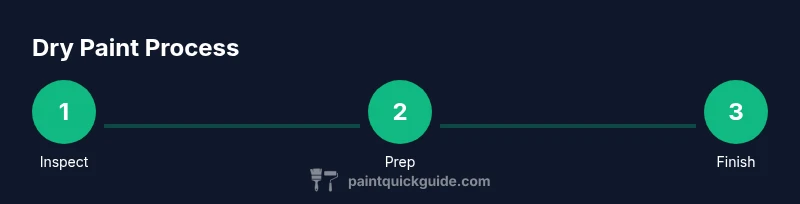
- 1
Inspect the dry film for adhesion and defects
Carefully examine the surface for peeling, cracking, or chalkiness. Run your fingers along edges to test adhesion and observe for any soft spots. If defects appear, plan for targeted repairs rather than a full recoat.
Tip: Document defects with a photo and plan the exact repair approach before touching the surface. - 2
Clean the surface to remove dust and oils
Wipe the area with a damp cloth or mild soap solution to remove dust and oils that can interfere with adhesion. Rinse with clean water if soap was used and allow to dry completely.
Tip: Use a tack cloth after cleaning to pick up fine particles that remain. - 3
Decide on the corrective path (touch-up vs recoat)
For small chips, opt for precise touch-ups; for larger areas, a light skim coat may be required. Match the new material to the existing film in both color and texture.
Tip: Test a small patch first to ensure color match and texture blend before proceeding. - 4
Prepare the surface for the chosen repair
If recoating, scuff the area lightly with fine grit sandpaper to promote adhesion, then wipe away dust. For touch-ups, feather the edges to blend with the surrounding finish.
Tip: Avoid over-sanding or penetrative sanding that could reveal underlying material. - 5
Apply touch-up or recoat using proper technique
Apply in light, even coats, overlapping slightly with the existing paint. Allow each coat to dry fully according to product guidelines before the next pass.
Tip: Use thin coats rather than one heavy layer to avoid drips and uneven texture. - 6
Apply a protective topcoat if needed and cure
Choose a compatible topcoat and apply as directed. Ensure adequate ventilation and keep the area undisturbed during curing to avoid contamination.
Tip: Protect from dust and disturbances during the cure window to achieve a smooth finish.
Your Questions Answered
What does "dry" mean in paint, exactly?
Dryness refers to the film forming on the surface and no longer transferring to your skin. Fully cured paint has reached its maximum hardness over time, which depends on the product, substrate, and environment.
Dry paint means a film has formed; full cure occurs over time and can vary by product and conditions.
Can I touch up immediately after the paint dries to the touch?
No. Wait for full cure as stated by the product label. Touch-ups on an incompletely cured film can cause adhesion problems and color inconsistencies.
Wait for full cure before touching up to avoid problems.
Do I need to sand between coats after drying?
Sanding is generally recommended before applying a new coat to improve adhesion, but only if the surface is being recoated and the existing film is fully cured.
Sand when recoating to improve adhesion.
How do I know if I should recoat or just touch up?
If the flaw is small, touch up. If color fade or finish look is uneven across a large area, recoat the surface for uniform results.
Small chips = touch-up; large areas = recoat for consistency.
What if the color looks off after drying?
Variations can occur because of lighting, aging, or drying conditions. Blending with a glaze or repainting the affected area may be necessary.
Blend or repaint the area if color looks off.
Is it safe to use a topcoat over dry paint?
Yes, when the base coat is fully cured and compatible with the topcoat. Follow label directions for layering times and ventilation.
Topcoats go on over a cured base coat if compatible.
Watch Video
Quick Summary
- Assess cure status before any repair
- Prepare surface thoroughly for best adhesion
- Use thin, feathered coats for blending
- Protect the work area and allow full cure
- Always test on a hidden area first