When to Paint After Primer: A Practical Guide to Timing
Discover the right wait time between primer and topcoat for interior, exterior, and auto projects. Learn how humidity, temperature, and primer type affect dry times, plus practical tests to ensure a flawless finish.


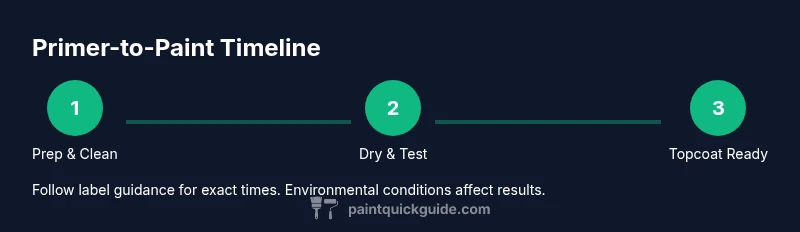
By the end of this guide you’ll know exactly when to paint after primer for interior, exterior, and auto projects. According to PaintQuickGuide, the critical steps are surface cleaning, ensuring primer is fully dry and cured, and performing a tack test before topcoat. We’ll cover dryness tests, environmental factors, and how paint type changes timing.
Why timing matters when painting after primer
Timing is not just a suggestion; it directly affects adhesion, finish quality, and durability. If you seal a surface with a primer that’s still damp or tacky, the topcoat can trap solvents, peel later, or cure unevenly. Primer types differ in their chemistry and drying behavior, so you must tailor your timing to latex versus oil-based primers, as well as epoxies used in auto refinishing. Humidity and temperature aren’t cosmetic details either: they control how fast solvents escape and how the primer interacts with the surface. PaintQuickGuide emphasizes patience here: rushing the transition from primer to topcoat is a common source of failure, especially for high-porosity woods, raw drywall, or previously unpainted surfaces. In practice, you should plan around a clean job site, proper ventilation, and a conservative wait that accommodates your environment. A well-timed topcoat yields better color uniformity, fewer texture issues, and a longer-lasting finish.
Key takeaway: timing is a performance lever, not a mere formality, and it’s worth getting it right the first time.
How to determine your primer's dry time
Dry time is determined by the product label, surface porosity, and environmental conditions. Start by reading the label carefully for the primer you chose, looking specifically for “dry to touch” and “cure” times. In most cases, you’ll use a two-step approach: first, ensure the primer is dry to the touch; second, verify it has adequately cured to resist surface marks and to allow adhesion of the topcoat. A practical test is to touch a small, inconspicuous area with a clean finger: if the surface leaves no residue and feels dry, move to the tack test (see the next section). For primers applied to rough or highly porous surfaces, cast a broader dry time buffer in your plan to account for absorbed moisture and slower solvent release. PaintQuickGuide notes that always defer to the product label, because execution varies by formulation and application method.
Factors that speed up or slow down drying
Drying is affected by multiple factors that you can control and others you cannot. High humidity and cool temperatures slow evaporation of solvents, while good airflow and a warm, stable environment help. Surface porosity matters: raw drywall or unsealed wood drinks in primer, increasing the needed cure time. The thickness of the primer layer also matters: a heavy coat dries more slowly and can trap solvents, requiring a longer wait before topcoat. If you are switching from a solvent-based primer to a water-based topcoat, or vice versa, check compatibility—some substrates require longer curing in transitional coatings. Other influences include paint color and sheen: darker colors and glossier finishes can reveal adhesion issues if the primer hasn’t cured fully. PaintQuickGuide’s analysis shows that environment and product compatibility are the top drivers of predictable dry times.
How to test for tackiness
A reliable tack-test is essential before applying topcoat. Start with a clean, lint-free finger and lightly press an inconspicuous area of the primed surface for a second or two. If the surface feels sticky or leaves a noticeable imprint, it’s not ready. If it feels dry but slightly flexible when you press with a fingertip, it may still require curing time in your specific conditions. For best results, perform the test after a short period of ambient drying, then recheck after another interval if you still detect tackiness. Always ensure you’re testing a recent area of the surface, free from dust accumulation or sanding residue. The tack test reduces the risk of topcoat failure and helps you time the next step with confidence.
Special cases: interior vs exterior vs automotive refinishing
Interior painting generally dries more consistently because indoor conditions are controlled; however, kitchens and baths with higher humidity can slow primer drying. Exterior surfaces face variable weather and sun exposure, often requiring longer curing windows to account for rain, dew, and temperature swings. Automotive refinishing demands strict conformance to topcoat windows because a small mis-timed layer can lead to solvent entrapment, peel, or orange-peel texture. In all cases, always consult the primer’s technical data sheet and follow the manufacturer’s recommended dry-to-touch and cure times. If you must work with limited daylight or fluctuating weather, plan in a day-by-day timeline and perform multiple checks—the patience will pay off with a smoother finish. PaintQuickGuide’s guidance emphasizes adapting to the project’s context while staying within the product’s official guidelines.
Common mistakes and how to avoid them
The most common mistakes are rushing, skipping the dryness checks, and ignoring environmental conditions. Painting over a damp or tacky primer often leads to premature topcoat failure. Skipping surface cleaning or sanding between coats can trap dust and create texture issues. Not using proper ventilation or failing to wear protective gear can create unsafe working conditions, especially with volatile primers. The simplest way to avoid these errors is to create a small, repeatable checklist before you start: inspect the surface, verify dryness per the label, test tackiness, and ensure stable humidity and temperature. When in doubt, extend the wait time and run a few test spots before committing to a full topcoat.
Quick checklists and practical tips
- Always start with a clean, dust-free surface. - Treat tough porous substrates with a slightly longer cure window. - Use a tack cloth before applying the topcoat if sanding dust remains. - If you suspect humidity is too high, pause and run a dehumidifier or fan to stabilize the environment. - Remember that the product label is the final authority for dry times and recoat windows.
Tools & Materials
- Clean cloths(Lint-free for dust removal before priming.)
- Tack cloth(Removes fine dust after sanding and before topcoat.)
- Primer and topcoat(Ensure compatibility and proper labeling.)
- Paint thinner or water for cleanup(Follow product directions.)
- Paint tray and roller/brush(Choose appropriate nap for surfaces.)
- Protective gear (gloves, goggles, mask)(Safety first—solvent vapors and dust.)
- Humidity/temperature tool (hygrometer, thermometer)(Helpful for monitoring conditions.)
- Fan or dehumidifier(Can improve drying in damp spaces.)
Steps
Estimated time: Varies by project
- 1
Prep the surface and surrounding area
Clear the space, protect floors, and clean the surface with a mild cleaner to remove dust, oils, and residues. Lightly sand rough areas for better adhesion, then wipe away dust with a tack cloth. Let the surface dry completely before applying primer to prevent trapping moisture.
Tip: A clean surface is the foundation of a durable finish. - 2
Check primer dryness
Read the primer label for dry-to-touch and cure times. Use the two-step approach: dry-to-touch test first, then verify curing with a tack test after the suggested interval. If in doubt, extend the dry time by a full day under normal indoor conditions.
Tip: Always prioritize the product’s official guidance over general timelines. - 3
Test for tackiness
Perform a tack test on an inconspicuous area: press briefly with a clean finger and release. If there’s any stickiness or imprint, wait longer. Re-test after a quiet interval to confirm full cure before topcoating.
Tip: Document the test so you have a consistent reference. - 4
Measure environmental conditions
Check indoor temperature and humidity using a hygrometer. Stabilize conditions within reasonable ranges to avoid rapid moisture loss or condensation on the surface. If conditions change, re-check dryness and adjust the plan.
Tip: Keep humidity below extreme levels when possible for more predictable dry times. - 5
Plan the topcoat window
Choose a topcoat compatible with the primer and surface. Prepare enough material to avoid stopping mid-coat, and ensure the environment remains consistent during application. Do not resume topcoat if the primer shows any sign of moisture migration.
Tip: Consistency in environmental conditions yields the best finish. - 6
Apply the topcoat
Apply the topcoat according to manufacturer directions, typically in smooth, even coats. If you notice a difference in sheen or color, pause and reassess adhesion. Allow adequate curing per the topcoat label after the final coat.
Tip: Aim for even pressure and steady hand movements during application.
Your Questions Answered
How long should primer dry before painting?
Dry times vary by product and conditions, but the general rule is to ensure the primer is dry to the touch and has fully cured per the label. Always perform a tack test after the recommended dry period and before applying topcoat.
Primer should be dry to the touch and fully cured as per the product label; perform a tack test before painting.
Can I speed up drying with a fan or heater?
Fans can improve air circulation and help solvents escape, but avoid directing heat or fans at the primer surface too aggressively, which can cause uneven drying or dust issues. Use moderate airflow and stable conditions.
Mild air movement can help, but don’t blast heat directly on the primer.
Does primer type affect drying time?
Yes. Water-based primers generally dry faster to the touch than solvent-based or epoxy primers, but curing times still depend on temperature and humidity. Always follow the specific product’s label for accurate timing.
Different primers dry at different rates; check the label for specifics.
Can I paint outdoors if humidity is high?
High humidity slows drying, and rain or dew can extend cure times. If outdoor conditions are uncertain, bring the project indoors or wait for a more favorable window and re-check dryness before painting.
Humidity can delay drying; wait for better conditions if you’re unsure.
Is sanding between primer and topcoat necessary?
Sanding between primer and topcoat is common to remove glaze and improve adhesion for some primers. Always clean the surface afterward and confirm dryness before topcoating. Follow product recommendations.
Sanding can help with adhesion; cleaning and drying are essential afterward.
Does auto refinishing require special timing?
Auto refinishing uses specialized primers and topcoats with strict recoat windows. Always follow the auto industry’s guidelines and the product data sheet, and perform rigorous tack tests under controlled conditions.
Auto coatings have stricter timing; follow the product sheet and test readiness.
Watch Video
Quick Summary
- Wait for primer to dry to touch and fully cure.
- Test tackiness before applying topcoat.
- Environment drives dry times—adjust for humidity and temperature.
- Always match primer and topcoat chemistry for best results.
- Use the product label as the ultimate timing guide.