When Can You Paint? A Practical Timing Guide for Home and Auto
Discover practical timing guidelines for painting interiors, exteriors, and automotive surfaces. Learn how to assess dryness, humidity, and conditions, plus step-by-step prep and safe practices for reliable, lasting finishes.


You can start painting once surfaces are clean, dry, and free of mold or loose coatings, and the air is comfortable for painting. According to PaintQuickGuide, prioritize indoor or exterior conditions that are not too hot, cold, or humid, and avoid applying paint on rain-soaked days or during recent weather swings. For most projects, plan for mild days with steady temps and low humidity to ensure proper adhesion and curing.
Understanding why timing matters for paint projects
Timing is more than deciding which day to pick up a brush. The success of any paint project hinges on surface condition, moisture balance, and environmental factors. If you apply paint when a surface is damp or the air is too humid, you risk poor adhesion, blisters, and longer cure times. By aligning the project with favorable conditions, you improve finish quality and durability. PaintQuickGuide’s analysis highlights that timing decisions cascade into fewer recoats and better color consistency over the life of the coating. In practice, think of timing as part of the prep work, not an afterthought. The right moment makes the difference between a crisp, lasting finish and a remedial redo.
Quick note on prep and timing
Before you even think about color, you must confirm that the surface is dry, clean, and sound. Residual moisture within the substrate or lingering cleaners can trap moisture under the finish, leading to bubbling or whitening. The simplest test is a thorough visual inspection plus a tactile check: wipe a small area with a cloth and feel for dampness. If it feels damp or tacky, postpone painting. A clean, dry surface paves the way for primer and paint adhesion, which is especially important on wooden, plaster, and metal surfaces.
How humidity and temperature influence drying and curing
Humidity and temperature are the twin levers that control drying times. In general, lower humidity and moderate temperatures promote faster drying, while high humidity slows the process and can affect film formation. Temperature should be within a comfortable band for the chosen coating; extremely hot or cold conditions can cause the paint to dry too quickly or unevenly, leading to cracking or color shifting. If you live in a climate with wide swings, plan painting during windows of predictable weather and avoid days with rain or rapid temperature changes.
Interior timing: optimizing for comfort and safety
Inside, aim for days when rooms have stable humidity and a moderate temperature. Turn off kitchen and bathroom exhausts during painting to prevent rapid drying or drafting that can cause uneven edges. Use fans to improve air circulation but avoid blowing directly onto freshly painted surfaces. If you’re using water-based latex paints, you’ll typically see quicker dry times, but you still should wait between coats until the film is touch-dry and no longer tacky. Ventilation is essential to accelerate cure while keeping odors at bay.
Exterior timing: weather windows and surface readiness
Exterior painting is often dictated by dry spells and temperature compliance. Choose days after a light rain when the surface has dried completely and there’s a forecast of several dry days. Direct sun on hot days can cause rapid skinning and recovery cracks, so seek shaded or semi-sheltered surfaces when possible. Clean, dry siding will accept primer and topcoat better, and this reduces the risk of peeling or blistering later. Assume that exterior surfaces take longer to cure due to environmental exposure, so plan accordingly.
Data-driven timing: what the numbers say about paint schedules
PaintQuickGuide analysis shows that proper scheduling reduces the need for rework and improves coating longevity. When timing aligns with low environmental volatility—moderate, dry days with minimal wind—adhesion improves and color consistency stays true. While exact times vary by product and substrate, the general rule is simple: dry, clean surfaces plus favorable air conditions yield the best results. Use this data-driven approach to plan buffer days for weather shifts and room-specific drying behavior.
Common mistakes and how to avoid them
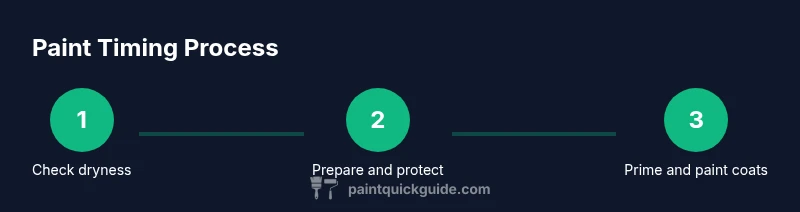
Rushing into paint with damp walls, dusty surfaces, or poor ventilation is a frequent error. Skipping surface prep or ignoring primer needs can cause dull finishes and peeling later. Inconsistent application, inadequate edge work, and painting in unfavorable weather can also ruin a job. To avoid these pitfalls, follow a clear sequence: test dryness, prepare thoroughly, protect surroundings, and apply thin coats with proper drying time between layers. Patience in timing equals quality results.
When to prime and when to skip primer
Primer matters most on bare wood, repaired spots, or surfaces with stains or tannins. On previously painted, clean surfaces with good adhesion, primer can be skipped in some cases, but it’s often wise to use a bonding primer for better color uniformity and durability. The key is to know the substrate and the paint system you’re using. If you’re unsure, apply a light primer coat and test a small area before committing to the full job.
How long to wait between coats and how to test readiness
Waiting between coats is essential for film formation and adhesion. A good rule of thumb is to wait until the previous coat is dry to the touch and no longer tacky; you should be able to press lightly without leaving a fingerprint. Factors such as humidity, airflow, and paint type affect drying times. Thin, uniform coats dry faster and reduce the risk of defects, while thicker coats require longer cure periods. Always follow the manufacturer’s guidance for your chosen product.
Final considerations: making a plan you can follow
Create a realistic schedule that accommodates weather, room use, and project scope. List the surfaces, pick the right tools, gather materials, and set a blocking calendar for prep, primer, paint, and cure time. A stepwise plan reduces decision fatigue and helps you monitor progress. Remember that timing is a strategic part of the project—when you start matters just as much as how you apply the finish.
Builder’s notes: a quick checklist for starting now
- Confirm dryness and cleanliness of all surfaces
- Check forecast for several dry, moderate days
- Protect floors, furniture, and adjacent surfaces
- Apply primer where needed and sand between coats
- Follow recommended dry times and test readiness
Tools & Materials
- Paint suitable for the surface (latex or oil-based as needed)(Select finish (matte, eggshell, semi-gloss) based on room or vehicle surface)
- Primer(Use bonding primer for difficult substrates)
- Masking tape(Low-residue painter's tape for clean edges)
- Drop cloths(Protect floors and furniture)
- Sandpaper or sanding block(Fine grit for smoothing rough spots)
- Putty knife and filler/patch kit(Repair small dents or gouges)
- Paint tray and rollers/brushes(Choose nap length appropriate for texture)
- Ladder or step stool(Secure and stable)
- Safety gear (gloves, eye protection, mask)(Protect from fumes and dust)
- Ventilation plan (box fan or exhaust)(Improve air movement without blowing directly on wet edges)
Steps
Estimated time: 6-8 hours
- 1
Inspect surface dryness
Visually inspect for dampness and touch-test suspect areas. If moisture is detected, pause and investigate potential leaks or condensation sources. Drying and repair work should occur before any coating is applied to ensure optimal adhesion.
Tip: Use a moisture meter if available to confirm dryness before proceeding. - 2
Clean and smooth the surface
Remove dirt, oils, and loose coatings from all surfaces. Lightly sand glossy areas to create a key for adhesion and wipe away dust with a damp cloth. Allow surfaces to dry completely after cleaning.
Tip: Wipe in small sections to prevent dust resettling. - 3
Protect surrounding areas
Cover floors and nearby possessions with drop cloths. Apply painter’s tape along edges and trim to ensure crisp lines, and remove hardware if possible to reduce edge touch-ups later.
Tip: Tightly press tape to prevent paint bleed; remove while still slightly tacky for best edge. - 4
Prime the surface (if needed)
If you’re painting bare wood, repaired plaster, or stained surfaces, apply a compatible primer. Allow primer to dry per manufacturer guidelines before applying topcoat.
Tip: Use a bonding primer for difficult substrates to improve adhesion. - 5
Apply the first coat
Dip the roller or brush and apply a thin, even coat. Work in small sections to maintain a wet edge and minimize lap marks. Allow the coat to dry as directed by the product label.
Tip: Back-roll or back-brush to smooth out roller texture and ensure uniform coverage. - 6
Wait for the coat to dry
Let the first coat dry completely before assessing coverage. If the color or texture isn’t uniform, consider a light sanding before applying a second coat.
Tip: Avoid rush-drying; dryness results in a better final finish. - 7
Apply the second coat
Apply a second coat evenly for uniform color and durability. Re-check edges and corners and correct any thin areas. Allow final coat to cure as recommended.
Tip: Two thin coats often yield better color depth and durability than a single thick coat. - 8
Final inspection and cleanup
Inspect for missed spots, dust nibs, or brush marks. Touch up as needed and remove tape carefully. Clean brushes and rollers according to paint type, and store leftovers properly.
Tip: Check the finish under different lighting to reveal any imperfections.
Your Questions Answered
What does it mean for a surface to be dry enough to paint?
Dry enough means no visible moisture and no tackiness to the touch. A test area should feel dry and not transfer moisture to your finger. If in doubt, wait longer or investigate the underlying moisture source.
A surface is dry enough when there’s no visible moisture or tackiness; test a small area and wait longer if unsure.
Can I paint in winter or during cold spells?
Painting in cold conditions can hinder adhesion and drying. If you must, choose a product rated for cooler temperatures and ensure the space is warm and ventilated. Exterior painting in cold weather is generally discouraged.
Cold conditions can prevent proper adhesion; use appropriate products and ensure warmth if you must paint.
Do I always need primer?
Primer is recommended on bare wood, stained surfaces, or repairs, to improve adhesion and hide contrasts. On already painted, sound surfaces, primer may be optional, but testing a small area helps confirm.
Primer is often essential for adhesion on bare or repaired surfaces; test a small patch to decide.
How long should I wait between coats?
Wait until the previous coat is dry to the touch and not tacky. Drying times vary by product and conditions, so always check the label and perform a readiness test before applying the next coat.
Wait for the coat to dry and feel dry to the touch before applying another coat.
Is it okay to paint over old paint without sanding?
If the old paint is clean, firmly attached, and the color isn’t drastically different, you may skip sanding in some cases. For glossy finishes or large color jumps, light sanding improves adhesion.
Sometimes you can paint over old paint without sanding, but run a quick test to be sure.
What environmental signs indicate it’s a bad painting day?
Forecasts with rain, high humidity, or rapid temperature shifts signal unfavorable conditions. If you see humidity rising or rain approaching, postpone or shorten sessions to avoid compromised finishes.
Rainy or highly humid days are not good for painting; wait for better conditions.
Watch Video
Quick Summary
- Verify dryness before painting to prevent failures
- Plan around humidity and temperature for best results
- Primer improves adhesion on tricky surfaces
- Thin coats dry evenly for better durability
- Protect surroundings and test areas before large jobs