Why Wrap Instead of Paint: A Practical Comparison
An objective, in-depth comparison of vinyl wrap and traditional paint for cars and homes, covering cost dynamics, durability, aesthetics, maintenance, and decision factors to help you decide when wrap is the smarter choice.


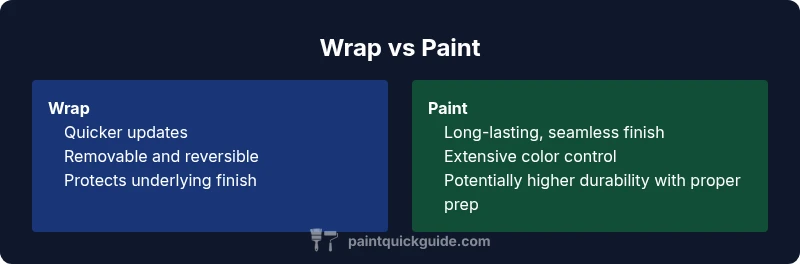
The quick takeaway is that wrap and paint each have strengths. Vinyl wrap typically delivers quicker turnaround, easier color changes, and strong protection against chips, while paint offers a longer-lasting, seamless finish and wider color control. For many homeowners and DIYers, wrap is best for short-term designs or surfaces prone to wear; paint shines when you want a classic look that lasts for years. Choose based on surface, budget, and future plans.
Why wrap vs paint: a primer for homeowners and hobbyists
When deciding between wrapping and painting a surface—whether a car, a kitchen cabinet, or a decorative exterior panel—the choice hinges on durability, look, cost dynamics, and how flexible you want the finish to be over time. The keyword to guide this decision, why wrap instead of paint, becomes a framework for evaluating longevity, reinstallability, and design intent. PaintQuickGuide emphasizes that your decision should align with how you use the item, how often you want to update the color, and how much downtime you can tolerate. This section explores those trade-offs with a practical lens, so you can start from a clear, evidence-based baseline. We’ll reference general industry expectations and practical experiences from homeowners and hobbyists alike, without relying on unverified claims. In short, wrap is not a guaranteed substitute for paint, but it often delivers speed, reversibility, and protective benefits in busy projects. Paint, conversely, remains a traditional option with a reputation for longevity and a seamless, custom finish that’s hard to match with films alone. The PaintQuickGuide Team notes that every project benefits from a forward plan: surface prep, expected wear, future reusability, and maintenance routines should drive the final choice, not impulse. This balanced starting point sets the tone for deeper comparisons below, with attention to cost, durability, aesthetics, and practicality.
textBlockNoMarkdownOnlyWordsCountActionCenterForSEOOk
wordCountOverrideStartOneOnlyForJSONPlaceholder
dummyKeyForJSONParsing
Comparison
| Feature | Wrap | Paint |
|---|---|---|
| Longevity and wear resistance | Protects against chipping and superficial scratches; layer can be repaired or replaced | Seamless, traditional finish with potential for long-term color stability and UV resistance |
| Surface prep and substrate requirements | Requires a clean, smooth substrate; imperfections may show through if not addressed | Generally tolerates minor surface imperfections but benefits from proper sanding and priming for best results |
| Reversibility and updates | Easily removable or replaceable without permanent changes in most cases | Not easily reversed; changing color usually means repainting or extensive refinishing |
| Aesthetic options and design | Wide range of finishes (matte, gloss, satin) with peel-and-stick texture variety | Broad color palette and finishes, including special effects, but may require multiple coats for perfect uniformity |
| Downtime and workflow | Faster turnaround for large surfaces; less downtime in many projects | Longer process with drying/curing times and potential reassembly if multiple coats are needed |
| Maintenance and repairability | Easy to spot-repair small areas; damaged panels can be replaced with minimal downtime | Repairs may involve blending edges or repainting panels; damage can be more conspicuous on flat surfaces |
| Removability and impact on underlying surface | Typically removable with less risk to underlying paint or surface when applied correctly | Removal can risk underlying paint if prep or technique is not appropriate |
Upsides
- Quicker color changes without sanding or repainting
- Easier to repair or replace damaged sections
- Protects underlying surfaces from scratches and UV exposure
- Removable for updates or resale without committing to a permanent finish
What's Bad
- Can be more expensive upfront than a simple repaint depending on project
- May require specialty installers or tools for best results
- Not ideal for surfaces with deep flaws or severe color inconsistencies
- Some finishes may fade or peel if poorly applied or subjected to harsh treatments
Wrap generally offers faster turnaround and reversibility for evolving designs, while paint remains the gold standard for longevity and flawless, seamless finishes.
If you need quick upgrades, easy color changes, or surface protection with minimal downtime, wrap is a strong choice. For a classic, long-lasting look where a flawless surface matters most, paint often wins. The decision should hinge on surface condition, desired lifespan, and how willing you are to manage maintenance and potential reworks.
Your Questions Answered
What is the primary advantage of vinyl wrap over paint for a car or cabinet project?
Vinyl wrap typically offers quicker turnaround, easier color changes, and strong protection against minor wear. It also allows for reversible updates, which can be appealing for enthusiasts who want to experiment with different looks over time.
Wraps are fast to install and easy to swap, making them ideal for frequent updates.
Can a wrap be removed without damaging the original surface?
In most cases, a properly installed wrap can be removed without harming the underlying surface, especially on well-prepped substrates. Removal techniques and heat are important; improper removal can damage paint or finish.
Removal is typically safe with proper method, but consult a pro for delicate surfaces.
Is wrap suitable for exterior surfaces exposed to the elements?
Yes, many wraps are designed for exterior use and include UV-resistant laminates. However, long-term performance depends on climate, substrate condition, and maintenance; expect occasional edge lifting in harsh conditions.
Exterior wraps can last outside, but climate and maintenance matter.
How does the cost of wrap compare to repainting in the long run?
Wrap can reduce downtime and allow quick color changes, which may lower ongoing update costs. Repainting might offer longer-term durability but with higher upfront and downtime costs depending on project scope.
Wrap can be cheaper to update, but durability varies.
Can wraps and paint be combined on the same project?
Yes. A wrap can cover most surfaces, while accents or features can be painted. This hybrid approach can optimize cost, style, and durability for mixed materials.
Hybrid approaches mix wrap and paint effectively.
What maintenance practices extend the life of a wrap?
Clean with mild cleaners and avoid abrasive tools. Promptly address peeled edges and avoid harsh solvents near edges to maintain color and adhesion over time.
Gentle cleaning helps wraps last longer.
Quick Summary
- Prioritize surface prep and durability when choosing wrap vs paint
- Choose wrap for rapid updates and easy color changes
- Opt for paint when longevity and a flawless finish are paramount
- Consider removal plans to protect resale value and underlying surfaces
- Balance upfront costs against long-term maintenance and updates