Paint vs Wrap Cost: A Practical Car Finish Guide
Explore paint vs wrap cost to understand upfront price, long-term value, and maintenance for auto finishes. A balanced, data-driven guide by PaintQuickGuide.


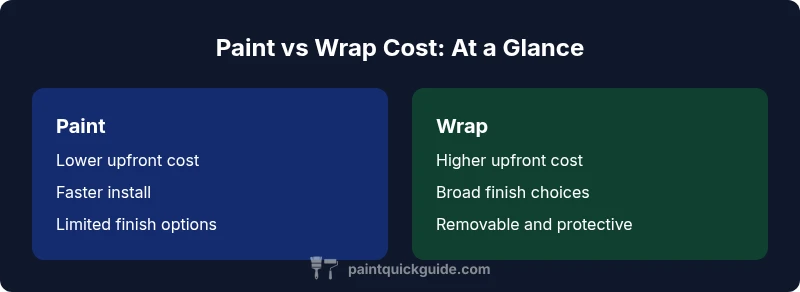
Paint vs wrap cost is a central factor when deciding how to refresh a car’s finish. Paint typically offers a lower upfront price, while vinyl wrap requires a higher initial investment but can protect the body and permit rapid color changes. Over time, total costs hinge on durability, maintenance, removal, and the look you want.
Cost foundations for automotive finishes
When evaluating the paint vs wrap cost for a car, you must understand what each option includes and how it translates into dollars and time. A traditional automotive paint job covers primer, base color, and clearcoat, plus potential surface prep. Vinyl wrap options add the cost of specialty films, adhesives, and finish protection. The overall expense is driven not just by the sticker price, but by prep quality, the extent of surface work, and whether the job is a full wrap or a partial accent. According to PaintQuickGuide, the paint vs wrap cost landscape is shaped by upfront material costs, labor, and the expected lifespan of the finish. The PaintQuickGuide team found that broader color control and finish options can sway buyers toward wraps, especially when the goal is frequent color changes or added protection. In practice, you should estimate costs within your local market and compare multiple shops to capture regional price variation. The most reliable conclusions come from real quotes rather than generic assumptions, particularly if you plan to retain the vehicle for several years. When you frame the decision in terms of total cost of ownership, the argument becomes clearer and less emotionally charged.
Upfront cost drivers
Upfront costs are the first hurdle in any paint vs wrap cost analysis. Paint projects typically require fewer consumables beyond primer, paint, and clearcoat, while wraps involve specialized vinyl, laminates, and installation labor. The upfront labor difference is often the most dramatic factor: a full wrap can take several days, depending on vehicle complexity, while a full repaint can take roughly a few days if no major bodywork is needed. Color matching a repaint adds time and cost, whereas wraps can offer a wide palette of textures and finishes with relatively predictable labor. The materials themselves matter: premium paints with multi-stage clearcoats add to the price, and high-end wrap films with UV protection and gloss or matte textures increase the bill. You should also consider environmental controls at the shop; proper ventilation and climate stability influence finish quality and the likelihood of costly reworks. For most owners, the upfront paint vs wrap cost choice hinges on anticipated vehicle usage, personality, and long-term ownership plans. Paint tends to be cheaper initially, while wraps push the budget higher but promise optional protection and color versatility.
Labor and installation time implications
Labor time directly affects cost, and the paint vs wrap decision carries different labor profiles. A paint job centers on surface prep, masking, priming, spraying, and curing times. Even with efficient shops, a quality repaint often requires holding the vehicle for a couple of days to allow the clearcoat to cure fully. Wrap installation focuses on film handling, edge sealing, and careful trimming, which can stretch across multiple days for complex shapes or custom patterns. Labor efficiency matters: skilled technicians can complete wraps faster with pre-cut templates, while complex parts may require custom cutting and heat staking. These labor dynamics translate into cost more than the material price alone. Additionally, the ability to salvage or reuse certain panels during maintenance can influence long-term expenses. The right mix of skill, planning, and timing reduces the risk of errors that trigger rework expenses later. When you request quotes, ask for a breakdown by labor hours, material costs, and any maintenance intervals to understand the true paint vs wrap cost over time.
Material costs and finish options
Material choices significantly shape the paint vs wrap cost landscape. Standard automotive paints use pigments, binders, and solvents, while special-effect paints introduce metallics, pearls, or chameleon colors that elevate material costs. Wrap films come in a spectrum of colors, textures, and finishes—gloss, satin, matte, carbon fiber, brushed metal, and textured patterns—each with a distinct price and installation consideration. In many markets, wraps are priced per square foot with minimum orders for whole-vehicle coverage, which can elevate upfront costs relative to a basic paint job. Keep in mind that some wraps require protective laminates to shield the film from UV exposure or stone chips, adding another line item to the quote. The choice between paint and wrap is not simply a single sticker price; it’s a matrix of film types, color accuracy, longevity expectations, and potential rework. Always compare the same quality tier across options to avoid misleading conclusions about the paint vs wrap cost.
Durability, wear, and ongoing maintenance costs
Durability expectations influence long-term paint vs wrap cost. Traditional painting can resist chips and fading when properly cured and protected, but color changes typically require a full repaint, which increases long-term cost if you frequently refresh looks. Wraps offer robust protection to the underlying substrate and can be replaced section-by-section without repainting the entire vehicle; installation and removal can be cleaner than repainting, but wrap wear—especially around edges and door handles—may require frequent maintenance or eventual replacement. Maintenance costs differ: paint demands careful washing, waxes, and periodic polish to preserve shine; wraps require careful washing with non-aggressive detergents and periodic vinyl-safe UV protection. Over several years, a wrap may prove financially favorable if you expect frequent color changes or heavy exposure to the elements. Conversely, a traditional paint finish can hold value well when color stability and long-term aesthetics are priorities. The exact balance depends on your local climate, driving conditions, and how aggressively you care for the finish.
Removal, repair, and color-change considerations
Removal costs and repair implications are major drivers of the paint vs wrap cost equation. Removing automotive paint without damaging the substrate can be invasive and expensive, particularly if there are multiple layers or old refinishes. In contrast, vinyl wrap can be peeled away with less risk to the underlying paint, though some residual adhesive may need cleaning and panel reconditioning. If you anticipate needing to revert to original color or you plan frequent re-coloring, the wrap removal process is typically simpler and can reduce downtime and labor costs. However, the wrap may leave adhesive residues or micro-scratches on some finishes that require professional attention. If the vanishing color or finish is important for resale, factor in the cost of repainting or re-wrapping selected panels. The decision hinges on your willingness to accept potential resale considerations and how comfortable you are with rework costs in the future.
Aesthetic options, color fidelity, and resale value considerations
One of the most subtle but impactful implications of paint vs wrap cost is how the finish affects resale value. Wraps preserve the original factory paint but may be perceived as non-original or temporary by some buyers, depending on how well the wrap holds up and whether it comes with full removal. Paint finishes, especially factory-correct colors, can sometimes enhance resale appeal if the color is popular and in demand. Specialty wraps and custom paint effects carry their own value propositions: wraps may advertise premium protection and unique textures, while high-quality paint jobs can emphasize color depth, gloss, and precision. If resale value is a priority, consider the vehicle’s target market and the possibility that a potential buyer will prefer original paint. In some cases, sellers expect paint to be closer to factory condition, which could influence the overall paint vs wrap cost calculus. The right choice aligns with your goals for appearance, protection, and marketability.
Decision frameworks and budgeting for real-world scenarios
Developing a practical decision framework helps translate the paint vs wrap cost into action. Start with a clear ownership horizon: do you plan to keep the vehicle for 3–5 years or longer? If long-term ownership and color stability matter, paint can be more cost-effective, especially if you keep the original color or want to minimize ongoing maintenance. If you expect frequent color changes for personal branding or seasonal aesthetics, wraps offer flexibility and protection with the possibility of a reversible option. Create a scenario-based budget: gather quotes for a full repaint and for a full wrap, add projected maintenance and re-color costs, and consider removal costs at the end of life. Compare the total cost of ownership over your intended horizon rather than focusing on upfront price alone. PaintQuickGuide recommends looping in multiple shops, inspecting past work, and requesting a warranty that's aligned with longevity expectations. The core guidance is practical: balance upfront reality with future costs to decide whether paint or wrap best matches your needs.
Common myths, caveats, and professional tips
Myths about paint vs wrap cost can distort decision-making. Some believe wraps are universally cheaper because they are easily removed; in reality, initial installation and film quality vary widely. Others assume paint is always cheaper; while this is often true upfront, you may pay more later for color changes or repairs. A reliable approach is to request detailed quotes that separate material, labor, and any required prep work. Ask about warranty coverage, removal costs, and the expected lifespan of the finish. Look for shops that provide process transparency and photo records of prior installations; this helps you gauge whether the paint vs wrap cost aligns with your expectations. Finally, ensure that the chosen option does not compromise safety or structural damage mitigation—some finishes require careful handling when performing body repairs or replacing panels. The bottom line: make a plan that ties cost to durability, maintenance, and resale goals before committing to paint or wrap.
DIY considerations and cost control for budget-conscious buyers
DIY enthusiasts often look to reduce paint vs wrap cost by handling smaller tasks themselves. In practice, DIY paint work can save money on labor but demands proper equipment, environmental conditions, and safety protocols to achieve a durable finish. Wrapping a vehicle is rarely a DIY-friendly project for most homeowners due to the risk of air bubbles and edge lifting, though some experienced hobbyists successfully wrap small sections. If you are considering a DIY route, focus on the project scope: partial wraps or accent panels are more feasible and still offer a sense of novelty without committing to full-vehicle coverage. For most people, professional installation yields better longevity and finish fidelity, while DIY paint can be a viable option for simple repairs or touch-ups. Always price in the cost of tools, consumables, and potential rework when comparing paint vs wrap cost from a DIY perspective.
Comparison
| Feature | Paint Finish | Vinyl Wrap |
|---|---|---|
| Upfront cost | Lower upfront cost | Higher upfront cost |
| Install time | Faster, often same-day | Longer, multi-day depending on wrap complexity |
| Color/finish options | Limited to available pigments and clear coats | Broad palette with textures and finishes |
| Durability / lifespan | High durability with proper prep; wear requires repaint | Protective wear and removable but may need replacement |
| Removal impact | Recovers original surface with repaint | Typically cleaner removal, potential adhesive residue |
| Maintenance | Regular washing and waxing | Vinyl-safe cleaning; UV protection advised |
| resale impact | Original paint may appeal to some buyers | Wraps can protect but may affect perceptions of originality |
Upsides
- Provides a structured approach to evaluating options
- Highlights key cost drivers like labor, materials, and time
- Supports budgeting with scenario planning
- Encourages shopping around and verifying warranties
- Helps align finish choice with ownership horizon
What's Bad
- Cost estimates vary by region and shop, reducing precision
- Non-financial factors (aesthetics, personal taste) influence decisions
- Removal and rework costs can surprise budgets
- Long-term value can be uncertain without clear resale goals
Wraps often win on long-term value for flexible aesthetics; paint wins on upfront cost and speed
If you want frequent color changes or maximum surface protection, wrap is the better bet. If upfront budget and quick turnaround matter most, painting is usually smarter. Consider your ownership horizon and resale goals to choose confidently.
Your Questions Answered
What is the typical upfront cost difference between paint and wrap?
In most markets, paint finishes start with a lower upfront cost than full wraps. The higher upfront price for wraps comes from specialty films, installation labor, and edge sealing. Always compare apples-to-apples quotes that separate material from labor to understand the paint vs wrap cost differential.
Paint usually costs less upfront than wrap, but installation quality and film choices matter. Get detailed quotes to compare.
How long does a wrap last compared to a repaint?
Wraps typically offer several years of service with proper care and removal options, while a repaint lasts many years but may require color changes to suit taste. Real-world longevity depends on climate, maintenance, and driving conditions. Consider your desired color stability when weighing paint vs wrap cost.
Wraps last several years with care; repaint longevity depends on maintenance and climate.
Can you remove wrap without damaging the car's original paint?
Yes, wrap removal is generally cleaner than repainting, but some vehicles may show residual adhesive or minor surface imperfections. The outcome depends on the film quality and how well the wrap was applied. Plan for post-removal detailing if you anticipate future resale.
Removable wraps usually come off cleanly, but check the film quality and expect some residue.
Does wrap affect resale value?
Wraps can protect the underlying paint and preserve resale conditions, but buyers may view factory finishes as more desirable. If the wrap is well maintained and fully removable, it can be a selling point; otherwise, some buyers may prefer original paint. Weigh buyer expectations in your market.
Wraps can protect, but some buyers prefer original factory finishes.
Is DIY installation feasible to save costs?
DIY painting can save labor costs but requires tools, a controlled environment, and skill to avoid defects. Wrapping is generally not recommended as a DIY project due to precision and risk of bubbles. If you pursue DIY, limit scope to small repairs or accent work and budget for professional finish later.
DIY paint can save money if you have skill and space; wraps are risky for DIY.
What maintenance should I budget for?
Paint maintenance centers on washing, polishing, and occasional wax protection. Wrap maintenance focuses on vinyl-safe cleaning, UV protection, and periodic inspection of edges. Budget for potential rework or replacement as the finish ages.
Budget for cleaning, protection, and possible rework for either finish.
Quick Summary
- Compare total cost of ownership, not just upfront price
- Assess durability and maintenance needs for each finish
- Weigh resale expectations against originality considerations
- Request detailed quotes with clear line items
- Choose professional installs for wraps to maximize longevity