Paint or Wrap Car: A Clear Side-by-Side Comparison
Compare painting and wrapping a car with practical costs, durability, aesthetics, and maintenance. Learn which option fits your budget and lifestyle for home garages and professional shops.


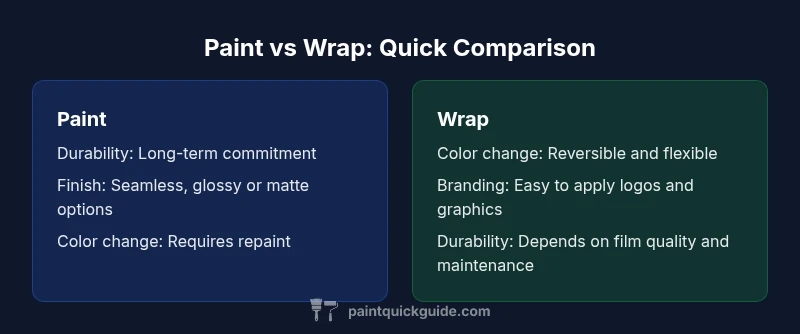
According to PaintQuickGuide, choosing between paint or wrap car hinges on goals: durability, cost, and how often you want color changes. Wraps offer reversible color and faster updates, while paint delivers a durable, seamless finish. This comparison helps homeowners and DIYers weigh upfront costs, maintenance, and long-term value.
Overview: Framing the decision between paint and wrap for a car
If you’re deciding between paint or wrap car finishes, start with the same questions you ask for any major finish project: what is the intended use, budget, and how often you want to change color. Traditional automotive paint creates a permanent, hard-wearing surface when properly prepped and cured, but it’s fixed in color until you repaint. By contrast, a car wrap uses a high-quality vinyl film that adheres to the surface and can be removed later without altering the underlying paint, making it appealing for color experiments or branding updates. The decision also hinges on climate, exposure to sun and salt, and maintenance habits. Throughout this guide, we’ll compare the two options across durability, aesthetics, cost, downtime, and practical concerns so you can make an informed choice tailored to your situation.
Durability and wear: how long each option lasts in real-world use
Durability largely depends on environment, maintenance, and installation quality. Traditional paint, when prepped correctly and topped with a durable clear coat, typically provides long-term endurance and a solid, glossy finish. A wrap’s lifespan hinges on film quality, installation technique, and exposure to sunlight and abrasion. PaintQuickGuide Analysis, 2026 notes that wraps can be removed with minimal impact on the original surface when installed by a skilled installer, but harsh conditions or repeated impacts can shorten film life. For owners in coastal or high-UV areas, expect more frequent wrap replacements, while a well-maintained painted finish can outlast many wraps.
Finish quality and color consistency: achieving a seamless look versus graphics options
A painted surface offers a depth and color consistency that many buyers associate with factory quality. With modern basecoat-clearcoat systems, color matching is extremely precise, and finishes can be polished to a uniform gloss. Wraps excel at graphics, patterns, and bold colors without requiring multiple coats of paint. They also enable edge-to-edge branding and partial wraps that protect the underlying metal in seams and curves. The result is a visually striking option that can be changed without repainting, but color matching between wrap and chrome or trim may require extra attention.
Customization options and limitations: what you can and cannot achieve
Paint allows custom colors and specialty finishes, but every change often means a new coat, sanding, or re-clearcoat. Wraps offer virtually unlimited patterns, textures, and branding, including matte finishes, metallic flecks, and graphic artwork. However, wraps may have limits on extreme chrome or very deep, near-black tones that require meticulous preparation. If you want a unique look that’s easy to modify in the future, wraps tend to be more flexible; for long-term permanence, paint is usually preferred.
Installation time and process specifics: downtime and scheduling considerations
A full paint job typically requires multiple stages: surface prep, primer, base coats, clear coats, and curing time. This can translate to several days of downtime, depending on shop workflow and climate. A wrap installation is generally faster, with a typical turnaround measured in days rather than weeks, depending on vehicle size and complexity. For projects with branding or graphics, the wrap process includes design proofs, vinyl plotting, and precise cutting, which adds planning time but can still finish sooner than a full repaint.
Removal, reversibility, and risk to original paint
Peeling or removing a wrap is usually straightforward if the surface was prepped properly and the film is of high quality. Removal can reveal original paint in good condition, though poorly maintained wraps may leave residue or lift edges that require detailing. Paint removal via sanding or aggressive clearcoat stripping is more invasive and can expose or damage substrate if not done carefully. In terms of risk, wraps tend to be less invasive when the goal is color change without altering original paint, while painting is a more permanent transformation that can complicate future color shifts.
Maintenance, cleaning, and care routines
Wraps require regular washing with non-abrasive cleaners and avoiding aggressive brushes that can scratch the film. Some finishes benefit from UV-protective sealants designed for vinyl. Painted surfaces, when well prepped and finished, respond well to standard car care: gentle washing, polishing, and occasional waxing per the paint system. Regardless of choice, avoid high-pressure impacts on edges and seams where damage is more likely to occur. Proper maintenance extends the life of both finishes and preserves resale value.
Costs, value proposition, and budgeting considerations
Upfront costs vary widely by region, shop or installer, vehicle type, and finish quality. A full repaint tends to have higher initial costs due to labor, materials, and curing time, but offers a durable, single-coat surface with potential long-term value. Wraps typically cost less upfront than a full repaint, especially when only the exterior surfaces are wrapped. Ongoing maintenance costs for wraps can add up if you schedule periodic replacements or graphic refreshes. The long-term value depends on how long you plan to keep the vehicle and how strongly branding or color consistency matters to you.
Resale value, branding, and market perception
A factory-like paint finish is often viewed as premium and may support resale value on classic or high-end models. A well-maintained wrap can preserve original paint and offer strong branding opportunities, but some buyers prefer a traditional paint finish. If the wrap is removed cleanly, the underlying paint can be revealed in near-original condition, which is advantageous for resale in many markets. The decision to wrap or paint should align with your expected ownership horizon and the preferences of your target buyers.
Environmental impact, safety considerations, and regulatory factors
Paints involve volatile organic compounds (VOCs) during application and drying, with environmental controls in professional facilities. Wrap films are typically low-VOC during application but rely on adhesives and plastics that have their own disposal considerations. Both options should be installed by trained professionals following local regulations for waste and emissions. If environmental impact matters, discuss with your installer the specific materials and disposal practices used, and consider long-term maintenance that minimizes waste.
Practical decision framework: a quick checklist for choosing between paint and wrap
Use this checklist to guide your decision. Do you plan to keep the vehicle long-term or sell soon? Is branding or color versatility a priority? What climate conditions do you face, and how much downtime can you tolerate? Do you want a seamless factory-like finish or bold graphics? Finally, obtain multiple quotes that include surface prep, cure time, and warranties. A structured approach reduces the chance of regrets after the work is done.
Common mistakes and how to avoid them: ensure a durable result
Avoid selecting a finish solely on price without evaluating the installer’s experience. Skipping proper surface preparation leads to premature failure for either option. Inadequate edge sealing for wraps can cause peels, while poor curing for paint results in dullness or yellowing. Ensure you review warranties, surface-care instructions, and a realistic timeline before committing. Education, planning, and licensed technicians are your best allies.
Comparison
| Feature | Paint | Wrap |
|---|---|---|
| Durability & longevity | Long-term durability with proper prep and clear coat | Durability depends on film quality and installation |
| Repairability | Color touch-ups or repaint required for flaws | Removal and reinstallation; limited on-site touch-ups |
| Installation time | Longer process with curing time | Faster installation; color change often in days |
| Color options & customization | Wide color range; traditional finishes | Unlimited patterns, textures, and branding |
| Maintenance | Standard car care; polishing may be needed | Regular cleaning; protect edges; avoid sharp tools |
| Upfront cost | Typically higher upfront for full repaint | Often lower upfront; cost varies by film quality |
| Resale value impact | Factory-like finish can support value | If removed cleanly, preserves factory paint; branding impact varies |
Upsides
- Allows reversible color changes with minimal surface prep
- Wraps protect original paint and can be removed
- Quicker installation for color updates and branding
- Paint provides a durable, seamless finish when prepped well
- Branding and graphics are easier with wraps
What's Bad
- Wraps can lift or crack if installed poorly or exposed to harsh conditions
- Harsh sun or salt can degrade wrap films faster
- Maintenance for wraps (regular cleaning, waxes) adds steps
- Paint requires extensive prep and curing time; respray needed for changes
Paint generally wins for long-term durability and a seamless look; wraps win for flexibility and faster color changes
Choose paint if you want a lasting finish and resale value. Choose wrap if you want frequent color changes or branding opportunities. The PaintQuickGuide team emphasizes aligning the choice with ownership horizon and budget.
Your Questions Answered
What is the typical lifespan of a car wrap compared to paint?
Lifespan varies by material and climate. Paint can last many years with proper prep and maintenance, while wraps depend on film quality and exposure; a high-quality wrap in favorable conditions often lasts several years, but extreme conditions may shorten it. Regular inspections help catch edge lifting early.
Lifespan depends on quality and environment. Paint lasts longer with proper care; wraps depend on film quality and exposure, so expect several years with good maintenance.
Can a wrap be removed without damaging the underlying paint?
Yes, when professionally installed on a properly prepared surface, wraps are designed to be removed without harming the original paint. Problems arise if the surface was not prepped correctly or if the wrap is old and brittle. A quality installer and good adhesion are key.
Wraps can usually be removed without damaging paint if installed correctly and kept up. Bad prep or aged film can cause issues.
Is wrapping cheaper than painting overall?
Initial wrap costs are typically lower than a full repaint, especially for color changes or branding. Over the long term, maintenance and replacement cycles influence total cost. A full repaint may be more expensive upfront but can offer longer-lasting value if the goal is a permanent finish.
Wraps usually cost less upfront, but long-term costs depend on replacements. Paint may cost more initially but lasts longer in some cases.
How long does installation take for each option?
Wrap installation is often completed within days, depending on vehicle size and complexity. A full repaint typically requires more days due to prep, multiple coats, and curing time. Scheduling should account for curing windows and weather when appropriate.
Wraps can be faster; paints require more time for prep, coats, and curing.
What maintenance does a wrap require?
Wraps benefit from regular washing with non-abrasive cleaners and avoiding aggressive scrubbing. Protect the edges and avoid high-pressure washing near seams. Periodic professional inspections help ensure the film remains intact.
Keep wraps clean with gentle cleaners and inspect edges regularly.
Which option preserves resale value better?
Factory-like paint is often preferred for resale on many vehicles. If a wrap is removed cleanly, it can preserve the original paint, but some buyers may favor a traditional paint finish. Consider your market and the vehicle type.
Paint is often favored for resale; clean wrap removal can also preserve paint but depends on the buyer.
Quick Summary
- Define your goal: durability versus flexibility.
- Evaluate finish quality and color stability over time.
- Account for installation downtime and total costs.
- Consider resale value and branding opportunities.
- Choose paint for longevity; choose wrap for frequent color changes.