How Much Does Painting a Car Cost? A Practical Guide
Learn realistic car painting costs, from DIY kits to professional refinishes, with budgeting tips, cost drivers, and how to estimate your project.


The typical price to paint a car ranges from roughly $1,000 to $5,000 for a standard single-stage repaint, with higher-end jobs reaching $5,000 to $15,000 for premium multi-layer finishes and color changes. Costs vary by paint type, prep work, and whether body repairs are needed, plus masking and curing time.
What goes into a car paint job
If you’re asking how much does painting a car cost, the short answer is: price depends on scope, prep, and finish quality. A typical repaint involves stripping or sanding old paint, primer, color coats, and a protective clear coat. The quality of the paint itself and the level of prep—from simple surface prep to extensive body repairs—play the biggest roles in cost. The process is often broken into assessment, masking, application, and curing. In professional shops, the goal is uniform color across panels, precise color matching, and a durable finish that resists chipping. For DIYers, price can drop when you supply materials and manage the masking and prep yourself, but results may vary based on technique and equipment.
Essential price ranges by job type
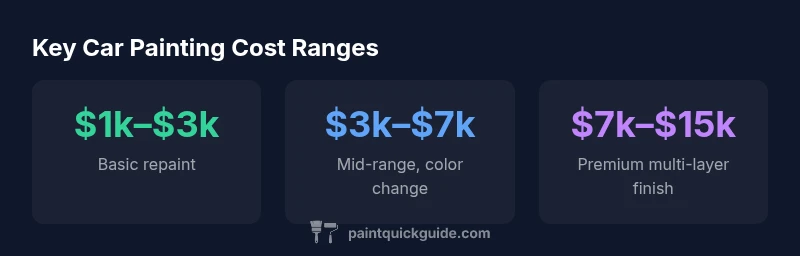
Prices for painting a car can be broadly grouped into three tiers. A basic, entry-level repaint typically runs around $1,000–$3,000 and usually uses a simpler paint system with limited prep. A mid-range job, often including a color change and basecoat/clearcoat system, lands in the $3,000–$7,000 range and balances cost with quality. Premium finishes—multi-layer clears, specialty colors, thorough body work, and flawless color matching—can range from $7,000–$15,000 or more. These figures reflect standard U.S. market conditions in 2026 and assume a typical vehicle size; actual prices vary by shop, location, and the extent of prep work.
Hidden costs to plan for
Beyond the basic paint and labor, several hidden costs can affect the final bill. Body repairs for dents, rust, or prior damage add substantial costs. Extensive masking for complex color changes, windshield or trim removal, and proper surface preparation increase labor time. Additional items include color matching for difficult paints, disposal fees for old coatings, primer and clearcoat upgrades, and warranty considerations. Always budget for contingency—unexpected body work or required curing time can push totals upward. The best practice is to request a written estimate that itemizes prep, materials, labor, and any potential extra charges.
How to estimate your project: a step-by-step approach
- Define the quality you want: basic, mid-range, or premium. 2) Assess the vehicle’s condition: any rust, dents, or panel replacement needed? 3) Choose a paint system: single-stage vs basecoat/clearcoat vs multi-layer. 4) Get at least three detailed quotes that include prep, masking, and curing. 5) Compare included services: wash, surface prep, color matching, warranty terms. 6) Factor time: curing windows and shop scheduling can affect timelines and costs. By clarifying these factors, you’ll derive a more accurate estimate and avoid sticker shock.
DIY vs professional shop: pros, cons, and costs
DIY painting can save labor costs but requires investment in equipment, ventilation, and facilities, plus time for prep and practice. Professional shops bring consistent results, color matching accuracy, and warranties, but charge for labor, masking, and curing. For a show-quality finish or resale-quality results, most homeowners lean toward a professional job despite higher upfront costs. If you’re on a tight budget, a smaller project such as a bumper or panel repaint with a professional base coat may offer a good balance between cost and outcome.
Timeline, scheduling, and warranties
Timelines vary with scope; a simple color refresh may take a few days, while full-body refinishes with prep and curing can extend to several weeks. Warranties vary by shop and paint system, but most reputable shops offer some coverage for adhesion, peel, or color fading within a specified period. When budgeting, factor lead times and potential delays, especially during busy seasons. Confirm warranty terms in writing and understand what is covered under normal use and environmental exposure.
Cost ranges for common car painting scenarios
| Cost Range | Typical Inclusions | Avg Paint Type | Notes |
|---|---|---|---|
| $1,000–$3,000 | Basic repaint; prep; masking | Single-stage enamel or acrylic urethane | Budget-friendly, quick turnaround |
| $3,000–$7,000 | Full repaint; color change; basecoat/clearcoat | Basecoat/clearcoat system | Balanced quality and cost |
| $7,000–$15,000 | Premium finishes; extensive body work; color shifts | Multi-layer basecoat/clearcoat; specialty paints | Best for resale value and show-quality results |
Your Questions Answered
What factors most affect car painting costs?
The biggest drivers are prep work, color changes, paint system, and any needed body repairs. Labor rates and shop overhead also influence the final price.
Prep work, color changes, and paint system choices are the main cost drivers.
Is it cheaper to paint a car myself?
DIY painting can save on labor but requires equipment, proper ventilation, and time. Results depend on your skill and shop-quality tools.
DIY can be cheaper if you have the gear and space, but results vary.
How long does a typical car paint job take?
Most standard paint jobs take several days to a couple of weeks, depending on scope, curing times, and shop scheduling.
Most paint jobs take days, not hours.
Do I need body work before painting?
Yes. Dent repair, rust treatment, and panel straightening improve the final result and longevity. This work adds cost and time.
Body work helps the paint last longer and look better.
What is the difference between single-stage and basecoat/clearcoat finishes?
Single-stage applies color and gloss in one coat; basecoat/clearcoat uses separate color and protective layers that yield deeper color and durability.
Basecoat/clearcoat looks deeper and lasts longer.
Are there government or safety considerations when painting a car at home?
Yes. Ventilation and proper disposal of paints and solvents are important; check local regulations for VOCs and waste handling.
Ventilation and proper disposal are key when painting at home.
“The true cost of painting a car isn't just the sticker price; prep quality, color choices, and finish layers determine long-term durability.”
Quick Summary
- Define goals before requesting quotes.
- Expect prep work and body repairs to drive costs.
- Choose durable basecoat/clearcoat for longevity.
- Get multiple quotes from reputable shops.
- Budget for masking, supplies, and warranty terms.