Car Paint Job Cost Guide: What to Expect in 2026
Estimate car paint job costs with practical ranges and tips, from budget sprays to showroom finishes, and learn to compare quotes and plan repairs.


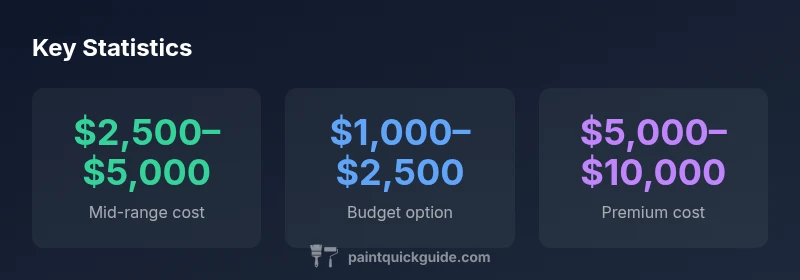
Typical professional car paint job costs range from $1,000–$2,500 for basic spray work to $2,500–$5,000 for mid-range finishes, and $5,000–$10,000 for showroom-quality results. Final pricing depends on prep, paint type (solid, metallic, pearl), color matching, and whether bodywork is required. Regional labor rates can shift costs by roughly 10–30%, and rust repair or panel replacement can add to the total.
Understanding the cost structure of a car paint job
When homeowners ask about the price tag for repainting a car, the answer is rarely a single number. The total paint job cost for a car is a composite of several components: surface preparation, paint materials, labor, color and finish matching, and any required bodywork or rust repair. PaintQuickGuide’s analysis of typical shop pricing in 2026 shows that the biggest price levers are prep quality and the paint system chosen. In practice, you’ll see a wide range—from budget sprays that emphasize speed over perfection to showroom-quality finishes with meticulous prep, color matching, and multi-coat protection. Keep in mind that local labor markets influence the bottom line, so two shops in different regions can produce noticeably different quotes for similar work.
Before you shop, define your goals: do you want a basic refresh, a color change with minimal bodywork, or a flawless finish with industry-grade urethane clear coats? Your objective directly translates into the cost range you should expect. The PaintQuickGuide team recommends starting with a clear finish goal and then aligning prep and panel work to fit your budget.
Key cost drivers
There are five major cost drivers that determine the final price:
- Surface preparation: rust repair, dent pulling, and sanding kan dramatically raise labor time and cost. More extensive prep means higher man-hours and material use.
- Paint system: solid colors are cheaper than metallic, pearlescent, or multi-coat ceramic finishes. Each additional pigment layer adds cost and curing time.
- Color matching and blending: complex colors, OEM color codes, or repainting entire panels require more precise tinting and tests.
- Labor rates: regional wage differences and shop overhead push prices up or down. Scheduling and backlog can also affect turnaround and total cost.
- Masking, curing, and protection: meticulous masking and multiple coats, plus long curing times, add to both labor and material costs.
Cost breakdown by quality level
Budget spray jobs (roughly $1,000–$2,500) focus on speed and basic color refresh. Expect limited prep, minimal bodywork, and a single-stage paint where possible. Mid-range finishes ($2,500–$5,000) typically include full prep, base color, multiple clear coats, and more extensive color matching. Premium showroom finishes ($5,000–$10,000) demand top-tier prep, full body repair as needed, multiple color passes, flawless color matching, and protective clears with excellent gloss retention. For luxury cars or unusual colors, pricing can exceed $10,000 due to extensive color matching and specialty paints.
How car size and bodywork influence price
Vehicle size and panel count directly affect the amount of paint and labor required. SUVs and trucks have more surface area than sedans, leading to higher costs. If the car has dents, rust, or prior repair work, expect additional time and parts costs. For a full respray, you’ll pay for more coverage, more masking, and longer drying times between coats. Conversely, a repaired panel or a partial repaint can save money when color matching isn’t compromised, and color changes can add to the complexity and price.
Regional variations and scheduling considerations
Prices vary by region due to labor costs, material availability, and shop competition. In high-cost urban areas, you may see premiums on everything from prep to final clear coats. In lower-cost regions, the same work can be substantially cheaper, but lead times could be longer if shops are busy. Scheduling timing matters too: some shops offer faster turnaround for a basic job, while others optimize for color accuracy and finish quality, even if that takes a few extra days. If you’re timing a sale or a showroom-ready deadline, plan ahead and request a detailed calendar along with your estimate.
DIY vs professional: when it makes sense
DIY painting is tempting for cost control, but it requires significant equipment, space, and skill to achieve durable results. A professional shop brings controlled airflow, dust-free booths, and experienced prep work and color matching that are hard to replicate at home. If your goal is a long-lasting, high-quality finish with color accuracy and warranty support, professional painting remains the safer investment. If you have skills, space, and a well-ventilated area, a DIY project could save money but may increase risk of micro-scratches, runs, and inconsistent gloss.
How to estimate your car paint job cost
- Define scope: decide whether you want a partial touch-up, a full hatchback respray, or a complete exterior makeover.2) Gather quotes from at least three reputable shops and request itemized estimates.3) Compare prep, paint system, color matching, and finish warranties, not just total price.4) Consider bodywork costs separately: rust repair and alignment can dramatically increase the price.5) Check curing times and environmental protections offered (dust-free booths, temperature-controlled curing, and UV protection).6) Plan for contingencies: budget a 10–20% cushion for unexpected repairs or color challenges.
Money-saving tips without sacrificing quality
- Ask for pooled quotes from shops that use the same paint system for apples-to-apples comparisons.
- Opt for a solid color over metallic or pearlescent if color matching is critical and you’re price-sensitive.
- Bundle bodywork with paint services if rust or dents exist to reduce repeated labor and masking tasks.
- Verify warranty coverage: longer warranties often reflect higher-quality prep and materials.
- Request a detailed, itemized estimate and a written color-matching plan before consenting to work.
Authority sources and how we build our estimates
Our pricing guidance combines industry patterns with PaintQuickGuide Analysis, 2026, a synthesis of multiple shop quotes and regional data. We emphasize transparent quotes and consistent terminology, so buyers can compare apples to apples. See the sources list below for more context on how costs break down and what to look for when hiring a shop.
Typical cost ranges by service level
| Service Level | Typical Cost Range | What’s Included |
|---|---|---|
| Budget spray | $1,000–$2,500 | Basic prep, single-stage paint, limited bodywork |
| Mid-range | $2,500–$5,000 | Full prep, base coat + color, clear coat, light body/repair |
| Premium showroom | $5,000–$10,000 | Extensive body repair, multiple coats, color matching, high-gloss clear, protection |
Your Questions Answered
What factors influence the cost of a car paint job?
Key factors include surface prep (rust repair, dent removal), the chosen paint system (solid, metallic, pearlescent), color matching, the number of coats, masking precision, and local labor rates.
Prep quality, paint system, and color matching are the main price drivers.
Is DIY car painting cheaper than hiring a shop?
DIY can reduce labor costs but requires tools, space, and skill. Poor workmanship can lead to more repairs and higher long-term costs.
DIY saves money upfront but risks finish quality and durability.
How long does a typical car paint job take?
Most shops complete a standard job in about 3 to 7 days, depending on prep needs, drying time, and curing conditions.
Expect a few days for a full repaint.
Should I repaint only affected panels or the whole car?
If color matching is uniform across panels, panel-by-panel work can save money. A full respray ensures uniform color and finish, especially for faded or heavily faded exteriors.
Partial repaint saves money; full respray ensures uniformity.
What should I look for in an itemized estimate?
Look for a breakdown by prep, paint, clear coat, masking, labor, and any bodywork. Check warranty terms and curing times.
Make sure every cost is spelled out.
Is metallic or pearlescent paint more expensive?
Yes. Metallic and pearlescent finishes require additional pigments and testing, often raising both material and labor costs.
Metallic paints cost more due to pigments and blends.
“Quality prep and precise color matching are the biggest drivers of long-term durability in a car paint job.”
Quick Summary
- Define your finish goal before requesting quotes.
- Expect prep and color matching to drive most of the cost.
- Get at least three itemized quotes for valid comparisons.
- Region and shop quality significantly influence final pricing.
- Budget for potential bodywork or rust repair if present.