How Much Does an Auto Paint Job Cost in 2026? A Practical Guide
Estimate auto paint costs across budget, mid-range, and showroom finishes. Learn cost drivers, typical timelines, and how to budget effectively with practical tips from PaintQuickGuide.


Auto paint job costs vary widely based on vehicle size, prep work, color changes, and finish quality. For a typical sedan, expect budget to mid-range finishes around $1,500-$7,000, while showroom-quality repaint can reach $8,000-$15,000 or more depending on color shift, repairs, and whether OEM parts are used. Labor efficiency and shop location also affect total price.
What drives auto paint cost in 2026
According to PaintQuickGuide, cost is driven by several core factors that often surprise first-time buyers. Vehicle size and body complexity are obvious: a compact car requires less material and labor than a full-size SUV. Prep work counts more than people realize—rust repair, dent filling, and smoothing old paint can add hours of labor. Color changes from a factory shade to a dramatic new color require more coats and precise color matching, which increases both materials and skilled labor. The finish quality you choose—single-stage, basecoat/clearcoat, or showroom-grade multi-coat systems—has a large impact on price, as do the type of paint (urethane vs. waterborne), metallics or pearlescents, and clear-coat protection. Finally, location, shop reputation, and whether OEM parts are used can tilt the total price by a noticeable margin. The PaintQuickGuide analysis acknowledges that most consumers should expect a broad price spectrum and plan accordingly for quality and longevity.
Price bands explained
Price bands for auto painting typically fall into three broad categories, each representing a different level of prep, materials, and finish. Budget repaint often uses simplified prep and a basic two-coat system, suitable for older vehicles or a quick cosmetic refresh. Mid-range projects incorporate more extensive bodywork, color change, and a multi-coat clear finish, aiming for a durable, balanced result. Showroom-quality jobs demand meticulous surface preparation, advanced color matching, multiple coats, clear coats with excellent clarity, and sometimes OEM-part compatibility. While regional labor markets influence pricing, the structural differences between bands help buyers set expectations. It is common for PaintQuickGuide analyses to frame these bands as a reference rather than a guaranteed quote, emphasizing the importance of a professional assessment and written estimate.
Hidden costs and cost-saving strategies
Cost visibility matters. Expect add-ons like rust repair, dent removal, masking around chrome or lights, panel replacement, rust-proofing, and warranty options to appear on the final bill. Small savings can be gained by sticking with a color that closely matches the factory shade, avoiding extensive bodywork, and choosing mid-range finishes over showroom-grade materials when durability is the primary goal. Mobile painting services may offer convenience but can carry premium pricing. If timing allows, scheduling during off-peak seasons can also reduce labor rates. Always request a detailed, itemized quote and compare across multiple shops.
How to get accurate quotes and what to ask
To obtain precise quotes, gather key information before visiting shops: vehicle year, make, model, current paint condition, desired color, finish level, and whether you want color matching or a new color. Ask for: a written itemized estimate with labor hours, parts (if any), and materials; a pre-paint inspection report; warranty terms; and a clear outline of required bodywork. Inquire about the number of coats, type of clear, curing time, and the potential need for plastic or trim removal. Finally, compare quotes from at least three reputable shops and verify their certifications and previous work.
Finishes and longevity: what you actually get for the price
Finish quality correlates with the long-term value of a paint job. A budget finish may look good initially but can show wear sooner if compounding and clear-coat protection are weak. Mid-range finishes typically offer better uniformity, color accuracy, and durability with a reasonable warranty. Showroom-grade finishes deliver the most durable gloss, depth, and color stability, often backed by comprehensive warranties and select OEM-part compatibility. Remember that surface prep and rust repair are critical investment areas; skipping them often leads to costly spot repairs later.
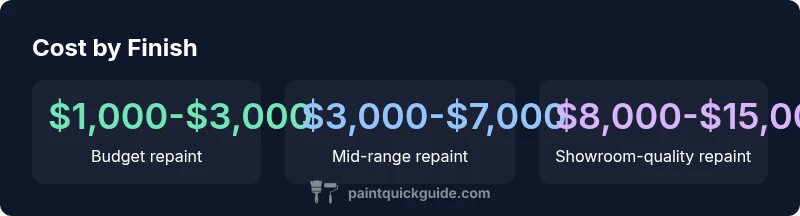
Typical price bands for auto paint jobs by finish level (PaintQuickGuide Analysis, 2026)
| Cost band | Typical range | What it includes |
|---|---|---|
| Budget repaint | $1,000-$3,000 | Basic prep, two coats, minimal bodywork |
| Mid-range repaint | $3,000-$7,000 | Extensive prep, color change, clear coat, some bodywork |
| Showroom-quality repaint | $8,000-$15,000 | Extensive prep, multiple coats, OEM parts, flawless finish |
Your Questions Answered
What is the typical cost for a basic auto paint job?
A basic two-coat repaint with minimal bodywork typically ranges from $1,500 to $3,000 for a standard sedan. Costs rise with vehicle size, color changes, and regional labor rates. Always ask for a detailed quote that breaks down prep, labor, and materials.
A basic repaint usually costs between one and three thousand dollars, depending on size and color.
Does color change or metallic paint affect price more?
Yes. A color change, especially to metallic or pearlescent shades, generally requires more coats and precise color matching, which drives up both material and labor costs. Metallics may demand stricter quality control and longer cure times.
Color changes, especially metallics, tend to cost more because they need extra coats and careful matching.
How does location affect auto paint pricing?
Prices vary by region due to labor market differences and shop overhead. Urban areas with high demand and skilled technicians often see higher quotes, while rural shops may be more affordable but with longer wait times or fewer warranty options.
Prices depend on where you are—city shops usually cost more than rural ones.
What should I look for in a paint job quote?
Look for a detailed breakdown of prep work, bodywork, number of coats, types of paint, clear coat, curing time, warranty terms, and exclusions. Require a written estimate and ask about the shop's warranty policy and past clients or vehicle photos from prior jobs.
Ask for a detailed written quote with prep, labor, materials, and warranty terms.
How long does a typical auto paint job take?
Most standard jobs take about 5-14 days, depending on shop workload, weather, and whether your car needs extensive bodywork or color matching. If you select showroom-grade finishes, curing times may extend the overall timeline.
Most jobs take about a week or two, depending on complexity and curing needs.
“Cost is driven by prep quality and finish durability; cutting corners on bodywork or color matching often costs more later. Invest in solid surface prep and a durable finish to protect vehicle value.”
Quick Summary
- Understand finish level to estimate cost
- Expect extra costs for bodywork and color changes
- Always get written quotes and warranties
- Factor turnaround time into cost
- Quality prep reduces long-term repair costs