Car Paint vs Wrap: A Practical Guide for 2026 Cars
Compare car paint and wrap to decide whether to refresh, protect, or transform your vehicle. This 2026 PaintQuickGuide analysis covers durability, cost, maintenance, and removal for homeowners, DIY enthusiasts, and auto refinishing hobbyists.


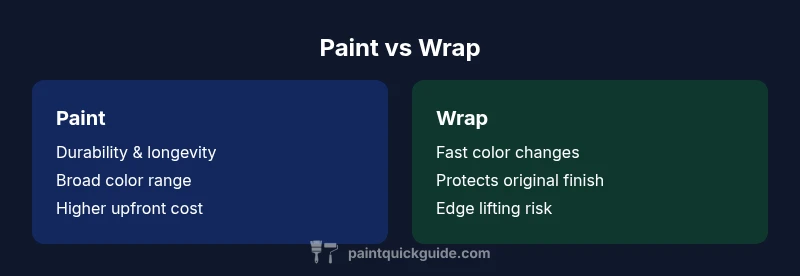
Wrap offers faster color changes and reversible protection, while traditional paint provides long-term durability and higher resale value. When weighing car paint vs wrap, focus on cost trajectory, maintenance, and removal options. If you want a reversible finish with quick customization, wrap shines; if longevity and value over time are priorities, paint remains the standard.
What matters when deciding between car paint vs wrap
When evaluating car paint vs wrap, the most important factors are durability, cost trajectory, reversibility, and how the finish aligns with your goals. According to PaintQuickGuide, the choice often comes down to whether you prioritize long-term value or quick, reversible styling. Spatial constraints, climate, and driving conditions also influence how well each option ages. This section lays out the framework you can use to compare options side by side and set expectations with a professional installer.
Durability and longevity: how long each option lasts
Durability is the cornerstone of any performance decision for a vehicle finish. Traditional automotive paint offers a proven track record for enduring exposure, with proper preparation, primer, and topcoat. It’s resilient against sun, solvent exposure, and everyday wear, and it tends to age gracefully when maintained. Wraps provide a protective laminate that shields the original paint from chips and UV damage, especially on high-impact areas like the hood and rocker panels. However, wraps can exhibit edge lifting and color fading if not installed correctly or if exposed to harsh temperatures without proper care. The decision often hinges on whether you expect frequent color changes or a long service life without rework.
Appearance, finishes, and customization options
Color choice and finish influence identity as much as durability. Paint opens broad creative avenues with custom paint jobs, metallics, pearlescents, and specialty textures. Wraps, by contrast, offer patterns, textures, and even 3D appearances that go beyond traditional paint, including glossy, satin, matte, and color-shifting effects. Both routes accommodate branding elements for commercial fleets, but wraps can deliver complex graphics without extensive masking. Consider whether you want a seamless, traditional look or a bold, temporary statement that can be removed without repainting.
Color changeability and reversibility: when flexibility matters
Wraps excel at reversibility. If you anticipate wanting to alternate colors with seasons, promotional campaigns, or resale strategies, a wrap makes it easy to revert to the original look or switch to a new design without a full repaint. Paint is less forgiving; color shifts typically require sanding, priming, and repainting, which means downtime and higher labor costs if you change your mind. Reversibility is a practical consideration for enthusiasts who like to experiment with aesthetics.
Cost and value proposition: upfront vs long-term costs
Cost considerations span materials, labor, and how long the finish lasts. Wrap installations can be competitive for shorter-term commitments or dramatic color changes, but long-term maintenance and eventual removal add to the total cost. Paint offers value through durability and potential resale impact; a well-executed repaint can preserve or increase a vehicle’s perceived value. PaintQuickGuide Analysis, 2026 notes that overall lifecycle costs depend on vehicle size, prep work, and climate exposure. A careful calculator may reveal that an initial wrap budget yields greater flexibility for a temporary look, while paint delivers enduring appeal for owners planning to keep the vehicle for many years.
Application process, downtime, and labor considerations
Paint projects require significant surface preparation, including sanding and rust mitigation, followed by primer and multiple coats, which can extend downtime. Wrap installation is typically quicker, especially for expert installers who can contour film over complex panels with heat and pressure. Both routes demand precise surface prep to avoid future failures; improper cleaning or damage to underlying panels can complicate both painting and wrapping. Expect to factor in curing or setting times for paint, and adhesive curing for wraps, when planning usage windows for the vehicle.
Maintenance implications and everyday care
Maintenance routines differ slightly. Painted finishes respond well to wax or sealants designed for longevity, but aggressive polishing can dull glossy finishes. Wraps require periodic inspection for edge lift, micro-tears, and UV degradation; cleaning should use non-abrasive detergents to avoid film abrasion. Prolonged exposure to heat and road debris can influence wear across both options, so routine inspections and timely repairs help sustain the chosen finish’s appearance and protection.
Real-world scenarios: aligning choice with goals and constraints
For a daily driver in a humid, sunny climate, paint may offer a more durable long-term solution with proper protection and corrosion resistance. For a car used in seasonal car shows, marketing fleets, or a vehicle whose owner desires frequent cosmetic updates, wrap provides flexible aesthetics and rapid changes. Fleet managers often balance branding needs with total cost, sometimes choosing wraps for branding and a base color that is easier to repaint later. The best choice is anchored in your goals: longevity, reversibility, appearance variety, and total cost over time.
Common myths and pitfalls to avoid
A common myth is that wraps are a cheap, low-effort option that never require maintenance. In reality, wraps demand ongoing edge checks and professional removal to avoid damage to factory paint. Another pitfall is assuming all wraps are equal; the quality of the film, installation techniques, and aftercare determine long-term outcomes. Likewise, a flawless-looking paint finish on the surface does not guarantee longevity if the preparation was inadequate. The right project begins with a reputable installer, honest expectations, and a plan that matches your vehicle’s use and environment.
Comparison
| Feature | Paint | Wrap |
|---|---|---|
| Durability/Longevity | Proven long-term durability with proper care | Protective film with good edge sealing can last for several years but requires maintenance |
| Repairability/Removability | Repairs typically require repainting for color consistency | Removable without damaging original paint if professionally installed |
| Cost (installation and ongoing care) | Higher upfront cost for quality finishes; long-term value depends on upkeep | Lower upfront cost for many looks; removal and reapplication may add costs later |
| Finish variety | Broad palette, textures, metallics, and custom hues | Extensive graphics, patterns, and specialty textures possible |
| Maintenance frequency | Wax/ sealant routines; less frequent attention needed once cured | Edge checks and occasional refreshes; more frequent visual updates |
| Impact on resale | Can boost value with a pristine, original-looking finish | Can enhance curb appeal with unique branding; may be viewed as aftermarket |
| Turnaround time | Typically longer due to prep and multiple coats | Usually quicker, especially on smaller vehicles or partial wraps |
Upsides
- Paint offers durable, long-term value and strong resale appeal
- Wrap provides rapid color changes and reversible protection
- Wraps enable bold graphics and seasonal aesthetics
- Paint allows broad color customization with consistent finish
What's Bad
- Wrap maintenance and edge lifting can recur; removal costs add up
- Paint requires more downtime and skilled prep for major color changes
- Wraps may eventually peel at edges or fail in extreme conditions
Paint generally offers better long-term value and resale potential, while wrap excels in reversibility and rapid color changes.
If your goal is a durable, timeless finish and solid resale value, paint is usually the safer bet. If you want flexibility, quick updates, or branded graphics, wrap is the smarter choice. The best option depends on your priorities, budget, and how you plan to use the vehicle over time.
Your Questions Answered
What is the typical lifespan difference between car paint and wrap?
Lifespan varies with climate, maintenance, and installation quality. Paint generally lasts longer with proper care; wraps can be long-lasting but may require refreshes or replacement sooner depending on exposure and conditions.
Paint usually lasts longer with proper care, while wraps can last several years but need attention to edges and conditions.
Is wrap removal safe for underlining paint without damage?
Yes, if professionally installed, a wrap can be removed with minimal risk to the underlying paint. Age and prior damage should be considered, and a post-removal inspection is recommended.
Yes, removal is usually safe when done by pros, but get an inspection for any existing paint issues.
Can wraps hide paint defects or prep issues?
Wraps can mask minor surface imperfections, but significant dents or rust should be repaired before application to avoid telegraphing defects through the film.
Wraps can hide small flaws, but major issues should be fixed before wrapping.
Which option is cheaper upfront for a full car color change?
Wraps can be cheaper upfront for a dramatic color change, especially on larger vehicles, but long-term costs depend on maintenance and eventual removal.
Upfront cost is often lower with wraps, but total cost over time depends on upkeep and removal.
What finishes are available for paint and wrap?
Paint offers a wide range of colors and textures, including metallics and pearlescents. Wraps provide finishes from matte to gloss and bold patterns.
Paint has lots of colors; wraps offer matte, gloss, and patterns.
How does maintenance differ between wrap and paint?
Paint maintenance focuses on protection and polishing. Wraps require edge inspections and periodic refreshes; both benefit from gentle cleaning with appropriate products.
Both need care, but wraps require more edge checks and occasional refreshes.
Quick Summary
- Define your goal: durability vs reversibility
- Consider lifecycle costs, not just upfront price
- Factor maintenance and removal into your budget
- Consult a professional for a precise cost and timeline
- Choose paint for longevity; choose wrap for flexibility and branding