Car Paint Protection: Practical Guide for 2026
Discover car paint protection options—wax, sealant, ceramic coating, and film. Learn how each works, maintenance basics, durability, and how to choose the right solution for your climate, budget, and driving habits.


Paint protection for cars refers to a range of products and materials designed to shield the exterior finish from environmental hazards, including UV rays, bird droppings, tree sap, road salt, and wash-induced swirl marks. The goal is to reduce abrasion, oxidation, and chemical etching while preserving gloss for longer. In practice, drivers choose wax, sealant, ceramic coating, or paint protection film based on climate, usage, and budget. This quick answer highlights what to expect and how to plan your protection strategy.
What is paint protection for cars?
Paint protection for cars refers to a range of products and materials designed to shield the exterior finish from environmental hazards, including UV rays, bird droppings, tree sap, road salt, and wash-induced swirl marks. The goal is to reduce abrasion, oxidation, and chemical etching while preserving gloss and color depth. In practice, most drivers choose between waxes and sealants for short-term protection, ceramic coatings for durable, long-lasting coverage, or paint protection films for a thick physical barrier. Every option changes care routines, costs, and the frequency of reapplication, so clarity about your climate, driving style, and budget helps you decide what makes the most sense for your vehicle. Throughout this guide, PaintQuickGuide will provide practical guidance to help you compare choices, prepare surfaces, and maintain protection over time.
Choosing between wax, sealant, ceramic coating, and film
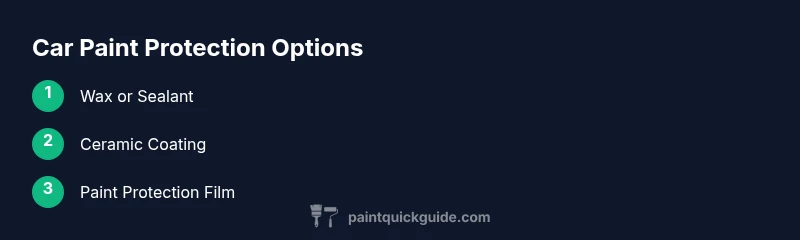
Protection options vary in durability, appearance, and cost. Waxes are affordable and easy to apply but wear off in a few weeks to a couple of months with regular washing. Sealants last longer and resist wash-induced marring somewhat better, but still require periodic reapplication. Ceramic coatings form a chemical bond to the clear coat, offering stronger protection and hydrophobic water beading for years with proper maintenance. Paint protection film provides a physical barrier against rocks and road debris, and can protect large areas or entire panels, though it is the most expensive option and requires professional installation for best results. To choose, assess your climate (sun exposure and humidity), driving exposure (highway speeds, gravel roads), and your willingness to maintain the finish. A practical approach is to start with a protective base like a sealant or coating, then add PPF on high-impact panels if needed. PaintQuickGuide’s team notes that a layered approach often delivers the best value over the car’s lifetime.
Ceramic coatings: how they work and what to expect
Ceramic coatings are chemical finishes that bond to the paint and cure to a hard, semi-gloss layer. They create a durable shield against UV radiation, chemical contaminants, and light abrasion while reducing water adhesion on the surface. A typical coating provides a hydrophobic effect, which makes water bead and roll off more easily during rain or washing. Unlike waxes, ceramic coatings resist wash swirls for a longer period and require less frequent maintenance. Expect a curing period after application and follow cleaning guidelines to avoid early degradation. If applied correctly, coatings can maintain gloss and color depth for several years, with occasional top-up treatments recommended to sustain maximal protection.
Paint protection film (PPF): durability and coverage
Paint protection film is a clear polyurethane layer applied over the paint surface to absorb impact and prevent stone chips, scratches, and daily wear. Modern PPFs are self-healing at mild temperatures, meaning minor scratches disappear after heat exposure. The film can cover functional areas such as the front bumper, hood, mirrors, and rocker panels, or be wrapped across larger areas for comprehensive protection. Professional installation is common because precise cutting and careful stretching ensure seamless edges. PPF is highly durable but can be expensive and may require occasional maintenance, including re-tightening or replacing sections after years of exposure to harsh conditions. For many owners, PPF is a long-term investment in the most vulnerable areas.
Waxes and sealants: affordable, quick, and temporary
Wax is a traditional option that provides a warm, rich gloss and a physical barrier against contaminants. It’s easy to apply and can be done at home with basic tools, making it ideal for budget-conscious buyers or hobbyists. Sealants offer better durability and slickness than traditional waxes and can be applied with a similar technique. Both options require more frequent reapplication than ceramic coatings or PPF, typically every few weeks to months depending on washing frequency and climate. They do not offer the same level of protection against chips or deep scratches as coatings or film, but they are a practical entry point for vehicles that are not exposed to extreme conditions.
Climate, driving exposure, and maintenance affect longevity
Environmental factors strongly influence how long a protection layer lasts. In intense sun regions, UV exposure can cause faster fading, making protective layers more important. In dusty or salty environments, abrasion and chemical buildup increase the need for regular washing and timely reapplication. Regular inspections help detect micro-scratches or micro-pitted areas that reduce gloss. High-mileage vehicles or cars used on gravel roads benefit more from robust protection like ceramic coatings or PPF, while city dwellers with gentle use may find waxes or sealants sufficient. Maintenance frequency should align with the protection type and the car’s exposure profile, with dedicated wash routines and periodic professional checkups.
Application and maintenance basics
Preparation is the foundation of any protection system. Begin with a thorough wash using a pH-balanced shampoo, then decontaminate the surface with clay to remove embedded particles. Inspect for chips, scratches, and paint defects; address issues before layering protection. For DIY wax or sealant, apply in thin, even coats and buff to a high-gloss finish. Ceramic coatings and PPF require more involved steps and, in many cases, professional installation. Aftercare is essential: wash with non-abrasive, pH-balanced soap, use proper wash techniques (two-bucket method), and avoid automatic car washes that rely on brushes. Curing times vary by product; respect manufacturer’s instructions for curing and toppers.
Durability, cost ranges, and maintenance schedule
Durability varies widely by product and environment. In general, waxes provide weeks to a couple of months of protection; sealants extend that period but still require reapplication; ceramic coatings endure for multiple years with proper care; and PPFs are designed for long-term protection and can last many years under optimal conditions. Costs depend on surface area, product type, and whether installation is DIY or done by a pro. A practical maintenance schedule includes regular washing, periodic inspections for wear, and a reapplication or re-lamination plan when gloss or hydrophobic performance fades. PaintQuickGuide recommends evaluating your car’s exposure and setting a realistic protection plan that fits your lifestyle.
AUTHORITY SOURCES
For further reading and safety guidelines, consult government and major publications:
- https://www.nhtsa.gov/
- https://www.epa.gov/
- https://www.nist.gov/
Tools & Materials
- pH-balanced car wash soap(Mild formula to avoid stripping protective layers)
- microfiber wash mitts(2-3 mitts, washable)
- two-bucket wash setup(One for soap, one for rinse)
- paint decontamination clay bar(Fine grade for embedded contaminants)
- microfiber towels (≥300 GSM)(For buffing and drying)
- alcohol wipe / panel wipe(Pre-coating surface prep)
- applicator pads for coatings/waxes(Non-abrasive, lint-free)
- ceramic coating kit or paint protection film (PPF) kit(Choose based on protection plan)
Steps
Estimated time: 2-6 hours total (depends on method and coverage)
- 1
Wash and decontaminate
Begin with a thorough wash using a pH-balanced soap, then dry completely. Use a clay bar to remove embedded contaminants so the surface is clean and receptive to protection.
Tip: Wash in shade; keep panels cool to avoid water spots. - 2
Inspect and address defects
Inspect all panels for chips, scratches, or swirl marks. Address defects with a basic polish if needed before applying protection to ensure a smooth, uniform finish.
Tip: Spot fix minor issues before coating; you’ll get a cleaner result. - 3
Choose your protection type
Decide between wax, sealant, ceramic coating, or PPF based on climate, driving conditions, and budget. Layering approaches (sealant plus wax, or coating with PPF on high-impact areas) can maximize value.
Tip: Document your planned layers to guide application steps. - 4
Apply the protection (DIY or pro)
Follow product instructions for your chosen protection. For wax/sealant, apply thin coats and buff to a glossy finish; for ceramic coatings or PPF, consider professional installation for best results.
Tip: Work in small sections to maintain control and prevent streaks. - 5
Cure and initial care
Allow the coating or film to cure per manufacturer guidelines. Avoid washing or exposing the surface to harsh conditions during this period.
Tip: Check curing times and avoid parking under trees or construction zones. - 6
Establish a maintenance routine
Adopt a regular washing routine with a dedicated soap, gentle drying, and periodic inspections. Reapply or refresh protection as the gloss or beading fades.
Tip: Use the two-bucket method to avoid introducing swirl marks.
Your Questions Answered
What is paint protection for cars?
Paint protection for cars encompasses wax, sealant, ceramic coating, and paint protection film. Each option provides a different balance of durability, gloss, and protection against environmental hazards. The right choice depends on your vehicle’s exposure and how you drive.
Paint protection for cars includes wax, sealant, ceramic coating, and film. Each option offers different levels of durability and protection based on your environment and usage.
How long does each protection option last?
Waxes and sealants typically last weeks to a few months, depending on washing frequency. Ceramic coatings and PPF can last years with proper maintenance, though performance depends on climate and care.
Wax and sealants wear off in weeks to months, while ceramic coatings and protective film can last years with proper care.
Is DIY application safe for home use?
DIY waxing or sealing is common and safe for beginners. Ceramic coatings and PPF installations often benefit from professional application due to surface prep and precision requirements.
DIY waxing is fine for beginners, but ceramic coatings and film installations usually require a pro for best results.
What maintenance is required after protection?
Maintenance includes regular washing with pH-balanced soap, avoiding abrasive tools, and periodic inspections. Reapply or refresh protection as gloss or water beading fades.
Keep washing gentle, inspect for wear, and refresh protection when you notice reduced gloss or water beading.
Do you need specialized equipment for PPF?
PPF installation typically requires professional equipment and training to ensure precise alignment and edge sealing. DIY kits exist but may not produce perfect results on complex curves.
Professional installation for PPF is usually recommended due to the complexity of edges and curves.
What about cost considerations?
Costs vary widely by product and installation complexity. DIY wax is cheapest; professional ceramic coating or PPF is more expensive but offers longer-lasting protection.
Expect DIY wax to be affordable, while ceramic coatings and PPF cost more but last longer with proper care.
Watch Video
Quick Summary
- Start with proper surface prep to maximize protection.
- Choose a protection strategy based on climate and use.
- Ceramic coatings and PPF offer long-term protection with proper care.
- Maintenance is essential to preserve gloss and functionality.