Why Is Paint Not Sticking to Primer? A Practical Troubleshooting Guide
Struggling with paint not sticking to primer? This urgent troubleshooting guide helps homeowners diagnose adhesion issues, prep surfaces, choose compatible primers and paints, and finish with durable results.


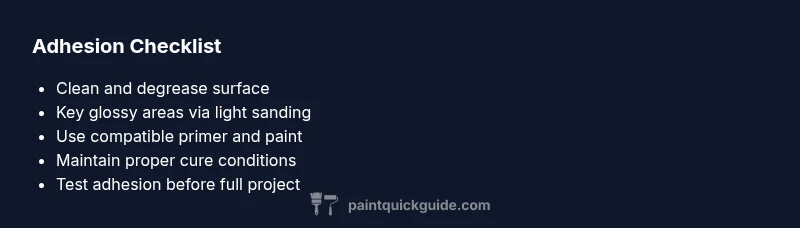
The most likely cause is inadequate surface prep or using incompatible primer and paint. Start by ensuring the surface is clean, dry, and free of wax or oils, then re-apply a compatible primer and allow it to cure fully before painting. If issues persist, check humidity, temperature, and label compatibility to avoid repeat failures.
Common adhesion culprits you can fix today
According to PaintQuickGuide, adhesion problems most often trace back to surface prep and product compatibility. Before you blame the paint, inspect the prep steps you took and the products you selected. Surfaces that are waxy, oily, or dusty create a barrier that prevents primer from bonding. Glossy plastics and non-porous metals can also repel primer if they haven’t been properly prepared. Temperature and humidity matter too: primers and paints require specific ambient conditions to cure and achieve a strong bond. If you notice peeling, lifting, or chalky residue after a test patch, start with a conservative cleaning, deglossing, and a fresh, compatible primer that is designed for the substrate. PaintQuickGuide’s guidance emphasizes the critical link between surface prep and adhesion, and it’s often the easiest fix you can action immediately.
Quick diagnostic tests to perform before you repaint
Begin with simple checks you can trust. A basic tape test can reveal surface gloss and porosity; if the tape easily lifts a film, the surface may be too slick or contaminated. Wipe a small area with a degreasing cleaner and rinse; if residue remains, repeat until a clean, dry patch is achieved. Lightly sand a test area with fine-grit paper (220–320 grit) to create a micro-roughness that the primer can grip. Finally, choose a small amount of primer and apply a thin coat to the test patch to confirm initial bonding before committing to the full surface. These tests help you distinguish between surface issues and product problems.
Surface prep steps that restore adhesion
Begin with a thorough cleaning to remove oils and waxes using a non-residue cleaner. Rinse well and dry completely. If the surface is glossy, perform a light scuff sanding to create a key for the primer. Deglossing solutions can also break the slick surface without heavy abrasion. Inspect for any remaining contaminants and re-clean as needed. Ensure the area is free of dust before priming. Proper prep lowers the risk of later peeling and saves time during the paint stage.
Sanding and keying the surface: how to prep for the primer
Keying the surface with the appropriate grit sandpaper depends on the substrate. Wood commonly uses 120–180 grit to remove gloss and create micro-abrasions; metal may require 400–600 grit on shiny parts. Always wipe away dust with a tack cloth before applying primer. For previously painted surfaces, remove peeling areas first, then sand the whole area to even out the texture. A smooth, uniform base ensures the primer seals well and forms a good bond with the topcoat.
Re-priming: choosing the right primer and applying it correctly
Select a primer compatible with the topcoat and substrate—water-based primers for latex paints, oil-based primers for oil-based finishes, and bonding primers for slick surfaces. Apply in a dust-free environment at the recommended temperature and humidity. Use thin, even coats rather than heavy layers to avoid runs and poor curing. Allow sufficient cure time between coats and before sanding lightly for adhesion. Always follow the product’s back label for dry and recoat times to prevent adhesion failures.
Painting with compatible products: avoiding mismatch
Make sure the paint and primer are designed to work together on the same substrate. A common error is pairing a high-build primer with a low-flow topcoat that won’t lay down evenly. Check the temperature range and humidity on the label; extreme conditions can compromise curing and bond strength. If you’re painting over a previously coated surface, ensure the old coating is stable and properly abraded for the new layer to adhere. When in doubt, test on a small area and wait for full cure before proceeding.
Environmental and substrate factors that sabotage bonding
Humidity above recommended levels can slow drying and lead to poor bonding. Extremely low temperatures retard curing and make the film brittle. For porous substrates like bare wood or drywall, ensure the primer is adequately absorbed before applying the topcoat. Some plastics and metals require specialized primers to impact adhesion. Always prime in a well-ventilated space and avoid applying coats in direct sunlight or windy, dusty environments, which can cause premature drying and weak bonds.
Tools, products, and safety: choosing materials
Use clean brushes or rollers appropriate for the primer and paint type. Avoid mixing products from different brands unless the manufacturer explicitly supports it. Notice the included cleaners, degreasers, and thinners to keep applicators functioning properly. Wear PPE as needed and work in a ventilated area to reduce exposure to fumes. Store leftover products in a cool, dry place and never return used rags to the can, as these can self-ignite.
Steps
Estimated time: 4-6 hours
- 1
Assess and prep the workspace
Clear the area, remove dust and contaminants, and set temperature and humidity to the recommended range. Prepare all materials to minimize delays during the fix.
Tip: Use a fan to provide light airflow for curing but avoid strong drafts on the wet film. - 2
Clean thoroughly
Wash the surface with a degreasing cleaner, rinse, and dry completely. Repeat if you feel any slickness remains on the surface.
Tip: Tack cloths remove fine dust just before priming. - 3
Lightly sand to key the surface
Sand glossy areas with fine grit (220–320), then wipe away dust. A uniformKey improves primer adhesion.
Tip: Avoid oversanding fragile substrates; you only need micro-roughness. - 4
Choose and apply the right primer
Select a primer compatible with the topcoat and substrate. Apply thin, even coats and allow to cure as directed.
Tip: Do not apply multiple heavy coats; better to coat lightly and recoat if necessary. - 5
Test the bond before the full project
Apply a small amount of topcoat to a test patch after primer cures. If it adheres well, proceed; if not, revisit steps 2–4.
Tip: Never skip cure time between primer and topcoat. - 6
Apply the topcoat with proper technique
Use smooth, even strokes and avoid overworking the paint. Maintain consistency with the roller or brush to prevent film defects.
Tip: Keep coats thin; heavy layers increase risk of peeling. - 7
Cure, then test adhesion again
Allow full cure in a suitable environment before final testing. A simple tape test on a finished patch can confirm durability.
Tip: For high-traffic areas, seal with a compatible topcoat for added durability. - 8
Document and prevent future failures
Note substrate, primers, and paints used, along with environmental conditions. Apply this knowledge to future projects to prevent recurrence.
Tip: Label canisters and keep records for reference.
Diagnosis: Paint won’t adhere to primer after application
Possible Causes
- highSurface contamination (oil, wax, silicone)
- mediumIncompatible primer/paint combination
- mediumPrimer not fully cured due to improper conditions
- highSurface too glossy or non-porous without proper keying
- lowSurface remained damp or cold during application
Fixes
- easyThoroughly clean and degloss the surface; rinse and dry completely
- easySwitch to a compatible primer and allow full cure per label
- easyRoughen glossy areas with light sanding and retouch with primer
- easyAdjust indoor conditions to meet primer/pain specs (temp/humidity); re-prime
- hardIf needed, strip problematic coatings and re-prime from scratch
Your Questions Answered
Why isn't paint sticking to primer after application?
Adhesion failures usually come from poor surface prep or incompatible products. Clean and degloss, prime with a compatible system, and ensure proper curing conditions before painting. If peeling continues, re-evaluate substrate and environmental factors.
Adhesion failures often happen due to poor prep or product mismatch. Clean, degrease, prime properly, and wait for full cure before painting.
Can primer cause paint to peel later?
Yes. If the primer wasn’t compatible with the topcoat or didn’t cure fully, the paint can lift. Use the correct primer for the substrate and topcoat, and ensure proper cure times and conditions.
Primer choice and cure matter. Use the right combo and ensure it cures fully to avoid peeling.
Should I sand the primed surface before painting?
Lightly sand primed surfaces to create a micro-roughness and improve adhesion, then wipe away dust. This helps the paint grip the primer better.
Light sanding after priming helps paint grip better. Wipe off the dust before painting.
How do environmental conditions affect adhesion?
High humidity, low temperatures, or rapid drying can prevent proper curing and bonding. Aim for the manufacturer's recommended range and avoid painting in extreme conditions.
Humidity and temperature matter. Stick to the product’s recommended range for best results.
Is a bonding primer always required?
Bonding primers are helpful on slick or non-porous surfaces. If you’re working with wood or porous substrates, standard primers may suffice but ensure compatibility with the topcoat.
Bonding primers help on slick surfaces; otherwise, choose a compatible standard primer.
When should I call a professional?
If repeated adhesion failures occur despite following prep and product guidelines, a professional can assess substrate-specific issues and potential coatings compatibility.
If failures persist after following steps, consider hiring a pro to evaluate substrate and coatings.
Watch Video
Quick Summary
- Ensure clean, dry, deglossed surfaces before priming
- Choose primer-paint combinations that are designed to work together
- Control environmental conditions to match product specs
- Test adhesion on a small area before full project