Why Is Paint Not Sticking to Wood? A Troubleshooting Guide
A comprehensive troubleshooting guide to wood paint adhesion failures. Learn the causes, how to prep surfaces, choose primers, and apply finishes that actually stick for durable interior and exterior wood projects.


Paint won’t stick to wood mainly because the surface is dirty, oily, glossy, or damp, or because it hasn’t been primed. Quick fix: clean and degrease, sand glossy areas, dry completely, then prime with a wood-friendly primer. Reassess moisture, temperature, and humidity before painting. If old paint is peeling, remove it fully and re-sand before priming.
Why wood surfaces fail to hold paint
Wood is a living material that moves with moisture and temperature. When you expect a coat to bond, the surface must be clean, dry, and properly prepared. The most common failures happen when there are oils from hands, wax from finishes, dirt, or a glossy film left on the surface. Even minimal moisture in the wood or ambient humidity can compromise adhesion. According to PaintQuickGuide, the top two culprits are surface contaminants and improper prior finishes. Understanding these basics helps homeowners diagnose issues faster and avoid repeating the same mistakes.
Surface prep essentials for wood
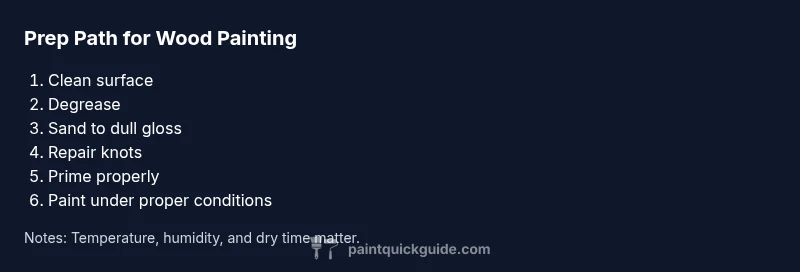
Preparation is the majority of the job. Start with a thorough clean using mild soap and water, then a degreaser for oily residues. Rinse and let dry completely. If the surface is glossy, sand with medium grit until the gloss dulls and micro-scratches are visible. Remove sanding dust with a tack cloth. Check for moisture by feeling wood fibers; any dampness means your project should wait. Make necessary repairs with wood filler and let it cure before sanding smooth.
Primers and paints that work best on wood
Primers are your best defense against poor adhesion. For knotty or resinous woods, use a stain-blocking or shellac-based primer to seal tannins and prevent bleed-through. On smooth, clean wood, a good oil- or latex-based primer will create a solid base. Choose a primer designed for interior or exterior use based on where the project is located. Apply a thin, even coat and let it dry completely before applying topcoat.
Environmental factors and wood types
Temperature and humidity influence drying times and film formation. Painting in conditions outside the manufacturer’s recommended range can lead to tackiness or long dry times, which invites dust and poor adhesion. Exterior woods often need a more robust primer and finishing system due to UV exposure and moisture cycles. Softwoods and woods with high tannin content require knot-blocking primers or sealers to prevent staining and adhesion failure.
Common mistakes and how to avoid them
Common errors include skipping sanding, skipping deglossing, using the wrong primer, or applying paint too soon after cleaning. Even the wrong brush or roller can leave lint or fibers that trap dust and prevent film formation. Always follow drying times for primers and topcoats, and avoid painting in high humidity or during temperature swings.
Quick checks before painting
Before you begin painting, re-check that the surface is completely dry, free of oils, and properly dulled. Test a small area with your primer; if you see poor adhesion or halos, stop and re-sand or switch to a primer better suited for the wood. A well-prepped surface dramatically increases adhesion and the long-term durability of the finish. Remember to protect surrounding areas from splatters and ventilate the space.
Steps
Estimated time: 1-2 hours
- 1
Inspect the surface for contamination and gloss
Begin by visually inspecting the wood for dirt, oil, wax, and glossy finishes. If you feel slick or see residues, plan a full clean. Remove any peeling areas to expose fresh wood.
Tip: A clean surface prevents dust from sticking to the primer. - 2
Clean and degrease thoroughly
Wash the surface with a mild cleaner or degreaser. Rinse well and allow to dry completely. Wipe with a tack cloth to remove remaining dust.
Tip: Never rush this step; moisture here will ruin adhesion later. - 3
Dull gloss and repair defects
Sand glossy areas with 120–180 grit until the sheen is dull and micro-scratches are visible. Repair cracks or dents with wood filler and re-sand.
Tip: Wipe away sanding dust before priming. - 4
Degloss or prime
If the surface remains slick after sanding, use a deglosser or apply a stain-blocking primer. For most projects, a good wood primer is enough once the surface is dull and clean.
Tip: A deglosser can save time if you don’t want to sand heavily. - 5
Prime with the right product
Choose a primer designed for wood and your environment; interior primers for indoor projects, exterior primers for outdoor surfaces. Apply a thin, even coat and let it dry fully.
Tip: Check the can for recoat times and don’t rush the dry time. - 6
Topcoat and cure
Apply your selected paint over an adequately dried primer. Maintain proper temperature and humidity while the paint cures to achieve a durable film.
Tip: Avoid painting in direct sun or wind if it speeds too fast the film can crack.
Diagnosis: Paint not sticking to wood after cleaning and preliminary prep
Possible Causes
- highDirty or oily surface remaining after cleaning
- highGlossy or shiny finish not abraded
- highMoisture or high humidity in surface or environment
- highNo primer or wrong primer used on wood
- mediumOld coating not fully removed and re-sanded
- lowTannins or bleed-through from knots
Fixes
- easyRe-clean surface with degreaser, rinse, and dry completely
- easyLightly sand to dull gloss and remove dust
- easyApply a quality wood primer suited to interior/exterior use
- easyCheck ambient conditions and wait for proper temperature/humidity
- mediumIf old paint exists, remove fully and re-sand before priming
- easyUse knot-blocking or stain-blocking primer for tannins
Your Questions Answered
Why isn’t my paint sticking to bare wood?
Most adhesion failures come from surface contaminants, gloss, or moisture. Re-clean, degloss, and apply a proper wood primer before repainting.
Adhesion failures on bare wood usually stem from oils, dust, or gloss; re-clean, degloss, and prime properly.
Do I need to prime wood before painting?
Yes. Primers improve adhesion, seal knots, and block tannins. Choose a primer suited for your wood and environment, then apply according to the label.
Yes. Primer helps adhesion, seals knots, and blocks tannins; follow the label for best results.
Can knots bleed through primer?
Yes. For knotty woods, use a knot-blocking primer or shellac-based primer to prevent resin bleed-through before topcoating.
Knots can bleed through; use knot-blocking primer first.
What is the best primer for wood?
A high-quality wood primer designed for your environment—oil-based or shellac-based primers work well on knots; water-based primers also are common for smoother surfaces.
Oil-based or shellac primers work well on knots; water-based primers are good for smooth wood.
How long should I wait between coats?
Follow the product label. Latex-based paints usually dry in a few hours, while oil-based finishes may require longer, up to a full day between coats.
Let each coat dry as the label instructs; latex dries in hours, oils may take a day.
Why is painted wood peeling after a day?
Peeling often means moisture, poor prep, or incompatible products. Re-clean, re-sand, and ensure the primer and topcoat are compatible and properly applied.
Peeling usually means moisture or prep or primer issues; fix by re-prepping and using compatible products.
Watch Video
Quick Summary
- Prep wood thoroughly before painting.
- Use primer to seal and improve adhesion.
- Match primer and topcoat to wood type and environment.
- Monitor moisture, temperature, and humidity.
- Test adhesion on a small area before full application