Why is Paint Not Drying? Troubleshooting Guide
Diagnose and fix why is paint not drying with an urgent, step-by-step approach. Learn environmental checks, surface prep, coat thickness tips, and when to call a pro for reliable drying.


Paint not drying is a common issue homeowners and DIYers face. The most likely causes are environmental conditions, improper paint type for the surface, or applying coats that are too thick. Start with ventilation, warmth, and choosing the right product, then follow the diagnostic flow for deeper fixes. If problems persist, escalate to a tested plan and consider professional help.
Why is paint not drying: a quick reality check
If you’re asking why is paint not drying, you’re not alone. Delays can happen for several practical reasons, from humidity to coat thickness. In many cases, the answer is straightforward: improve air movement, raise the surface temperature slightly, and ensure you’re using the right type of paint for the material. This section lays out the fundamental checks you can perform before moving to deeper diagnostics. Remember, the goal is a tack-free finish, not just a dry surface on the top layer. By focusing on the core variables—surface prep, product compatibility, and environmental conditions—you can quickly narrow the culprit and prevent wasted coats. Paint not drying is often a symptom of multiple throttling factors acting together, so approach it methodically and document what you try.
Environmental factors that delay drying
Drying time is highly sensitive to ambient conditions. High humidity slows solvent evaporation and can lead to a soft, sticky film long after the posted drying time. If the air feels muggy or the room lacks good air exchange, dry times can stretch dramatically. Temperature also plays a critical role: most paints require a minimum temperature to cure properly; if the space is cooler than recommended, the film may never reach a tack-free state. Adequate airflow is essential—use a fan or a vent to move air across the painted surface to carry away solvents and water vapor. Finally, distance from heat sources should be managed carefully: direct heat can cause cracking or sticky patches at the surface if applied too soon.
Surface prep and contaminants
A clean, dry surface is the foundation of proper drying. Oils from hands, dust, mold, or residual waxes can form a barrier that traps moisture and slows cure time. Before painting, wipe surfaces with a suitable cleaner, rinse, and allow complete drying. If you’re repainting, consider lightly sanding glossy surfaces to give the new paint something to grab onto. Even tiny traces of silicone or soap residue can interfere with adhesion and prolong drying dramatically. Inconsistent prep often shows up as patches that take longer to dry, followed by tackiness in those areas.
Paint type, compatibility, and base
Not all paints are created equal for every surface. Water-based acrylics behave differently from solvent-based enamels, and two-part epoxies have their own cure schedules. Using a product not designed for the substrate—wood, metal, concrete—or mismatching primers can cause slow evaporation and incomplete drying. Check the label for recommended temperatures, recoat intervals, and whether the film should dry to touch before the next coat. When in doubt, a quick test on a small area can reveal whether the product is compatible with the surface.
Coat thickness and application technique
Thick coats trap solvents more than thin layers, so many slow-drying issues trace back to heavy application. Practice the thin-coat rule: apply a light, even layer and allow it to dry fully before adding another. Feather edges to avoid pooling, which can remain tacky for hours. If you must apply a second coat, ensure the first is completely dry—otherwise you’ll trap solvents between layers that delay cure. For large projects, plan multiple passes rather than one heavy coat and monitor drying times per coat.
Temperature, humidity, and ventilation: practical checks
Humidity and temperature are the silent drying saboteurs. Measure room humidity with a hygrometer and target a drying-friendly band specified by the product (often 40–60% humidity and 65–75°F/18–24°C). Ventilation matters: move air across the surface to remove vapor without creating a draft that disturbs the film. If the environment is stubborn, consider using a dehumidifier or a space heater with precautions to avoid overheating or rapid evaporation that could crack the film. Safety first: never use open flame or heating devices not rated for indoor painting.
When to suspect moisture or old paint in the surface
Hidden moisture within walls or a previously painted layer can render a new coat tacky for days. Inspect underlying materials for dampness, leaks, or efflorescence. If you’re painting over older paint that palabes with poor adhesion, you may trap moisture and solvents underneath. In new builds, poor curing can occur if there’s construction moisture or recent rainfall. If the substrate remains damp after reasonable drying times, stop painting and address moisture before continuing.
Quick fixes and safe retries
Start with the simplest fixes: increase ventilation, raise the temperature gradually, and apply thinner coats. For fabrics or porous surfaces, consider sealing pores first with an appropriate primer before repainting. Clean recoat edges to ensure uniform drying. Use a test patch to check drying times before committing to the entire surface. If you still encounter tackiness after these steps, move to the diagnostic flow or consult the product’s technical data sheet for approved curing conditions.
Prevention and planning for future projects
Prevention reduces the guesswork and reduces drying time headaches. Plan around a dry, warm, well-ventilated environment; avoid painting in rainy or foggy conditions with high indoor humidity. Select the correct paint for the surface and application climate, and always follow manufacturer-recommended recoat intervals. Finally, keep a moisture meter and a hygrometer handy when tackling challenging rooms or vehicles; consistent data helps you fine-tune conditions for reliable drying in future projects.
Steps
Estimated time: 90-120 minutes
- 1
Assess the symptom and gather materials
Confirm the exact drying issue and collect test primers, the right topcoat, a hygrometer, and a space heater or dehumidifier if needed. Document the current conditions (room temperature, humidity, paint type). This baseline helps you compare results after each fix.
Tip: Label areas you test and note outcomes to track what works. - 2
Check environmental conditions
Measure temperature and humidity. If humidity is high or the space is too cold, increase airflow and adjust temperature to within the product’s recommended range. Avoid drafts that blow directly on the wet film.
Tip: Aim for a stable environment rather than chasing immediate changes. - 3
Inspect surface prep and contaminants
Wipe surfaces with an appropriate cleaner, rinse, and allow to dry. Lightly sand glossy areas and remove any wax residues. If you see contamination, the fix is to fully clean and re-prep.
Tip: Mistakes in prep are the leading cause of prolonged drying. - 4
Evaluate coat thickness
If coats are thick, sand lightly and apply a thinner subsequent coat after the first has dried. Use a quality brush or roller to ensure even distribution and avoid pooling.
Tip: Remember: thin coats dry faster and cure more evenly. - 5
Test a small area with a different approach
Paint a small patch with adjusted conditions (warmer, better ventilation) and a thin coat. Observe drying behavior and compare to the original area.
Tip: A controlled test patch saves entire project time. - 6
Decide on recoat strategy
If the test patch dries normally, plan to repaint the main area with the same controlled conditions. If tackiness returns, reassess product compatibility or substrate moisture.
Tip: Do not rush recoats; allow full cure before continuing. - 7
Finalize and document
Record the conditions, coatings used, and results for future projects. Once fully dry, cure times may extend slightly in less-than-ideal environments; plan accordingly.
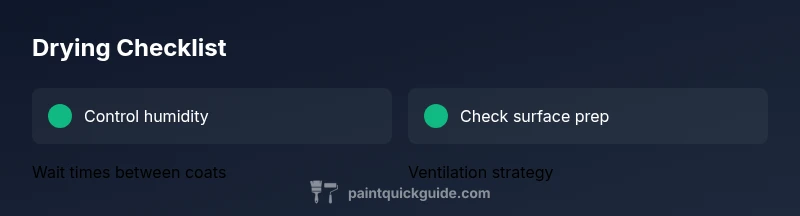
Tip: Create a drying checklist for repeat projects.
Diagnosis: Paint won't dry to a tack-free finish after application.
Possible Causes
- highHumidity or moisture in the environment
- highTemperature too low for the product
- highApplying coats that are too thick
- mediumIncompatible paint for surface or substrate
- lowSurface contaminants (oil, wax, dust)
Fixes
- easyIncrease ventilation and raise ambient temperature to product-recommended range
- easyThin coats and allow full drying time between layers
- mediumUse the correct primer and paint type for the surface
- easyClean and prep surface thoroughly, removing oils and residues before repainting
- mediumAddress moisture sources (leaks, humidity) and reapply after surface is dry
Your Questions Answered
Why won't paint dry even after the posted drying time?
Post-drying delays usually point to humidity, temperature outside the product range, or overly thick coats. Address these variables one by one and test a small area to verify improvements.
Drying delays are usually humidity or temperature problems or thick coats, so fix those first and test a small area.
Can I speed up drying by using a heater?
Using a heater can help, but direct heat on the film can damage it. Use a room heater to raise ambient temperature gradually within the paint’s recommended range and ensure proper ventilation.
A room heater can help if used carefully and within the product’s guidelines.
Is it safe to recoat while the first layer is tacky?
No. Recoating on tacky or wet paint traps solvents and can worsen drying times. Wait until the first layer is dry to touch and within the manufacturer’s recoat window.
No, you should wait for it to dry to touch before recoating.
What should I do if there’s moisture coming through the wall?
Tackle underlying moisture first. Fix leaks, improve indoor humidity control, and allow the surface to dry completely before repainting.
Fix moisture sources before repainting to ensure proper drying.
When should I call a professional?
If issues persist after following the diagnostic flow, or if you’re dealing with large surfaces, structural moisture, or unfamiliar products, professional help is advisable.
If problems persist after trying the steps, it's time to call a professional.
Watch Video
Quick Summary
- Control humidity and temperature during drying.
- Apply thin coats and prep surfaces properly.
- Use the right paint for the substrate and climate.
- If unsure, pause and consult the product data sheet.