When to Paint Pressure Treated Wood: Timing, Prep & Finish
Learn when to paint pressure treated wood, how to test dryness, and master prep, priming, and exterior painting for long-lasting protection.


You will learn exactly when to paint pressure treated wood, how to tell it's dry enough, and how to prepare, prime, and seal for lasting finish. By following weather-safe guidelines and using products designed for PT lumber, you’ll minimize peeling and maximize protection. This guide also covers timing by climate, age of wood, and the difference between new construction and reclaimed PT lumber.
Why timing matters for pressure treated wood
Timing is the cornerstone of a durable finish on pressure treated wood. The treated lumber is designed to resist decay, but it still needs to acclimate to ambient conditions before paint can adhere properly. The question of when to paint pressure treated wood isn’t just about age; it involves moisture content, surface condition, and weather windows. According to PaintQuickGuide, proper timing reduces peeling, color inconsistency, and topcoat failure, which means investing a little patience now pays off with a longer-lasting finish. In practice, assess how dry the wood feels to the touch, check for rain or dampness in the panels, and plan around periods of low humidity and consistent temperatures. This approach helps homeowners and DIY enthusiasts avoid common mistakes and set the stage for a successful paint job.
Dryness and moisture testing
Dryness is the single most important factor in determining when to paint pressure treated wood. Start by inspecting the surface: it should feel dry to the touch, with no dampness or soft spots. If you have a moisture meter, use it to verify that the surface is within a comfortable range for coating; if not, rely on several days of dry weather and a thorough surface dry before priming. PaintQuickGuide emphasizes that a dry, clean surface ensures better adhesion and a longer-lasting finish. Prepare for the test by cleaning the wood first, then rechecking after any rain or heavy dew clears. Remember, even seemingly dry boards can release moisture later if sealed without proper drying. This step reduces the risk of blistering and premature failures of topcoats.
Age and installation context
Newly installed pressure treated lumber often requires more time to dry and acclimate than older boards that have weathered in place. In some climates, fresh PT lumber can trap moisture inside the wood fibers if painted too soon, leading to adhesion problems. Conversely, reclaimed or aged PT boards may already be closer to ready, but inconsistent exposure can still create adhesion challenges. PaintQuickGuide notes that the age of the wood, how it was stored, and sun exposure all influence timing decisions. By recognizing these variables, you tailor your plan to the specific project—deck, fence, or siding—rather than applying a one-size-fits-all rule.
Climate and weather windows
Weather windows are essential when painting outside. Plan around dry spells, moderate humidity, and temperatures that won’t cause rapid drying or sun-driven cooling. In humid regions, waiting longer after rainfall helps avoid moisture pockets beneath the topcoat; in dry climates, you’ll want to finish during cooler parts of the day to reduce rapid drying that can cause brush marks. The goal is a stable, dry environment during both drying and recoating phases. If you’re unsure, monitor local forecasts and extend the window by a day or two to ensure consistency. PaintQuickGuide’s guidance highlights that climate-aware planning improves coat adhesion and color uniformity.
Surface preparation steps
Proper surface prep is a prerequisite for any paint job on pressure treated wood. Begin with a thorough cleaning to remove dirt, mildew, and surface oils that can interfere with adhesion. Use a cleaner appropriate for exterior wood, followed by a rinse and a complete dry-out period. If tannins bleed through, a wash with a tannin-blocking primer may be necessary before painting. Sand rough spots to create a smooth profile, then wipe away dust with a tack cloth. Prepare adjacent surfaces with painter’s tape and drop cloths to protect surrounding areas. Finally, check that the wood remains completely dry to touch before applying primer. This rigorous prep stage sets the stage for a flawless finish and longer protection against the elements.
Primers, sealers, and paints for pressure treated wood
Choosing the right primer is critical on pressure treated wood. A high-quality, exterior-grade acrylic latex primer designed for PT lumber provides a solid base and helps seal tannins that can bleed through paint. Follow with an exterior 100% acrylic latex paint or a paint-and-primer-in-one product if recommended by the manufacturer. For decks and exterior siding, a UV-resistant finish offers better color retention. If you’re repainting, consider a stain-blocking primer to minimize tannin bleed and maximize adhesion. Always follow product labels for coverage, compatibility with wood, and recoat times. PaintQuickGuide recommends testing a small area first to confirm adhesion and color. This ensures the topcoat performs as intended over the life of the project.
Application technique for PT wood
Apply primer and paint using compatible tools—brushes or rollers designed for exterior wood—and work in the direction of the grain to promote even coating. Apply a thin, uniform coat and avoid overloading the brush or roller, which can cause runs and uneven color. Back-brush or back-roll to ensure the primer seals all pores. For decks or vertical surfaces, two coats are typically recommended, allowing adequate drying between coats. Maintain a consistent pace to prevent lap-marking and ensure color uniformity across boards. If you see tannin bleed after the first coat, a second coat of primer in problem areas may be needed before the final color coat.
Drying times and recoat windows
Drying times depend on humidity, temperature, and airflow. Ensure that each coat dries to the touch before applying the next; avoid painting in direct sunlight or when rain is forecast. After applying the final coat, allow sufficient time for curing before exposing the surface to foot traffic or weather exposure. Recoating windows vary by product, but always consult the label for the minimum time. Weather conditions significantly influence cure rates, so adjust expectations accordingly. Proper drying and cure times protect the finish from premature peeling and extend the life of your paint job. PaintQuickGuide emphasizes patience at this stage to guarantee a durable result.
Troubleshooting common issues
Even with careful prep, problems can arise. If you notice peeling or blistering, inspect for moisture trapped beneath the surface, re-evaluate dryness, and consider a light scuff-sand before applying a fresh coat. Tannin bleed may require a specialized primer or stain-blocking product; tannins can seep through lighter colors, causing dark patches. If paint dries with an uneven texture, re-check humidity and airflow; a humid day can trap moisture and degrade finish quality. For tannin-heavy boards, plan for an extra coat of primer in high-bleed areas. By addressing causes and adjusting techniques, you can recover a surface that looks consistent and protected.
Quick-start timeline and checklist
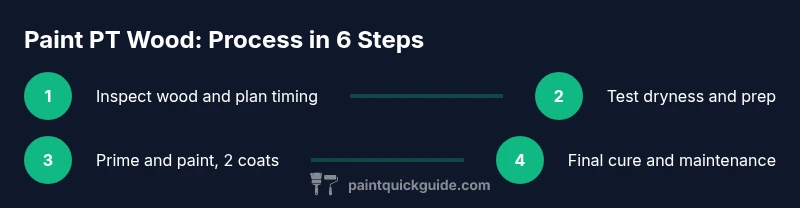
Create a short, practical checklist to guide your project: verify weather windows, test dryness, clean thoroughly, sand, prime with a tannin-blocking primer, apply at least two coats of exterior paint, and inspect after cure. Keep a flexible schedule to accommodate longer dry spells and retest moisture if you suspect lingering dampness. A concise plan helps homeowners and DIY enthusiasts stay organized and motivated. The PaintQuickGuide team recommends starting this project with a clear calendar and a dedicated cleanup process to minimize backtracking and ensure a smooth finish.
Tools & Materials
- Exterior-grade primer for pressure treated wood(Water-based acrylic primer is recommended; blocks tannins and improves adhesion.)
- Exterior 100% acrylic latex paint(Choose a fade-resistant finish suitable for outdoor use on wood.)
- TSP or oxygen-bleach wood cleaner(Removes dirt, mildew, and surface oils before priming.)
- Sandpaper (120-150 grit)(Sands rough spots and opens wood pores for better primer grip.)
- Paint brushes and/or rollers (outdoor grade)(Use natural or synthetic bristles appropriate for latex paint.)
- Painter’s tape and drop cloths(Protects adjacent surfaces and keeps work area clean.)
- Moisture meter (optional)(Helps confirm wood dryness if available.)
- Safety gear (gloves, goggles, mask)(Protects skin and eyes during cleaning and painting.)
- Clean water and rags(For cleanup and blotting spills promptly.)
Steps
Estimated time: 2-5 days
- 1
Inspect wood and plan timing
Begin by visually inspecting the boards for knots, cracks, and surface damage. Check for any visible dampness and assess whether a weather window is available for the project. If the wood feels damp or if recent rain is probable, delay painting to avoid trapping moisture under the finish.
Tip: If possible, schedule during a multi-day dry spell to avoid interruptions. - 2
Test dryness (moisture awareness)
Use a moisture meter if you have one to confirm dryness. In absence of a meter, ensure the surface is dry to the touch and free of dew or rain residues. Allow extra time in humid climates, and re-check after any rain or heavy dew. Dryness is essential for primer adhesion.
Tip: Even a light finger press should not leave a damp feel. - 3
Clean and prep the surface
Clean all surfaces with a wood-safe cleaner to remove oils, dirt, and mildew. Rinse thoroughly and let the boards dry completely. Sand rough areas lightly to create a uniform surface and wipe away dust with a tack cloth.
Tip: Avoid oversanding; you only need a smooth, slightly rough surface for good adhesion. - 4
Address tannin bleed and repair
If the wood exhibits tannin bleed or minor splits, apply a tannin-blocking primer to those areas first. Repair any cracks or loose boards, and re-clean the surface after repairs before priming.
Tip: Bleed-prone boards may need targeted priming to prevent color blotches. - 5
Apply primer
Apply a uniform coat of exterior primer designed for PT lumber, ensuring coverage of all pores and knots. Allow the primer to dry per the product label. Do not skip this step, as primer improves adhesion and color uniformity.
Tip: Use a brush for edges and boards where rollers don’t reach. - 6
First coat of paint
Apply a thin, even coat of exterior paint using long strokes with the grain direction. Avoid heavy loads of paint that can sag or peel. Allow the coat to dry thoroughly before evaluating for a second coat.
Tip: Back-brush in corners to ensure complete coverage. - 7
Second coat and final checks
Apply a second coat in the same manner, ensuring consistent color and finish. Check for any missed spots and touch up as needed. Ensure curing occurs in an environment free of rain and heavy dew for the recommended drying period.
Tip: Double-check color consistency across all boards. - 8
Cleanup and protection
Clean tools with water and soap, store paints in a cool, dry place, and protect the finished surface from rain for a few days if possible. Inspect the finish after cure and recoat only if necessary.
Tip: Keep area well-ventilated during drying to minimize odor and accelerate curing. - 9
Evaluate longevity and maintenance
Plan a maintenance schedule to recoat in a field-tested interval based on climate exposure and wear. Regular inspections help spot early signs of maintenance needs and extend the life of your finish.
Tip: Document the date of application for future reference.
Your Questions Answered
How soon after installation can I paint pressure treated wood?
Wait until the wood is dry to the touch and free of moisture after installation. If you’re unsure, test with a moisture meter or extend the drying window with a few extra days of dry weather before priming.
Wait until the wood feels dry to the touch and shows no signs of moisture; if in doubt, test with a moisture meter before painting.
Do I need to prime pressure treated wood before painting?
Yes. A high-quality exterior primer improves adhesion and helps block tannins that can bleed through the topcoat. Use a primer formulated for pressure treated lumber, then apply your exterior paint.
Priming is essential for best adhesion and long-lasting color on pressure treated wood.
Can I use interior paint on pressure treated wood outdoors?
Outdoors, always use exterior-grade paint. Interior paints may not resist UV exposure and moisture, leading to faster fading and peeling.
No—use exterior paint designed for outdoor exposure, not interior paint.
Should I stain before painting pressure treated wood?
Staining before painting isn’t required, but if tannins bleed heavily, a stain-blocking primer can help. After priming, apply the topcoat as recommended by the product label.
Staining isn’t mandatory, but primer can help seal bleed-through before painting.
How often should I recoat pressure treated wood?
Recoat timing depends on climate, wear, and color choice. Monitor for peeling, fading, or moisture signs, and plan to refresh as needed following the product’s guidelines.
Watch for peeling or fading and refresh the finish per product directions.
Watch Video
Quick Summary
- Plan around a dry, moderate-weather window.
- Test dryness before priming to ensure adhesion.
- Use tannin-blocking primer on bleed-prone boards.
- Apply two coats for best protection and color depth.
- Follow label drying times to ensure a durable finish.