When to Spray Paint: Timing, Prep, and Safety
A comprehensive guide to timing, prep, and safety for spray painting walls, furniture, and car panels. Learn optimal conditions, surface prep, equipment choices, indoor/outdoor considerations, a practical checklist, and common mistakes to avoid.


Learn when to spray paint to achieve a smooth, durable finish for home projects or automotive work. This guide explains exact timing windows, how temperature and humidity affect adhesion, and why surface prep matters, plus practical rules of thumb for indoor and outdoor spraying, recommended spray equipment, safety steps, and a simple pre-check checklist you can follow before you start.
Why timing matters for spray painting
When to spray paint is a common question for any project. Timing influences how paint flows, dries, and adheres to a surface. If you spray when the air is too humid, you may get bloomed finishes, runs, or longer drying times. If it’s too cold or windy, solvents can evaporate too quickly, leading to orange peel or fisheye. Planning the right window for when to spray paint reduces waste, improves adhesion, and yields a smoother film. According to PaintQuickGuide, making timing decisions early in a project sets the foundation for a successful finish and minimizes the need for touch-ups. For both home projects and car refinishing, understanding how temperature, humidity, and air movement interact with your coating helps you choose the optimal day and time to start spraying. When you ask yourself, “when to spray paint,” you should consider the conditions you can control (indoor climate, masking, and ventilation) before you consider the color or finish. This early planning saves you time and money and makes the rest of the process go more predictably.
Temperature, humidity, and ventilation
Weather and air quality directly impact spray paint performance. Ideal conditions often fall into a moderate temperature range with low to moderate humidity and good ventilation. If the air is too warm, solvents can flash off too quickly, causing dry spray; if it’s too cold, film formation slows and curing takes longer. Humidity levels above 60 percent can lead to moisture getting trapped in the film, resulting in dull spots or even blushing on metallic finishes. Ventilation is essential both for odor control and worker safety, especially when spraying indoors. Maintain a steady airflow without creating strong drafts that disrupt your spray pattern. If you’re unsure about the current weather, check a local forecast and test a small spray on a sacrificial surface to observe how the coating behaves before committing to a full project. The goal is to spray paint under a consistent environment that minimizes variations in drying and adhesion. PaintQuickGuide analysis shows that humidity can significantly slow drying and affect film formation, so plan around reliable air conditions.
Surface prep and priming
Good surface preparation is the backbone of a durable spray finish. Begin by cleaning the surface with a solvent appropriate for the material (soap and water for walls, wax and grease remover for automotive panels). Degreasing removes oils that would otherwise keep the paint from bonding. Lightly abrade the surface with fine-grit sandpaper (usually 220–320 grit) to create a uniform, matte profile that improves adhesion. Remove dust with a tack cloth. Mask surrounding areas with painter’s tape and drop cloths to prevent overspray. For bare metal, fiberglass, or wood, apply a compatible primer or conversion coating to promote adhesion and prevent corrosion. Allow the primer to dry fully and sand lightly between coats if required. When to spray paint becomes a habit only after you’ve achieved a clean, uniform surface free of contamination, oils, and previous coatings.
Equipment and settings: selecting a spray method
Your choice of spray method guides how evenly you cover the target. Spray cans are convenient for small spots and quick refreshes, while HVLP systems or conventional spray guns excel on larger areas and provide more consistent atomization. If you’re using a spray gun, select a nozzle size appropriate for the type of coating (various manufacturers offer nozzles roughly in the 0.8–1.4 mm range for common coatings). Set air pressure according to the coating’s recommendations and calibrate the spray pattern with test passes on cardboard. For a car panel, you’ll want a finer spray with softer overlaps; for walls, a slightly broader pattern can speed coverage. Remember to thin the paint as directed by the manufacturer, mix thoroughly, and avoid creating bubbles. When you’re deciding when to spray paint, start with a controlled test spray to dial in your technique before committing to the actual piece.
Indoor vs outdoor spraying: safety and rules
Spraying indoors concentrates fumes, so it demands careful planning. Use a dedicated vented space, or work near open doors and windows with a strong, directed exhaust. Keep sources of ignition away and wear a respirator with organic vapor cartridges, safety glasses, gloves, and protective clothing. VOCs from paints can affect indoor air quality; ensure the room is large enough to diffuse odors and avoid lingering fumes. For outdoor work, choose a calm, windless day to prevent dust and debris from altering your finish. Always encapsulate the work area with drop cloths and masking to protect furniture, floors, and nearby surfaces. If local codes restrict spray operations, follow those rules to avoid penalties or fines. The timing of your spray paint job should include safe, compliant working conditions that reduce health risks while delivering a professional finish.
Drying, curing, and recoat windows
Understanding when to spray paint is also about knowing drying and cure times. After applying a coat, wait until the film feels tack-free before applying the next pass; this reduces the risk of dragging or pulling. Drying to the touch can occur in minutes to an hour, depending on temperature and humidity, but full cure typically takes longer. Recoat windows vary by product; some coatings require several hours between coats, while others may allow you to topcoat the next day. If you rush the process, you risk solvent entrapment, sags, or an uneven finish. After final coats, give the piece adequate time to cure in a dust-free environment before use. This patience helps ensure the desired longevity, color, and protection. In practice, timing your coats and the overall spray painting sequence around the product’s recommended cure times is essential to a durable finish.
Quick project examples: walls and car panels
When to spray paint matters differently for interior walls and car panels. For walls, you’ll want to clean and prime walls, then apply several light coats with short dry times between passes. The goal is a smooth, uniform finish with consistent color. For car panels, you’ll need a more meticulous approach to color matching, surface prep, and dust-free environment control. Applying a base coat, followed by a clear topcoat, requires attention to overspray, runs, and tape lines. In both cases, practice on sacrificial surfaces first and document the settings that produced the best results. Remember, the core principle of when to spray paint is to choose a period with predictable conditions and ample time to complete the process without rushing the coats.
Common mistakes and how to avoid them
- Spraying with too much pressure or too large a nozzle can cause runs or orange peel. Adjust settings gradually and test on a similar surface.
- Spraying indoors without proper ventilation leads to health risks and poor odor control. Use a dedicated space and appropriate PPE.
- Skipping surface prep or primer results in poor adhesion and early chip wear. Invest in thorough cleaning, masking, and priming.
- Applying coats too thick compromises film integrity and finishes with sags or fisheye. Use light coats with proper dry time between passes.
- Not following the coating manufacturer’s thinning guidelines can affect flow and cure. Always follow the stated recommended reduction ratios.
- Rushing the curing phase or failing to let the final coat cure fully will reduce durability. Plan for the full cure window and avoid touching the surface early.
Quick-start checklist and timeline
- Decide on indoor or outdoor spraying and choose the appropriate workspace.
- Prepare, mask, and clean the surface; select primer and base coats.
- Test spray pattern on a sacrificial surface; dial in distance and speed.
- Apply 2–3 light coats, allowing tack time between passes.
- Inspect for dust, runs, or orange peel; correct with light sanding if needed.
- Allow full cure before use; factor temperature and humidity into your schedule.
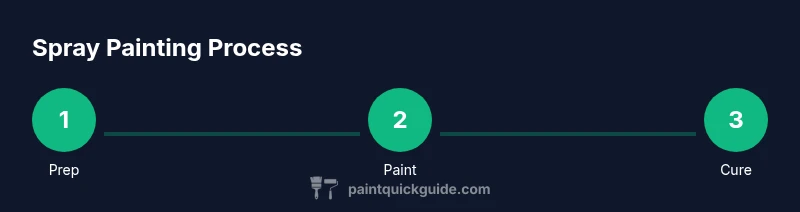
Sample timeline: Prep and masking (0.5–1.5 hours), priming and base coat (1–2 hours each coat with 15–60 minutes between passes), curing (days as per product). When to spray paint is a matter of patience and precision, not speed.
Tools & Materials
- HVLP spray gun or turbine-powered spray system(Choose a setup appropriate for the project size; larger areas benefit from HVLP for better atomization)
- Air compressor or shop turbine(Ensure adequate CFM and a clean air supply)
- Spray cans (aerosol) for touch-ups(Good for small spots or test passes)
- Respirator or organic vapor respirator(Use cartridges rated for solvents and paints)
- Safety glasses or goggles(Protect eyes from mist and debris)
- Gloves and protective clothing(Keep skin protected from solvents)
- Drop cloths or plastic sheeting(Contain overspray and protect surfaces)
- Masking tape and painter’s tape(Protect edges and mask around the work area)
- Industrial degreaser or wax remover(Use appropriate cleaner for the surface)
- Sandpaper (220–320 grit)(Lightly abrade surfaces to improve adhesion)
- Primer and base coats(Select compatible primer for the surface)
- Paint thinner or reducer(Follow product directions for thinning)
- Mixing cups, stir sticks, and strainers(Avoid bubbles and dust in coatings)
- Test panels or sacrificial surfaces(Dial in technique and settings before the main piece)
Steps
Estimated time: 2-8 hours
- 1
Prepare the workspace
Clear the area and protect surrounding surfaces with drop cloths. Set up ventilation and lighting, and arrange tools within easy reach. This reduces interruptions and helps you maintain a steady spray rhythm.
Tip: Do a quick test spray on a sacrificial panel to confirm distance and pattern before starting on the actual piece. - 2
Choose your spray method
Decide between spray cans for small jobs or a spray gun/HVLP for larger surfaces. Confirm nozzle size, paint viscosity, and thinning requirements for smooth, even coverage.
Tip: Test spray on cardboard to verify atomization and adjust distance (aim for stable, overlapping strokes). - 3
Prepare the surface
Clean, degrease, and sand the surface to provide a tooth for the coating. Remove dust with a tack cloth and mask off surrounding areas.
Tip: Ensure the surface is dry before priming to prevent trapping moisture in the film. - 4
Apply primer
Apply a thin, even coat of primer suited to the surface; allow to dry completely and sand lightly if required.
Tip: Primer should be matte; too glossy a primer may cause adhesion issues. - 5
Thin and mix paint
Follow product guidelines to thin and mix paint. Strain if necessary and mix thoroughly to avoid pigment separation.
Tip: Avoid air bubbles by stirring gently and never shaking vigorously. - 6
Set up equipment and test pattern
Check nozzle, pressure, and distance. Do several test passes on a sacrificial surface until the pattern is consistent.
Tip: Maintain a steady distance (roughly 6–8 inches) and use smooth, overlapping strokes. - 7
Apply multiple light coats
Spray thin coats with proper dry time between passes. Build color gradually to reduce runs and orange peel.
Tip: Finish each coat with an even sweep and avoid lingering on one spot. - 8
Check and adjust between coats
Inspect for dust, runs, or texture issues. Sand lightly if needed and recoat after tack time.
Tip: Address issues on the next coat rather than trying to fix after fully cured. - 9
Cure and finalize
Allow the final coat to cure in a controlled environment. Avoid heavy use until fully cured.
Tip: Keep the area dust-free during curing and note the product’s cure window for future projects.
Your Questions Answered
What is the best temperature for spray painting?
Aim for a moderate temperature, roughly 65–75°F, with low to moderate humidity. Extreme heat or cold can affect drying and film formation.
Aim for a comfortable room temperature with moderate humidity for the best results.
Can I spray paint indoors?
Yes, with a well-ventilated space and proper containment. Use a dedicated area, good exhaust, and PPE to manage fumes safely.
Yes, but you need good ventilation and protective gear.
How long does spray paint take to dry?
Dry-to-touch times vary, commonly from 15 minutes to an hour depending on temperature and humidity; full cure often takes longer, up to 24–72 hours.
Dry to the touch in minutes to an hour; full cure may take a few days.
What safety gear do I need?
Wear a respirator rated for solvents, safety goggles, gloves, and protective clothing. Ensure proper ventilation to reduce inhalation risks.
Use a respirator, goggles, and gloves, and ventilate the area.
Can spray painting be used on wood?
Yes, spray painting works well on wood with proper prep. Sand, clean, prime, and thin as required for a smooth finish.
Absolutely—prep, prime, and thin as needed for wood surfaces.
How do I fix runs or orange peel?
Let the coat dry, lightly sand the imperfection, then apply a new thin coat. Avoid heavy coats that worsen runs.
Let it dry, sand lightly, and recoat with thin layers.
Watch Video
Quick Summary
- Plan around consistent environmental conditions.
- Prep surfaces thoroughly for best adhesion.
- Light coats beat heavy coats for durability and finish.
- Ventilate and protect yourself with proper PPE.
- Allow adequate curing time for final durability.