Fixing Orange Peel in Paint: A Fast Troubleshooting Guide
Urgent, practical troubleshooting for orange peel in paint. Learn causes, diagnosis, and step-by-step fixes for walls, cabinets, and car finishes with PaintQuickGuide.


Texture issues like orange peel in paint are usually caused by improper viscosity, incorrect spray distance, or fast-drying conditions. The quickest fix is to adjust your spray settings and thinning, test on a scrap panel, and allow proper flash-off between coats. Start with simple checks, then re-sand and recoat if needed.
What orange peel is and why it happens
Orange peel in paint is a textured film that resembles the skin of an orange: tiny raised bumps and an uneven surface that catch light differently. It can appear on interior walls, kitchen cabinets, or automotive panels after a spray job. The problem isn't purely cosmetic; a rough finish can affect durability if the coating cracks or wears unevenly over time. According to PaintQuickGuide, the root causes are usually linked to paint viscosity, spray technique, and drying conditions. Start by confirming your material is properly mixed and thinned to the manufacturer’s recommendations, and ensure the surface is clean and dry. If the texture is mild, you may correct it by adjusting application technique and performing light sanding between coats. More severe orange peel often requires adjusting viscosity, equipment settings, and the reapplication of a fresh coat after thorough surface prep.
Causes at a glance: why your paint texture goes sour
The most common driver is incorrect viscosity: paint that’s too thick won’t level properly and dries with a pebbled surface. A distant or misaligned spray pattern also creates uneven droplets that dry as orange peel. Environmental factors matter too: high airflow, low humidity, or rapid drying can lock a rough texture into the film. Surface prep plays a critical role—dust, oil, wax residues, or insufficient sanding can trap texture in the finish. Finally, applying coats too thick or stacking coats without adequate flash-off time can trap solvents and produce a bumpy look. Different paint types (latex vs oil-based) and finishes (gloss vs matte) respond differently to the same conditions, so tailor your approach accordingly.
Surfaces and symptoms: how orange peel reveals itself across projects
On walls, look for feathered edges and a consistent pebble pattern across larger areas. Cabinets and furniture may show more pronounced texture due to tighter spray passes and harder substrates. Automotive finishes can exaggerate texture under strong lighting; the texture becomes more noticeable in panels exposed to sun. The key is to isolate variables: viscosity, spray technique, and drying conditions. A quick test on a spare board or panel under similar conditions helps confirm whether the issue is material-based or technique-based.
Diagnosing the problem on the fly: quick checks you can do now
Begin with the simplest checks: confirm paint is mixed to spec, inspect the reducer, and verify the air temperature and humidity are within recommended ranges. Do a test spray on a scrap surface, noting the distance, spray angle, and passes. If the test shows improved leveling after thinning, you’ve identified viscosity and technique as the primary culprits. If not, the surface prep, equipment condition, or environmental controls require attention. Always document settings to identify patterns across projects, and remember that small changes can yield big improvements. PaintQuickGuide emphasizes systematic testing as the fastest path to the right fix.
Quick fixes you can apply today to improve finish
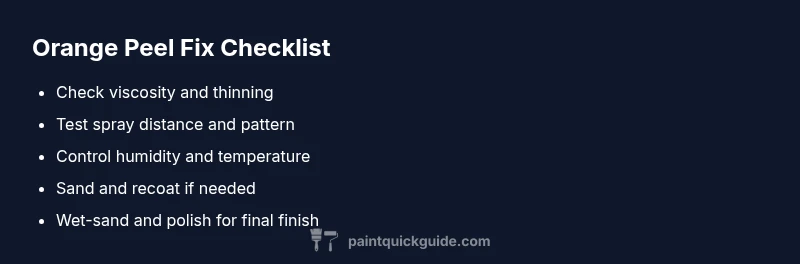
- Adjust viscosity: thin gradually to the recommended viscosity and re-test.
- Calibrate spray settings: keep the nozzle at an appropriate distance (adjust per tool) and maintain an even pass with consistent overlap.
- Manage the environment: reduce air movement, optimize humidity, and ensure adequate ventilation.
- Sand and recoat when needed: for persistent texture, light sanding between coats with fine grit helps level the film.
Steps
Estimated time: 1.5-3 hours
- 1
Prep the surface and materials
Clean the surface thoroughly to remove dust, oil, and wax. Sand lightly with fine-grit paper to create a uniform key, then wipe clean and let dry. Gather your paint, reducer, spray gun, and measuring tools, ensuring everything is within spec.
Tip: Use a tack cloth before painting to remove micro-dust. - 2
Check and adjust paint viscosity
Follow the manufacturer's guidelines to mix thinning agents and reducers. Start with a small thinning increment and run a spray test on a scrap panel. Observe how well the surface levels and whether the texture smooths out.
Tip: Record exact thinning ratios for future reference. - 3
Calibrate spray equipment
Set the spray gun distance, fan width, and atomizing pressure according to tool guidelines. Do a short test spray on a scrap piece, aiming for smooth, even coverage with minimal dry spray or runs.
Tip: Maintain a steady hand and consistent speed across passes. - 4
Optimize the environment
Control temperature and humidity to the paint’s recommended range. Reduce drafts and ensure adequate ventilation. Keep the work area clean and free of dust that can settle on the wet finish.
Tip: If possible, paint during mid-morning when conditions are most stable. - 5
Apply coats with proper flash-off
Allow appropriate flash-off between coats to let solvents evaporate. Apply light, even coats rather than multiple heavy coats that trap solvents and create texture.
Tip: A slow, deliberate pass often yields a flatter finish than fast, sweeping moves. - 6
Final sand and coat (if needed)
If texture remains after curing, gently sand with very fine grit (320-400) and recoat with a fresh layer. For automotive finishes, consider a wet-sand and polish after full cure.
Tip: Wear eye protection and a respirator during sanding and finishing steps.
Diagnosis: Visible orange peel texture on painted surface after spraying
Possible Causes
- highPaint viscosity is too high (too thick)
- highSpray distance or technique is incorrect (too far, wrong pattern)
- mediumEnvironmental conditions (high airflow, low humidity, rapid drying)
- lowPoor surface preparation (dust/oil/wax on surface, inadequate sanding)
Fixes
- easyThin paint to manufacturer-recommended viscosity and retest on scrap
- easyAdjust spray distance and ensure even passes with correct overlap
- easyStabilize environment (control temperature/humidity, reduce drafts)
- easySand between coats and recoat with consistent technique
- hardIf texture persists, perform wet-sand and polish (for automotive finishes) or consult a pro
Your Questions Answered
What is orange peel in paint?
Orange peel is a textured paint finish that resembles the surface of an orange, caused by spray technique, viscosity, or environmental factors. It Appears as tiny bumps rather than a smooth film. Proper mixing and application can prevent it.
Orange peel is a bumpy paint texture caused by how you spray and the conditions around you. It shows up as tiny bumps rather than a smooth film.
Is orange peel dangerous for car finishes?
It's not dangerous to the structural integrity, but it compromises appearance and can affect durability if moisture seeps into the film. Recoating with proper technique improves protection and look.
No safety hazard, but it can ruin the look. Recoat properly to restore protection and finish.
Can I fix orange peel without repainting?
Often yes. If the texture is mild, you can sand and recoat after improving thinning and spray technique. Severe cases may require a full repaint.
Yes, many cases can be fixed with sanding and a fresh coat after adjusting thickness and spray settings.
Should I sand between coats to prevent orange peel?
Sanding between coats helps flatten the film and remove minor texture. Use fine grit and recoat after cleaning the surface.
Yes, light sanding between coats can prevent orange peel from forming.
When should I call a professional?
If texture persists after basic fixes, or if you’re refinishing a car’s clear coat, professional results may require specialized tools and controlled environments.
If you still see texture after fixes, consider getting professional help, especially for automotive finishes.
Watch Video
Quick Summary
- Check viscosity and thinning first
- Test spray parameters on a scrap panel
- Sand between coats for leveling
- Control environment for consistent results