How to Keep Paint from Chipping: A Practical Guide
Learn practical steps to prevent paint from chipping on walls, furniture, and cars. From surface prep to finish coats, this guide covers prep, primers, and durable finishes with real-world tips.


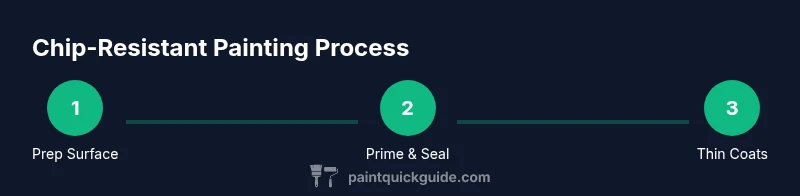
Keep paint from chipping by starting with a clean, dry surface and choosing a durable system. Prep thoroughly, prime where needed, and apply thin, even coats with proper drying between layers. Use high-quality brushes or rollers and finish with a chip-resistant topcoat. Follow these steps for walls, furniture, and automotive refinishing to maximize longevity.
Preparing the surface for a chip-resistant finish
Before you apply paint, ensure the surface is clean, dry, and sound. Dust, grease, and loose material create weak spots that chips exploit. Remove peeling layers with a putty knife, then lightly sand glossy areas to improve adhesion. Wipe away dust with a tack cloth and let the surface dry completely. For deep gouges, fill with a lightweight filler and sand flush. Exterior substrates may benefit from a light power wash, but avoid soaking wood or metal. The goal is a stable, porous base that accepts coatings evenly. Temperature and humidity matter: aim for moderate conditions (about 60-80°F / 15-27°C and humidity under 80%) to allow proper curing. Proper ventilation helps volatile components escape and prevents moisture buildup. With solid prep, you’ll see a uniform base ready for primer and paint, reducing future chipping opportunities.
Choosing paints and primers that resist chipping
Durability starts with selecting the right paint system. For interior surfaces, high-quality acrylic latex or enamel-based paints with good abrasion resistance perform best on walls and trim. For exterior wood, fiber cement, or metal, look for paints labeled for durability and adhesion, and consider a bonding primer on slick or stained substrates. Primer choice matters: a bonding primer enhances adhesion and seals porous surfaces, helping prevent early chipping. If you’re refinishing a car, use automotive primers and topcoats designed for flexible finishes that resist stone chips. Always check the manufacturer’s recommendations for substrate compatibility, coverage, and recoat windows. A reliable system uses compatible layers that share similar expansion and contraction rates, reducing the likelihood of edge cracking and peeling over time.
Surface repair and stabilization techniques
Cracks, dents, and flaking material invite chips. Stabilize the surface with appropriate fillers, feathered flush edges, and light sanding between repairs. Allow each filler to cure completely before sanding to a smooth, level plane. For raised edges, re-sand with a finer grit to minimize visible ridges after painting. If you encounter oil, wax, or silicone residues, remove them with an appropriate cleaner before priming. Stabilized surfaces promote even pigment distribution and prevent micro-dissolving, which can manifest as micro-chips later. When repairing metal or plastic automotive parts, apply a compatible filler and lightly sand to the same contour as the surrounding area. The goal is a seamless surface that behaves like new under topcoats.
Primers and sealers: when and how
Primers are the foundation of a chip-resistant finish. Use a bonding primer on glossy surfaces, cured cedar, or previously painted areas with poor adhesion. For porous materials, a stain-blocking or sealing primer can prevent bleed-through and improve topcoat longevity. Apply thin, even coats and allow thorough drying time per the label. In automotive work, a dedicated adhesion promoter along with a high-build primer can create a robust barrier before color coats. Don’t skip priming on areas prone to moisture or frequent contact. The primer should dry completely to a slightly tacky surface before applying the next layer, ensuring better film formation and reduced chipping.
Application best practices to prevent chipping
Load your tool correctly: avoid overloading brushes or rollers, which causes uneven deposition and runs. Apply thin coats and maintain a consistent direction, slightly overlapping strokes. Allow sufficient drying time between coats and avoid applying a new layer while the previous is still soft. Sand lightly between coats with very fine paper to remove nibs and promote adhesion. For high-traffic areas, consider a third coat or a protective topcoat with enhanced abrasion resistance. Weather or indoor conditions must be controlled to prevent rapid moisture loss or absorption that can lead to micro-cracking and chips. Consistency is key: uniform film thickness minimizes weak spots that are prone to chipping.
Drying, curing, and environmental factors
Temperature, humidity, and airflow influence curing. Paint typically cures best in moderate temperatures, with steady, low humidity and good ventilation. Avoid painting when temperatures swing rapidly or when humidity is high, as this can cause blistering, soft films, or delayed hardening, which increases chip risk. Dust and particulates should be minimized during drying; use clean drop cloths and keep the area free of activity. When working on cars, allow longer curing in a dust-free environment to prevent embedment of particles that can cause surface imperfections and chips. By controlling the environment, you encourage a uniform, hard film that resists chips over time.
Finishes and topcoats for durability
Select a finish with abrasion resistance appropriate to the project. Higher sheens (semi-gloss, satin) offer easier cleaning and better chip resistance on walls and trim, while flat finishes hide imperfections but may chip more easily under abrasion. For automotive work, a multi-layer system with a basecoat, clearcoat, and a UV-protective topcoat often yields the best chip resistance. Apply the topcoat evenly and avoid heavy flow areas where solvent entrapment can occur. Let each layer cure fully before using the surface. Protection from sunlight, moisture, and daily wear extends the life of the finish and minimizes future chipping.
Maintenance and touch-up tips to avoid visible chips
Spot-clean gently and address chips quickly to prevent corrosion of the surrounding film. Use touch-up paint that matches the original color and finish, applied with a fine brush or pen tip for precision. For walls, a micro-filler can smooth small chips before repainting. On wood, reseal with a compatible topcoat to restore abrasion resistance. On cars, use a matching enamel or lacquer pen to repair chips, then apply a thin protective layer after curing. Regular cleaning and prompt retouching preserve color integrity and reduce the appearance of chips over time.
Common mistakes and how to avoid them
Common errors include skipping prep, using incompatible primers, applying too-thick coats, and rushing drying times. Skipping surface prep invites immediate peeling and chipping. Using a primer not designed for the substrate can lead to poor adhesion. Overworking paint or applying heavy coats increases sags and micro-cracks that become chips. Finally, ignoring environmental cues like humidity and temperature can compromise cure and film integrity. By avoiding these missteps, you improve longevity and reduce chip risk.
Real-world scenarios: walls, trim, and automotive painting tips
Walls benefit from robust primers and semi-gloss or satin finishes for durability and easy cleaning. Trim should use high-adhesion enamel with a crisp edge to resist impact and scuffing. Automotive projects demand dedicated primers, base colors, and clear coats designed for flexible, resilient finishes. For metal surfaces, remove rust, degrease, and use an epoxy or urethane system with a high-build primer. In all cases, start with solid prep, use compatible products, and follow manufacturer recoat times. With these practices, you’ll achieve a chip-resistant result across diverse projects.
Tools & Materials
- Degreaser or mild detergent(For cleaning surfaces and removing oils.)
- Bucket and clean rags(To wash and wipe surfaces.)
- Putty knife and scraper(Remove flaking material.)
- Sandpaper assortment (120-220 grit)(Create tooth for adhesion.)
- Sanding block or orbital sander(Easier, faster sanding.)
- Tack cloth(Remove fine dust after sanding.)
- Filler/putty for repairs(Fill dents and gouges.)
- Putty knife(Apply filler smoothly.)
- Primer (bonding primer preferred)(Improve adhesion on tough surfaces.)
- Topcoat/finish with abrasion resistance(Chip-resistant final layer.)
- High-quality brush or roller(Apply even coats.)
- Painter’s tape and drop cloths(Protect areas not being painted.)
- Protective gloves and mask(Safety during sanding and painting.)
- Ventilation fan or well-ventilated area(Reduces solvent buildup.)
- Cleaner suitable for automotive surfaces (optional)(Degrease metal before paint.)
Steps
Estimated time: 2-4 hours
- 1
Inspect and plan
Assess the surface, identify problem areas, and choose compatible products. Create a step-by-step plan to minimize sanding and rework, including cure times and environmental conditions.
Tip: Write down the substrate type and required primers before starting. - 2
Clean and prep
Thoroughly clean the surface, remove dirt and oils, then lightly sand to create a mechanical key. Wipe with a tack cloth and ensure surface is completely dry before priming.
Tip: Avoid harsh cleaners that can leave residues. - 3
Repair and smooth
Fill any gouges or cracks and sand flush. Ensure transitions are even and the surface is free of ridges that could telegraph through the finish.
Tip: Let filler cure fully before sanding. - 4
Prime and seal
Apply bonding primer to difficult substrates and seal porous areas. Allow to dry completely according to label directions; a tacky feel usually indicates readiness for paint.
Tip: Use a thin coat to prevent excessive film build. - 5
Apply base coats
Load tool properly and apply thin, even coats, crossing strokes to ensure uniform color. Allow each coat to dry fully before applying the next.
Tip: Lightly sand between coats for a smoother finish. - 6
Finish and cure
Apply final topcoat with even strokes and avoid over-brushing. Let the surface cure undisturbed in controlled conditions for the full recommended time.
Tip: Don’t rush curing; improper cure leads to chipping.
Your Questions Answered
Why does paint chip off after drying?
Chipping often happens when the surface wasn't properly prepped, or when incompatible products were used. Insufficient bonding between layers creates weak points that crack and flake as the film ages. Environmental stress, like temperature fluctuations, also contributes to premature failure.
Chipping usually comes from poor prep, wrong product choices, or harsh environments that stress the paint film.
Is priming always necessary to prevent chipping?
Priming is essential on glossy, porous, or hard-to-adhere substrates. A bonding primer improves adhesion and reduces early chipping. Not all surfaces require primer, but when in doubt, prime for a stronger base coat.
Priming is key on tricky surfaces to keep chips from forming early.
Can you fix chipped paint without repainting the entire surface?
Yes. Patch chipped areas with a compatible filler, sand smooth, re-prime if needed, and apply a touch-up coat that matches the surrounding finish. For large chips, consider a spot repair with a small test area first.
You can fix small chips with patching and careful touch-ups.
Should I use a sealer on high-traffic surfaces?
Yes. A clear sealer or durable topcoat can add abrasion resistance and help protect against chips on high-traffic areas like hallways or automotive panels.
Sealers can greatly improve durability on busy surfaces.
What temperatures are best for painting?
Most finishes cure best in moderate temperatures, typically around 65-75°F (18-24°C). Extreme heat or cold can cause improper curing and increase chipping risk.
Stick to moderate temperatures for best cure and durability.
How long should topcoat cure before use?
Cure times vary by product; always follow label directions. In general, avoid heavy use for at least 24 hours and full cure may take several days.
Follow the product’s cure time to ensure the finish hardens properly.
Watch Video
Quick Summary
- Prep thoroughly to prevent future chipping.
- Choose compatible primers and durable topcoats.
- Apply thin coats and allow full cure between layers.
- Address damage promptly with proper touch-ups.