Goof Off for Paint Remover: A Practical DIY Guide
Learn safe, effective use of goof off for paint remover for home and auto projects. Step-by-step prep, safety, surface testing, and cleanup guidance for DIYers and hobbyists.


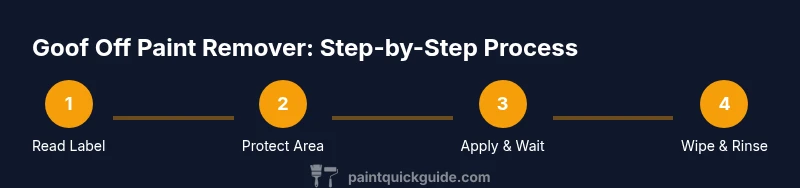
Go through a careful, test-first approach to removing paint with goof off for paint remover. This quick guide outlines choosing the right variant, protecting surrounding surfaces, and applying, waiting, and wiping with minimal damage to substrates. Expect practical prep, safety, and cleanup tips to achieve clean results at home.
What goof off for paint remover is and when to use it
Goof Off for paint remover is a solvent-based product designed to soften and lift paints from non-porous surfaces. For DIY projects on walls, metal, glass, and certain plastics, it can save time over aggressive scrubbing. This guide from the PaintQuickGuide team explains when to choose this remover, how to test first, and how to minimize potential damage to the substrate. The key is cautious application, proper ventilation, and thorough cleanup. For best results with goof off for paint remover, test a hidden area first and follow label directions exactly. According to PaintQuickGuide, goof off for paint remover should be used only on non-porous surfaces and in well-ventilated spaces to minimize fumes and substrate damage.
Safety considerations and surface compatibility
Solvent-based removers can release fumes and interact with finishes. Always work in a well-ventilated area and wear protective gear: chemical-resistant gloves, safety glasses, and, if advised by the label, a respirator. Avoid using on porous wood without testing; finishes like shellac may react, and certain plastics can craze or haze. Before applying to any surface, check compatibility with official guidance from the manufacturer and local safety regulations. Keep away from children and pets, and never mix with other cleaners or solvents. Your safety and the integrity of surrounding surfaces depend on careful planning and proper PPE.
Testing and preparation for removal
Preparation is essential to prevent collateral damage. Start by choosing a small, inconspicuous patch to test how the paint and substrate respond to the remover. Use a clean cloth or cotton swab to apply a small amount, wait 5–10 minutes, and wipe away. If there is any color transfer to the cloth or softening of the substrate beyond the paint layer, stop and reassess. Lay down drop cloths or plastic sheeting to protect nearby areas, and cover floors thoroughly.
Surface-specific guidance: wood, metal, ceramic, and more
Wood: bare wood or unfinished surfaces can absorb solvents; use sparingly and test; finishes like varnish can soften; wipe promptly to avoid damage. Metal: most metals tolerate solvents; avoid etched or lacquered finishes; test to ensure there’s no discoloration or pitting. Ceramic/tile: glazed surfaces are generally safe; avoid porous or unglazed areas where solvents could penetrate. Plastic or vinyl: some plastics can craze or haze; test a small patch first and stop if you notice any dulling or cracking. Aftercare: rinse with clean water and mild soap to remove any residue, then dry thoroughly to prevent streaking or corrosion.
Alternatives and best practices
If you prefer non-solvent options or are dealing with delicate substrates, citrus-based removers or soap-and-water scrubbing may work for light paint. Mechanical methods such as plastic scrapers or nylon brushes reduce chemical exposure, but they require more effort on thick coats. For automotive surfaces, consider manufacturer recommendations and prefer dedicated automotive-safe products. Always follow the label and avoid mixing cleaners, which can release hazardous gases or cause unintended reactions.
toolsMaterialsOnlyLabelNotPresent":null}
stepByStepSectionPlaceholder
Tips and Warnings placeholder
Key takeaways placeholder
Authority sources placeholder
Video embed placeholder
FAQ placeholder
mainTopicQueryPlaceholder
Tools & Materials
- Goof Off paint remover (variant suitable for your project)(Follow label directions; choose Pro Strength for heavy coatings or solvent-sensitive surfaces with care.)
- Personal protective equipment (PPE)(Chemical-resistant gloves, safety glasses, and a respirator or mask if recommended.)
- Drop cloths or plastic sheeting(Protect floors and nearby finishes from splashes.)
- Soft cloths or lint-free rags(Use non-abrasive cloths to avoid scratching surfaces.)
- Plastic scraper or putty knife(Gently lift softened paint without gouging the substrate.)
- Measuring cup and disposable container(For mixing or disposing of used solvent safely.)
- Water, mild dish soap, and clean towels(Rinse residue and dry surfaces after treatment.)
- Ventilation aid (fan or open windows)(Keep air moving to minimize fumes.)
Steps
Estimated time: 45-60 minutes
- 1
Read the label and confirm compatibility
Inspect the product label for surface compatibility, ventilation requirements, and PPE recommendations. If the surface is sensitive or porous, consider a spot test first on an inconspicuous area.
Tip: Always follow the manufacturer’s instructions and start with the smallest amount possible. - 2
Prepare the work area
Clear the space, lay down drop cloths, and isolate the project to avoid fumes reaching other rooms. Remove nearby items and ensure kids and pets are out of the area.
Tip: Ventilate by opening windows and using a fan to move air away from your face. - 3
Test a small patch
Apply a small amount of Goof Off to an inconspicuous patch with a cotton swab, wait 5–10 minutes, and wipe away. Check for any adverse reaction or finish damage.
Tip: If no damage occurs, proceed to the full area in sections. - 4
Apply to a manageable area
Dampen a cloth with remover and apply to a defined section, working with the grain (where applicable). Avoid oversaturation and keep the product away from edges you want to protect.
Tip: Apply sparingly and avoid pooling on edges. - 5
Wipe and assess
Gently wipe the softened paint with a clean cloth. If paint remains, reapply in a small amount and wait another 5–10 minutes before wiping again.
Tip: Don’t scrub aggressively; this can damage the substrate. - 6
Rinse, dry, and inspect
Rinse treated areas with clean water and mild soap to remove residue. Dry thoroughly and inspect for remaining paint or damage.
Tip: Allow the surface to dry completely before applying any finish or sealant. - 7
Dispose of materials and clean tools
Place used rags and disposable materials in a sealed bag for proper disposal per local regulations. Clean tools with appropriate cleaners and store safely.
Tip: Do not dispose of solvent-soaked rags in trash bins; follow local guidelines.
Your Questions Answered
Is Goof Off safe to use on wood, metal, or painted surfaces?
Goof Off can be effective on certain non-porous surfaces, but it’s harsh on porous wood and some coatings. Always test first and follow label directions. Use PPE and proper ventilation to reduce risk of damage.
Yes, but only after testing and ensuring surface compatibility; always wear PPE and ventilate.
Can Goof Off remove paint from cars or automotive finishes?
It can remove paint but is risky for automotive clear coats and polished finishes. If used, apply sparingly and test on a small area, or consider automotive-specific products and a professional if needed.
It’s possible but risky for car finishes—test first or consult a professional.
How long should I wait after applying Goof Off before wiping?
Wait about 5–10 minutes after applying a small amount to see how the paint loosens. If the paint remains stubborn, you can reapply in a controlled, thin layer.
Usually about 5 to 10 minutes, then wipe; don’t rush the process.
What safety gear should I wear when using Goof Off?
Wear chemical-resistant gloves, safety glasses, and a respirator or mask if recommended on the label. Keep hair and clothing away from the solvent.
Wear proper PPE and keep the area ventilated.
What should I do if Goof Off damages the surface?
If you notice discoloration, softening, or peeling, stop immediately and reassess. Rinse with water and mild soap, and consider finishing repairs or sanding before repainting.
If damage occurs, stop, rinse, and reassess; you may need to repair or repaint.
Are there disposal or environmental considerations?
Dispose of used rags and leftover solvent according to local regulations. Do not pour solvent down the drain; seal and take to an appropriate disposal facility.
Dispose of solvent-soaked materials per local rules; don’t pour it down the drain.
Watch Video
Quick Summary
- Test a hidden area first before full application
- Ventilate the work area to manage fumes
- Apply remover sparingly and wipe promptly to minimize damage
- Dispose of solvents and rags according to local laws