How to Apply Floor Epoxy Paint: Step-by-Step Guide
Learn how to prep, mix, apply, and maintain floor epoxy paint for garages, basements, and workshops with practical steps and safety tips.


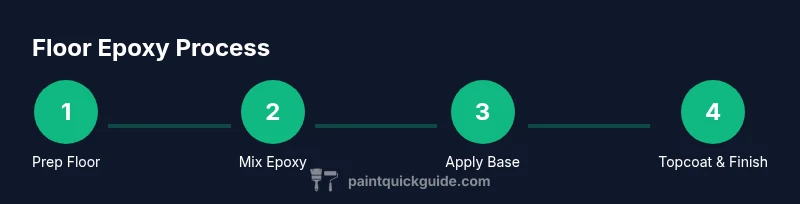
By the end of this guide, you’ll be able to prep, mix, apply, and cure floor epoxy paint for durable, chemical-resistant floors. You’ll learn how to choose the right kit, prepare the substrate, and avoid common mistakes. This is a practical, step-by-step approach designed for homeowners, DIY enthusiasts, and auto refinishing hobbyists seeking reliable results in real-world garage, workshop settings.
What is floor epoxy paint and why choose it for your floors?
Floor epoxy paint is a durable, chemical-resistant coating designed to protect concrete and other substrates while delivering a smooth or textured surface. For homeowners and DIY enthusiasts, epoxy paints offer several advantages: they resist stains and abrasions, are relatively easy to clean, and can transform a garage, basement, or workshop into a professional-looking space. The PaintQuickGuide team often observes that a properly applied epoxy coating creates a seamless surface that stands up to chemicals, oil spills, and heavy foot traffic. When planning a project, consider the ambient conditions, the substrate’s condition, and the level of slip resistance you need. A well-chosen epoxy system can also incorporate decorative chips or color flakes for a customized look while maintaining practicality for daily use.
Epoxy systems and formulations explained
Epoxy coatings come in several forms, but most residential and commercial floor projects rely on two-component systems: a base resin and a hardener that chemically react to form a solid, durable film. There are also one-component, moisture-curing versions, though they typically require different surface prep and may not achieve the same chemical resistance as two-part systems. Within each category, you’ll encounter various solids content, cure times, and finish options, such as clear coats, satin, or glossy looks. For a garage floor with heavy traffic or chemical exposure, a higher solids, two-part system with a protective topcoat often provides the best balance of durability and ease of maintenance. Always follow the manufacturer’s instructions for mixing ratios and cure conditions. PaintQuickGuide emphasizes choosing a system that matches your substrate and desired level of gloss and slip resistance.
Surface prep basics for epoxy floors
Successful epoxy flooring hinges on proper surface preparation. Start with a thorough cleaning to remove oil, grease, dirt, and old coatings. Degreasing agents and a stiff brush or scrub pad work well on concrete; for very oily areas, repeat cleaning and rinse thoroughly. After cleaning, test the surface for moisture; if present, address it before coating. Mechanical profiling (etching or grinding) is typically necessary to create a roughened surface that epoxy can bond to. Any sealers, curing agents, or cure compounds should be removed. If the surface is porous or dusty, a dust-free sweep and a light vacuum are essential. Proper prep reduces the risk of delamination and increases the coating’s long-term performance.
Primers and sealers: when you need them
Primers or sealers can improve adhesion on challenging substrates, such as very smooth concrete, porous slabs, or floors with stains that might bleed through. In some epoxy systems, the base coat contains sufficient adhesion, and a separate primer isn’t required. If you’re unsure, consult the product’s data sheet and perform a small adhesion test in an inconspicuous area. Primers also help to create a uniform color and reduce the risk of blotchiness or staining showing through the topcoat. If moisture or vapor transmission is a concern, use a vapor barrier or specialized epoxy primer designed for damp substrates. The goal is a uniform, well-bonded foundation before the epoxy layers go down.
Choosing the right kit and color options
Selecting the right epoxy kit is more about performance than color. Choose a system with appropriate chemical resistance, slip resistance, and curing behavior for your space. Decide whether you want a high-gloss, satin, or matte finish, and whether you’ll add decorative chips or a non-slip additive for traction. Color options typically include standard solid colors, with chips or flakes offering custom looks. Ensure you have the correct topcoat if you’re adding chips or a textured finish. Always verify kit coverage rates and whether you’ll need extra rollers, trays, and edge tools to reach corners and tight spaces. PaintQuickGuide recommends matching the kit to your space’s traffic and exposure levels.
Mixing, pot life, and working time
Accurate mixing is crucial for performance. Measure out the base resin and hardener in the correct ratio, then mix at a steady speed to avoid introducing air. Stir until the mixture is uniform and free of streaks. Pot life and working time vary by product and temperature, so plan ahead and mix only as much as you can apply within the window. If you pause, reseal containers promptly to prevent skin formation. Keep containers closed between batches, and label batches to avoid confusion. Temperature and humidity can dramatically impact cure, gloss, and adhesion—work under manufacturer-recommended conditions for best results.
Application techniques: edges, rollers, and safety margins
Apply epoxy using a combination of rollers for the main field and brushes or edge tools for corners and tight areas. Work in manageable sections to maintain a wet edge and reduce lap marks. Maintain a consistent rolling speed and avoid excessive pressure that can trap air. For textured finishes or slip resistance, introduce decorative chips or a non-slip additive at the recommended stage. Protective tape along edges and doors helps achieve clean lines. Ventilation is essential during application and curing to minimize inhalation of fumes; wear PPE including gloves, goggles, and a respirator if required by the product.
Safety and ventilation precautions
Epoxy coatings release fumes during mixing and curing, so ensure adequate ventilation. Use a well-ventilated space, or work outdoors if possible. Wear a proper respirator and eye protection; gloves and long sleeves provide protection against skin contact. Keep children and pets away from the work area. Read the Safety Data Sheet (SDS) for the specific product you’re using to understand exposure limits and safe handling. Store epoxy under appropriate conditions and dispose of waste according to local regulations. Safety is as important as performance when engaging in floor coating projects.
Curing expectations and foot traffic readiness
Curing times vary with product and conditions, but expect an initial set within a day or two and a longer full cure. Avoid foot traffic or placing heavy items on the surface during the cure window. Temperature, humidity, and airflow affect cure rate and surface hardness, so follow the manufacturer’s guidance for your climate. Even after the surface feels dry, soft spots can be present under heat and impact; test for readiness before moving equipment or heavy objects. Plan for at least a complete cure before using the space for its intended purpose to maximize durability.
Maintenance and long‑term care
A properly cured epoxy floor is relatively low maintenance. Use mild detergents and a soft mop or microfiber pad for routine cleaning. Avoid harsh solvents that could degrade the topcoat over time. Place mats at entryways to reduce grit and wear, and reseal if the gloss diminishes or stains become difficult to remove. For garages and workshops, consider reapplying a protective topcoat after several years or when signs of wear appear. Regular inspections help catch early issues like chipping, delamination, or moisture intrusion, allowing proactive repairs.
Common mistakes and troubleshooting
Common missteps include insufficient surface prep, mixing errors, and applying coats in unsuitable weather. Always follow the product’s instructions for prep, mixing ratios, pot life, and cure conditions. If you notice blistering, peeling, or poor adhesion, investigate substrate moisture, surface profile, and cleanliness. If you see color inconsistencies or blotching, check for even coverage and whether a primer was required or not. Troubleshooting often involves sanding the affected area and reapplying with proper surface prep and adhesion checks.
Tools & Materials
- Epoxy floor coating kit (base resin + hardener)(Two-part system designed for concrete floors; ensure kit matches square footage.)
- Degreaser or concrete cleaner(Use before cleaning to remove oil and contaminants.)
- Concrete patching compound(Optional for cracks or holes; choose a fast-setting formula.)
- Acetone or denatured alcohol(For spot cleaning and surface prep before bonding.)
- Concrete etching solution or grinder with diamond cup wheel(At least roughen the surface to create a good mechanical bond.)
- Paint rollers (3/8" nap) and roller frame(Choose high-quality rollers for even application.)
- Paint roller extension pole(Helps reach edges and reduce bending.)
- Edge brush or sash brush(For corners and edges near walls.)
- Paint trays and liners(Keep batches clean and separate.)
- Mixing drill with paddle attachment(Use steady speed to avoid air bubbles.)
- Personal protective equipment (PPE): nitrile gloves, safety goggles, respirator(Follow product SDS for respirator requirements.)
- Masking tape and drop cloths(Contain spill and protect surrounding areas.)
- Non-slip additive (optional)(Add to topcoat for enhanced traction.)
Steps
Estimated time: 1-2 days (prep, mixing, application, and initial cure; full cure longer)
- 1
Assess space and select epoxy system
Evaluate the room size, traffic, and exposure to chemicals. Choose a two-part, high-solids epoxy for durability or a water-based option for easier handling. Consider slip resistance and finish level (gloss vs. matte) based on use-case and aesthetic preferences.
Tip: Plan for sections to maintain wet edges and reduce visible seams. - 2
Protect area and gather PPE
Lay down drop cloths, tape off edges, and ensure ventilation. Put on gloves, goggles, and a respirator if needed. Having all tools within reach prevents mid-job trips.
Tip: Double-check any nearby appliances or items that could contaminate the coating. - 3
Clean and degrease floor
Thoroughly remove oil, grease, and dust; contaminants reduce adhesion. Rinse with clean water or degreasing agent, then allow to dry completely before proceeding.
Tip: A clean surface is critical; even small residues can cause coating failure. - 4
Roughen the surface for bonding
Etch or mechanically profile the concrete to create a rough surface. This improves bonding and reduces the risk of delamination.
Tip: Do not proceed if surface remains slick after etching. - 5
Repair cracks and joints
Fill cracks with a suitable patching compound and smooth the surface. Allow patches to cure as directed before coating to prevent telegraphing through the epoxy.
Tip: Use a straightedge to level patches with the surrounding floor. - 6
Prime if required by system
Apply primer only if the product data sheet requires it for your substrate. Primers improve adhesion and even color, especially on porous or dusty concrete.
Tip: Neglecting primers when required can compromise bond strength. - 7
Mix base and hardener in correct ratio
Pour the two components into a clean container and mix at a consistent speed until uniform. Avoid whipping air into the mix and follow the manufacturer's pot life.
Tip: Label each batch to prevent mixing errors. - 8
Apply base coat evenly
Begin at a corner and work in sections, maintaining a wet edge to minimize roller marks. Use smooth, overlapping strokes and avoid stopping mid-section unless you must.
Tip: Keep coats thin to reduce puddling. - 9
Add optional topcoat or chips and final checks
If using decorative chips or a non-slip additive, broadcast evenly while the base coat is still wet and cap with the second coat if required. Inspect for thin spots and recoat as needed.
Tip: Follow topcoat timing strictly to ensure adhesion.
Your Questions Answered
Can I apply epoxy paint over existing paint or coatings?
In most cases you should remove or thoroughly abrade old coatings to ensure adhesion. If removal isn’t feasible, roughen the surface and test adhesion before coating.
You should usually remove or roughen old coatings before epoxy paint to ensure good adhesion.
Do I need a primer for epoxy floor coatings?
Some systems require a primer on porous or dusty concrete to improve adhesion and hide stains. Follow the manufacturer's recommendations.
Primer is often needed for porous floors; check your kit instructions.
How long does floor epoxy paint take to cure?
Cure times vary with product and conditions; expect an initial set within a day or two and a longer full cure.
Cure times vary; plan for an initial set in a day or two and full cure later.
Is floor epoxy safe for a home garage and living spaces?
Work in a well-ventilated area and wear PPE; some fumes may be present during application and curing.
Make sure the area is well-ventilated and wear appropriate PPE.
How can I prevent slipping on a finished epoxy floor?
Add a non-slip additive during mixing or apply a non-slip topcoat; ensure even texture.
Add non-slip particles or a textured topcoat to reduce slipping.
Watch Video
Quick Summary
- Prepare thoroughly: surface prep drives adhesion and durability.
- Mix accurate ratios and work within pot life for best results.
- Choose the right kit for your substrate and traffic level.
- Ventilate well and use PPE to stay safe during application.
- Plan for cure time and avoid early traffic to prevent damage.