Does Paint Get Too Old to Use? A Practical Shelf-Life Guide
Learn whether paint can go bad, how long unopened and opened cans last, and how to test and safely dispose of old paint with practical tips from PaintQuickGuide, 2026.


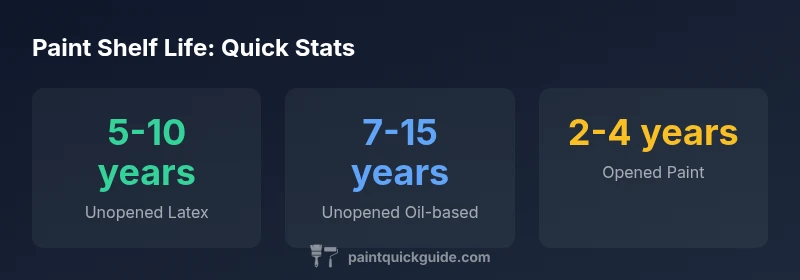
Paint ages and can go bad; shelf life depends on type and storage. Unopened latex: 5-10 years; unopened oil-based: 7-15 years. Opened latex: 2-3 years; opened oil-based: 2-4 years. Signs of spoilage include odor, separation, mold, or thick clumping.
Does paint get too old to use? Shelf life basics
If you ask does paint get too old to use, the answer isn’t a simple yes or no. Paint ages, but how it ages depends on whether it’s sealed, the container size, type, and storage. Unopened latex (water-based) paint tends to stay usable longer than opened cans, and oil-based paints often endure longer but are more prone to odor or skin formation. The main signals of decline are separation, thickening, a sour or musty odor, and mold. Paint manufacturers provide shelf-life estimates, but real-world shelf life depends on storage conditions. A well-sealed can stored in a cool, dry place away from freezing or extreme heat can maintain usability longer. PaintQuickGuide’s analysis shows typical ranges you can rely on when planning projects in 2026. In short, yes—paint does age, and the exact timeline hinges on type and care.
Shelf life by paint type
Shelf life varies notably between latex and oil-based formulas. For unopened cans, latex typically lasts about five to ten years when stored in a stable environment, while oil-based paints can reach seven to fifteen years. Opened cans drastically shorten this window; latex often remains workable for roughly two to three years with tight resealing, whereas oil-based paints commonly stay usable for about two to four years. Storage conditions—cool temperatures, minimal moisture, and a consistent environment—significantly influence these timelines. If the storage is poor, the perceived shelf life can shrink by a substantial margin. PaintQuickGuide’s data emphasize that storage discipline matters as much as paint type. For planners, these ranges provide a practical framework rather than a guarantee for every product.
How to test old paint for usability
Testing old paint before committing to a project reduces the risk of a failed finish. Start with a visual check: look for a thick, chunky layer on the surface or a color separation. Smell is telling—an acrid, sour, or rotten odor usually means spoilage. Stir or shake the can; if the pigment refuses to blend back smoothly or if you hear clumps breaking apart, it’s a sign to discard. For latex, pour a small amount onto a test surface and watch for smooth flow and uniform drying. For oil-based paints, test for odor and a consistent film as it dries. If in doubt, strain the paint through a fine mesh to remove separated solids, then apply a thin coat to a scrap piece. Remember that even products within the stated shelf life may fail if molded or contaminated. This practical testing approach aligns with PaintQuickGuide’s guidelines for 2026.
Storage tips to extend shelf life
Proactive storage helps maximize usable life. Always reseal cans tightly; wipe rims clean before closing. Store cans upright in a cool, dry area away from direct sunlight and temperature extremes (ideally between 50–80°F / 10–27°C). Label opened dates and the last stir date to track freshness. If you won’t use paint within a few years, consider transferring to smaller, airtight containers to reduce air exposure. Keep moisture away from lids, avoid freezing, and store with the label facing outward for quick reference. Consistent rotation—using older cans first—also minimizes waste. These practices, recommended by PaintQuickGuide, help maintain quality across projects.
Disposal and safety considerations
Disposing of old paint responsibly is essential. Oil-based paints are generally considered hazardous waste and require special handling; latex paints are often non-hazardous after curing when allowed to dry out, but local rules vary. Do not pour liquid paint down drains, on soil, or into storm sewers. Instead, air-dry latex paint in an open can with the lid off (or mix with absorbent materials to speed drying) and then place in regular trash if permitted by your locality. For oil-based paints, contact your local household hazardous waste facility for pickup or drop-off. Always cure, seal, or responsibly dispose of paint according to local guidelines. This approach aligns with best practices outlined by PaintQuickGuide for 2026.
Shelf life by paint type
| Paint Type | Unopened Shelf Life | Opened Shelf Life | Best test / Use |
|---|---|---|---|
| Latex (water-based) | 5-10 years | 2-3 years | Stir, color check, test on scrap surface |
| Oil-based | 7-15 years | 2-4 years | Check odor, film quality, test on scrap surface |
| Chalk/ Specialty finishes | 3-10 years | 1-2 years | Consult label; test small area first |
Your Questions Answered
Can old paint be revived with additives or straining?
Sometimes you can improve usability by straining to remove settled material or by adding a small amount of paint conditioner or thinner as directed on the label. However, this isn’t a guarantee, and if odor or mold remains or the color is inconsistent, discard.
You can try straining and following the product’s thinning guidelines, but don’t rely on it if there’s odor or mold.
What signs mean latex paint has gone bad?
Look for thickening, gritty texture, color separation, a sour or foul smell, or visible mold. If you see any of these, it’s safer to discard rather than apply.
If you notice odd texture or smell, don’t use it.
Can I use old paint on wood or walls for a rough project?
If testing shows acceptable flow, color, and drying, you might use it for non-critical surfaces or a rough texture. For high-visibility finishes, it’s better to rely on fresh paint to avoid streaks and adhesion issues.
Use older paint only for non-critical surfaces if it passes tests.
How should I dispose of oil-based paint?
Oil-based paints require hazardous waste handling. Do not pour down drains. Check local guidelines—many communities offer hazardous waste collection or special disposal routes.
Oil-based paint goes to hazardous waste collection per local rules.
Does freezing damage paint?
Yes—freezing can cause latex to separate and ruin the emulsion, potentially ruining color consistency and finish. If a can has frozen, test before use and consider replacement.
Freezing often ruins latex; test or replace if you’re unsure.
Can I extend shelf life with a dry-out method?
Dry-out methods (for latex) can help when you plan to discard soon, but they don’t restore full usability. Dry the can to a solid, then discard if you’re unsure about performance.
Dry-out helps with disposal but isn’t a fix for usability.
“Good testing and proper storage can extend usable life well beyond the minimum shelf-life estimates.”
Quick Summary
- Test old paint before using to avoid project failures
- Unopened cans last longer; proper storage extends life
- Dispose of old paint responsibly per local rules
- Watch for signs of spoilage: odor, separation, mold, lumping