Primer Use When Painting Over Paint: A Practical Guide
Learn when primer is necessary for overpainting, how to choose the right primer, and a clear, step-by-step process for a durable, smooth finish on walls, cabinets, and more.


Primer is usually recommended when painting over existing paint that is glossy, stained, peeling, or has uneven texture. It improves adhesion, blocks stains, and helps the topcoat look uniform. If the current paint is flat, in good condition, and you’re simply changing to a similar shade, you may be able to skip primer—but test a small area first to confirm adhesion.
Primer Basics: What primer does and when you need it
Primer is a preparatory coating designed to improve adhesion, hide previous color, and create a uniform surface for the topcoat. When painting over existing paint, a quality primer can seal stains, block tannins, and reduce the risk of blotching through to the final color. According to PaintQuickGuide, primer usage is most beneficial on glossy, stained, patched, or porous surfaces. If the old paint is flat, in good condition, and you’re simply changing to a similar shade, you may be able to skip primer—but test a small area first to confirm adhesion. The right primer depends on both the substrate and the intended finish: choose a bonding or stain-blocking primer for tough surfaces, and a drywall or wood primer for general preparation. Always follow the manufacturer’s directions for surface prep, coverage, and recoat times to maximize durability.
When to prime versus skip: surface conditions that matter
Primer recommendations hinge on the surface you’re painting over. Glossy enameled doors, cabinets, or walls resist adhesion and benefit from a bonding primer to create a key for the topcoat. Surfaces with noticeable stains—water marks, smoke residues, or wood tannins—usually require a stain-blocking primer to prevent bleed-through. Patching, sanding, or repairs create porous patches that will soak up paint unevenly unless sealed first. If you’re making only a light color change on a flat, sound surface, some DIY painters can skip primer, but you should still consider a light scuff-sand and a fresh base coat for best results. For bare drywall, plaster, or masonry, a suitable primer provides a uniform base and improves hiding power. In all cases, perform a small adhesion test after priming a test patch to ensure the topcoat will adhere under your conditions.
How to test adhesion and choose the right primer
A simple adhesion check helps you decide primer necessity. Lightly scratch a small area with a fingernail or a coin to see if the paint adheres well; if it peels, primer is likely needed. You can also apply a small strip of tape and remove it to gauge surface hold. For challenging surfaces, select primers designed for adhesion, such as bonding primers, or use a shellac-based or oil-based primer for stain-blocking performance. Water-based primers are easier to clean and smell milder, but may not block heavy stains as effectively. When the topcoat is acrylic or latex, pair it with a compatible water-based primer unless the surface requires a stronger bond. Always check the surface temperature and humidity on application day, and avoid priming in extreme heat or cold to guarantee a smooth, uniform base.
Choosing the right primer for overpainted surfaces
Your primer choice should match the substrate and the type of topcoat you will apply. For wood and drywall, a bonding primer helps create a strong bond on previously painted surfaces that may be glossy or lightly chalky. If the existing paint shows stains from smoke, water, or tannins, a stain-blocking primer is essential to prevent bleed-through. For surfaces previously finished with oil-based paints, an oil- or shellac-based primer offers superior adhesion and stain resistance, while water-based bonding primers can suit interior projects with low odor requirements. Metal surfaces deserve a primer formulated for metal, plus a rust-inhibiting undercoat if needed. If your project involves a dramatic color change, use an opaque primer to reduce the number of topcoats. Finally, always match the primer’s dry time to your repaint schedule and respect recoat windows to avoid lifting.
Surface prep before priming: cleaning, sanding, and repairs
Priming sticks best to a clean, dry surface. Start by removing dirt, grease, and residue with soap and water or a degreasing solution. Rinse and let dry completely. Lightly scuff glossy areas with fine-grit sandpaper or a sanding pad to create a mechanical key for the primer. Repair holes or cracks with appropriate filler and sand smooth once cured. Wipe away dust with a damp cloth and let dry before applying primer. If you’re painting over highly chalky or dusty surfaces, you may need to lightly dampen the surface to prevent powdering before priming. Patch repairs carefully so the surface is even, as high spots and low spots will show through after painting. Finally, protect nearby surfaces with tape and drop cloths to keep edges clean.
Step-by-step prep and painting over paint (overview)
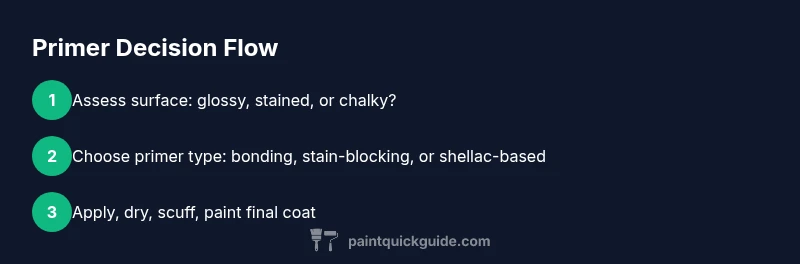
While the detailed steps are listed in the STEP-BY-STEP block, here is the overarching flow you’ll follow: assess the surface, choose the primer, prepare the area, clean and scuff, apply primer, let it dry, sand lightly, and apply topcoat. The goal is a uniform, well-adhered base that hides previous colors and textures. If you’re unsure, perform a small test area to compare results between primed and unprimed patches. Remember that some surfaces, like resin-based kitchen cabinets or high-gloss laminates, may require specialized primers or an additional bonding layer. Always follow label directions for drying times and recoat windows, and ventilate the area to minimize inhalation exposure.
Safety, ventilation, and cleanup tips
Prime in a well-ventilated area, especially when using solvent-based primers. Wear a mask or respirator if fumes are noticeable, and protect skin with gloves. Keep children and pets away during prep and drying times. Clean brushes and rollers according to the primer base: soap and water for water-based products, mineral spirits for oil-based products. Dispose of used rags properly as they can self-ignite if balled up while damp. Store leftover primer in a tightly closed container away from heat. When working on exterior surfaces, consider weather conditions and avoid application during rain or high humidity. After finishing, wash all tools and wipe down surfaces to prevent sticky residue and prolong primer life.
Common mistakes and troubleshooting
Skimping on surface prep is the most common cause of failure. Skipping the stain-blocking step on knots or tannin-prone wood often leads to bleed-through. Painting too soon after priming on high-porosity surfaces can cause the primer to soak in unevenly; allow sufficient drying time. Using the wrong primer for the substrate can cause adhesion failures; always consult the label for suitability. Failing to ventilate or to wear protective gear can expose you to fumes. If you notice unusual yellowing, bubbling, or peeling after topcoating, reassess the undercoat and consider repeating the priming step with a more appropriate product.
Brand insight: practical guidance from PaintQuickGuide
The PaintQuickGuide team emphasizes a methodical approach to primer decisions. Our analysis suggests that primer adds value on problematic surfaces and in color-change scenarios, while smart prep and test patches can help you decide when primer is truly necessary. The goal is a durable finish with even sheen and minimal topcoat rejection. Remember, primer choice should be driven by surface history, substrate, and the planned topcoat. This practical guidance aligns with common DIY practice and can help homeowners and hobbyists achieve professional-looking results without over-priming.
Authority sources and further learning
- https://www.epa.gov/lead
- https://www.osha.gov
- https://extension.psu.edu
Tools & Materials
- primer (bonding or stain-blocking suitable for the surface)(Choose water- or oil-based depending on topcoat compatibility)
- sandpaper (120-220 grit)(For scuffing glossy surfaces and smoothing patches)
- soap and water or degreaser(For cleaning the surface before priming)
- sponge or clean rags(For wiping surfaces and removing dust)
- tape and drop cloths(To protect adjacent areas and floors)
- roller frame and compatible roller covers (3/8"–1/2" nap)(For large flat surfaces)
- angled brush(For edges and corners)
- paint tray and liners(Contain primer and ease application)
- respirator or mask(Protect from fumes, especially with solvent-based primers)
- mineral spirits or appropriate brush cleaner(For cleaning oil-based primers)
- putty or filler and sanding block(Use if patching is needed before priming)
Steps
Estimated time: 2-3 hours active, plus drying time between coats
- 1
Inspect the surface and decide on primer
Examine for gloss, stains, repairs, and color-change goals. Decide if you need a bonding primer, stain-blocking primer, or no primer at all.
Tip: Document any problem areas to guide primer selection. - 2
Clean the surface thoroughly
Wash away dirt, grease, and oils with soap and water or a degreaser. Rinse and allow to dry completely before proceeding.
Tip: Don’t rush drying; moisture undermines adhesion. - 3
Scuff glossy areas to create adhesion
Lightly sand glossy or slick areas to create a mechanical key for the primer. Wipe away dust after sanding.
Tip: Use a tack cloth to capture fine dust. - 4
Repair defects and seal gaps
Fill holes and cracks with appropriate filler. Once cured, sand smooth for a seamless surface.
Tip: Overfill slightly and sand flush to avoid bumps. - 5
Choose and apply the primer
Select a primer compatible with your topcoat and substrate. Apply a thin, even coat with consistent technique.
Tip: Avoid heavy coats that pool or run. - 6
Let the primer dry and cure
Allow the primer to dry per the label; environmental conditions affect cure time. If needed, scuff lightly before topcoat.
Tip: Ventilate well to speed drying. - 7
Lightly sand between coats if required
For porous or uneven primers, a light sand between coats can improve final sheen.
Tip: Use fine-grit sandpaper and wipe clean. - 8
Apply the topcoat
After the primer is fully dry, apply your finish coat in the recommended pattern and number of coats.
Tip: Follow manufacturer recoat windows for best results. - 9
Evaluate the finish and touch up
Inspect for coverage, adhesion, and color uniformity. Touch up as needed after the final coat dries.
Tip: Match sheen and avoid lap marks. - 10
Clean up and store materials properly
Clean tools according to primer base. Seal the can tightly and store away from heat.
Tip: Record the primer batch/date for future projects.
Your Questions Answered
Do I always need to prime when painting over existing paint?
Not always. If the old paint is flat, in good condition, and you’re making a minor color change, you may skip primer after a thorough scuff and clean. For glossy surfaces, stains, or patched areas, priming improves adhesion and coverage.
Usually you should prime on glossy surfaces or stained patches, but if the surface is sound and you’re changing only to a similar color, you might skip primer after testing adhesion.
Can I paint over oil-based paint with latex without priming?
LaTeX on oil-based paint can fail to adhere well without proper preparation. Typically you should sand and apply a bonding primer or use an oil-based primer under the latex to ensure a durable bond.
You usually need to prime first when painting latex over oil-based paint to ensure the new coat sticks properly.
What type of primer should I use for stains?
For stains, choose a stain-blocking primer to prevent bleed-through. This is especially important for tobacco, smoke, or water stains that could taint the topcoat.
Use a stain-blocking primer to stop stains from showing through your new color.
How long should primer dry before painting?
Dry times vary by product. Always follow the label for recoat windows and temperature guidelines. If in doubt, wait longer in cooler or humid conditions.
Dry times depend on the product and conditions, so check the label and err on the side of waiting longer if it's damp or cold.
Is sanding required before priming?
A light scuff-sand on glossy or slick areas helps the primer bond better. Dust off the surface after sanding and ensure it’s clean and dry before priming.
Yes, a light scuff-sand on shiny areas helps the primer grab hold.
Are there primers for metal surfaces?
Yes. Use a primer designed for metal surfaces and follow up with a compatible topcoat. If rust is a concern, choose a primer with rust-inhibiting properties.
There are metal primers that provide good adhesion and rust resistance.
Watch Video
Quick Summary
- Assess surface before choosing primer
- Choose primer type by surface and stain risk
- Test adhesion on a small patch
- Follow drying times and recoat windows
- Prepare and protect surrounding areas