How to Remove Spray Paint From Skin: Safe, Quick Steps
Learn proven methods to remove spray paint from skin safely and effectively. This PaintQuickGuide tutorial covers soap, oils, skin-safe removers, and aftercare to prevent irritation.


You can safely remove spray paint from skin by starting with soap and warm water, then using a gentle oil (like mineral or olive oil) if needed. Avoid harsh solvents on bare skin and rinse thoroughly. If paint remains after a couple of washes or irritation occurs, switch to a skin-safe remover and seek medical advice.
How spray paint interacts with skin
Spray paint contains pigments suspended in solvents that can bond with skin oils and sweat. Some formulations stain the surface, while others may irritate or dry the skin, especially if you have sensitive or damaged skin. If you are wondering how to remove spray paint from skin, you can follow a simple, skin-safe routine that minimizes irritation and avoids harsh chemicals. According to PaintQuickGuide, the safest approach starts with basic cleaning and progresses to gentle, oil-based removers only if needed. With patience and the right steps, most spray paint will wash away without lasting effects. This section explains why certain solvents bond with skin, which options are safest for you, and how to plan a quick cleanup during a messy project.
Immediate safety steps before removal
Before you start any cleaning, protect your eyes, face, and any broken skin. Work in a well-ventilated area to avoid inhaling fumes, especially if the paint has dried or is oil-based. Put on disposable gloves if you’re cleaning large areas or if paint is on your hands for an extended period. Rinse the exposed skin with lukewarm water and mild soap as soon as possible to reduce pigment penetration. If you wear contact lenses or have sensitive eyes, consider rinsing the eye area with clean water and avoiding rubbing. The PaintQuickGuide team emphasizes safety as the first line of defense, and you should pause cleaning if you notice a burn or increasing redness.
Soap and water: the first line of defense
Soap and warm water should be your initial step for any skin paint cleanup. Use a mild dish soap or hand soap and gently lather for 20–30 seconds, then rinse. Repeat 2–3 times if needed. The friction from a soft washcloth can help lift pigment without harming skin, but avoid scrubbing too aggressively. If after a couple of washes pigment remains, move to a skin-safe oil to loosen the residue. This approach aligns with common dermatological guidance and PaintQuickGuide’s cautious stance on solvent use near skin.
Oil-based removers and skin-safe solvents
If initial washing doesn’t remove all the pigment, apply a small amount of mineral oil, olive oil, or a skin-safe remover on a clean cloth and gently massage over the stained areas. Oils can help break the bond between pigment particles and the skin surface without harsh chemicals. After 1–2 minutes, wash again with soap and warm water. Avoid applying large amounts of solvent or rubbing the skin aggressively, as this can cause irritation. Oil-based methods are generally gentler and effective for stubborn stains when used with patience.
What to avoid: harsh solvents and abrasive methods
Avoid strong solvents like acetone, toluene, or industrial cleaners on bare skin. These chemicals can dry, irritate, or burn the skin and may cause dermatitis with repeated exposure. Do not scrub with abrasive materials, steel wool, or rough sponges, which can abrade the skin and push pigment deeper. If the pigment remains after multiple gentle washes and oil treatments, consider switching to a dermatologist-approved, skin-safe remover product and follow label directions carefully.
A practical, step-by-step method for common areas
For hands and arms, start with soap and warm water, then apply a small amount of mineral oil and gently rub in circular motions for 30–60 seconds before washing again. For facial areas, minimize rubbing and avoid the eyes; use a soft cloth and a small dab of oil to loosen pigment, then rinse with water. If paint is near the lips or eyes, rinse thoroughly and avoid penetrating the mucous membranes with solvents. Pat the skin dry instead of rubbing to prevent irritation, and moisturize after cleanup.
Post-removal skincare and irritation management
After removal, wash again with mild soap and pat dry. Apply a fragrance-free moisturizer or aloe to soothe any dryness or redness. If itching or a burning sensation persists for more than a few minutes, consider applying a cool compress and avoid further chemical exposure. Hydration is important for skin recovery, and applying a mild barrier cream can help protect the skin for the next project. If irritation worsens or spreads, seek medical advice promptly.
Common mistakes and how to avoid them
One common mistake is scrubbing too hard, which can irritate or injure the skin and push pigment deeper. Another error is using harsh solvents directly on skin or near sensitive areas like the eyes. Always start with soap and water and opt for gentle oils before resorting to stronger products. Test any product on a small skin patch first to ensure you won’t react badly, and never use incompatible products simultaneously (e.g., oil and high-concentration solvents) on the same area.
When to seek medical help or professional assistance
If pigment covers a large area, if you have open wounds, or if you experience persistent redness, swelling, blistering, or a burning sensation after cleaning, contact a healthcare professional. Prolonged exposure or repeated contact with certain spray paints can cause dermatitis or chemical burns in some individuals. If the paint contains hazardous pigments or solvents, a clinician can provide guidance on safe removal and appropriate skin care. The PaintQuickGuide team recommends erring on the side of caution and seeking professional advice in doubt.
Quick recap of best practices
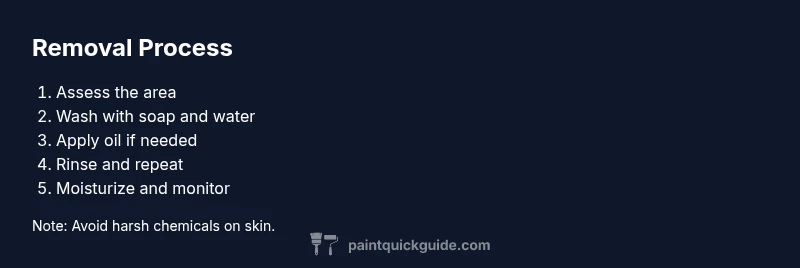
Start with soap and warm water, then gently use mineral or olive oil if needed. Avoid acetone or other harsh solvents on skin, and never scrub aggressively. Use a soft cloth, rinse thoroughly, and moisturize after cleaning. If irritation occurs or pigment refuses to lift after several gentle attempts, switch to a skin-safe remover and seek medical guidance. For future projects, prepare your skin with barrier creams and wear protective gear.
Tools & Materials
- Mild dish soap or soap for hands(Gentle formula; fragrance-free preferred)
- Warm water(Around body temperature; not hot to avoid burns)
- Mineral oil or olive oil(Small amount on a soft cloth or cotton pad)
- Soft washcloth or sponge(Non-abrasive; gentle cleaning surface)
- Dermatologist-approved skin-safe remover (optional)(Choose products labeled for skin use; test first)
- Fragrance-free moisturizer(Soothes the skin after cleaning)
- Gloves (optional)(Protect hands during cleanup; nitrile recommended)
- Eye protection (if spray near face)(Avoid splashes; rinse eyes with water if contact occurs)
Steps
Estimated time: 15-30 minutes
- 1
Prepare skin and workspace
Set up a clean, well-lit area. Put on gloves if available and remove jewelry to avoid trapping paint beneath. Have soap, oil, and a towel within reach before you begin.
Tip: Clear a nearby sink or basin to prevent drips on clothing or floors. - 2
Rinse with soap and warm water
Wet the skin with warm water and apply a small amount of mild soap. Gently rub in circular motions for 20–30 seconds, then rinse thoroughly.
Tip: If paint feels sticky, give it a little extra time before rinsing. - 3
Use oil to loosen stubborn paint
If pigment remains, apply a tiny amount of mineral oil or olive oil on a cloth and gently massage over the area for 30–60 seconds. Rinse and wash again.
Tip: Oil helps break the bond without harsh solvents that can irritate skin. - 4
Repeat washing if necessary
If pigment persists, repeat the washing and oil step once more. Avoid over-scrubbing, which can irritate the skin.
Tip: Pat the skin dry after washing to avoid irritation. - 5
Moisturize and assess
Apply fragrance-free moisturizer to soothe any dryness. Check the area over the next several hours for redness or irritation.
Tip: If irritation develops, discontinue products and seek advice. - 6
Escalation if paint remains
If paint still won’t lift after gentle steps, consider a dermatologist-approved remover and follow its directions. Do not apply multiple removers at once.
Tip: Always patch-test a small area first.
Your Questions Answered
Is it safe to use acetone on skin to remove spray paint?
Acetone can irritate skin and mucous membranes; it should be avoided for skin cleanup. Use milder, skin-safe removers instead and rinse thoroughly.
Acetone is not safe for skin cleanup; opt for milder removers and rinse well.
What should I do if paint dries on my skin?
Dried paint can be softened with warm water, mild soap, then a light oil. Gently rub with a soft cloth and repeat as needed. If still persistent after multiple attempts, seek professional guidance.
Dried paint may take extra patience with soap and oil; keep it gentle.
Can household cleaners remove spray paint from skin?
Plain dish soap and mild oils are generally safer for skin. Strong household cleaners or solvents should be avoided on exposed skin, especially near eyes.
Stick to soap and oil for skin; avoid harsh cleaners on skin.
How long does skin cleanup usually take?
Most removals take a few minutes to about twenty minutes with repeated washing and oil steps. More stubborn stains may require extra time and care.
Most cleanups take minutes, with patience for stubborn stains.
What if spray paint gets near my eyes or lips?
Rinse gently with clean water immediately and avoid rubbing. If irritation or vision changes occur, seek medical help promptly.
Rinse with water if paint nears the eyes; seek help if irritation continues.
Watch Video
Quick Summary
- Start with soap and warm water.
- Use oils to loosen stubborn paint safely.
- Avoid harsh solvents on skin.
- If irritation or persistence occurs, seek medical advice.