Spray-on Texture Paint: A Practical How-To Guide
Learn how to use spray-on texture paint to create durable, decorative wall textures. This guide covers prep, equipment, mixing, spraying, drying, and cleanup with practical tips from PaintQuickGuide.


You will learn how to apply spray-on texture paint to walls and ceilings, producing durable, decorative finishes. This quick guide covers product selection, surface prep, proper equipment, mixing and thinning options, masking, spraying technique, drying times, and cleanup. You’ll need PPE, good ventilation, drop cloths, masking tape, a spray gun or hopper gun, and a steady, controlled motion.
What is spray-on texture paint and how does it work?
Spray-on texture paint is a specialized coating designed to create raised textures on walls and ceilings. It combines pigment with a textured additive that materializes as you spray, producing finishes such as orange peel, knockdown, popcorn, or skip-trowel looks. Unlike traditional solid paints, texture products are formulated to build height and pattern in a single pass, helping hide minor imperfections and providing a tactile visual interest. When used correctly, spray texture adheres well to properly prepared surfaces and dries to a durable, washable finish suitable for high-traffic rooms. In this guide, we use practical steps you can apply in a home setting, whether you’re renovating a single room or refreshing an entire interior.
Benefits of texture spray over traditional finishes
- Hides flaws: Texture can conceal hairline cracks, patchy repairs, and uneven drywall seams more effectively than flat paint.
- Speed and coverage: A single textured coat can cover irregular surfaces more uniformly and quickly than multiple coats of standard paint.
- Aesthetics and design: Texture adds dimension and character, letting homeowners experiment with patterns and color families.
- Maintenance: Textured walls tend to show less fingerprint and scuffing than highly glossy surfaces when paired with a protective topcoat.
However, texture spray requires careful prep and clean-up to avoid overspray mess and to ensure a consistent finish across large areas. This guide will walk you through the decisions, setup, and workflow to achieve professional results.
Surface prep for best results
Surface prep is the most critical step in any texture project. Start with a clean, dry surface free of dust, oils, and loose material. Patch holes or gouges, sand rough edges, and remove loose paint. If you’re coating over glossy finishes, scuff the surface with a coarse sanding pad or apply a bonding primer to improve adhesion. Mask adjacent areas with painter’s tape and drop cloths to protect trim, floors, and outlets. Temperature and humidity matter: aim for a dry day with moderate humidity to avoid slow drying or cracking later on.
Texture product options: premixed texture paints vs. texture additives
Texture paints come in premixed formulas and in base paints that accept texture additives. Premixed textures offer convenience and predictable outcomes, while base paints with additives let you customize texture strength and color consistency. When choosing, consider the area’s exposure (high-traffic zones benefit from heavier textures) and whether you want a specific look (orange peel, knockdown, or skip-trowel). Always read product labels to confirm compatibility with your spray equipment and with any primer or topcoat you plan to apply afterward.
Equipment and setup: guns, compressors, and settings
The core choice is between HVLP (high-volume, low-pressure) and conventional air spray systems. HVLP tends to produce finer textures with better control and less overspray, which is helpful for interior walls. You’ll also need a spray gun or hopper gun, appropriate hoses, a pressure regulator, and a clean air supply. Ensure the equipment can handle the texture viscosity and that nozzles are clean and sized for your texture pattern. Use a suitable containment solution for overspray and maintain a steady air flow to avoid runs or splotches.
Mixing, thinning, and color considerations
Texture paint often requires some thinning or mixing to achieve the desired spray consistency. Always follow the manufacturer’s instructions for any thinning or additive requirements. Test your texture mix on a scrap board or a hidden patch first to verify pattern, adhesion, and drying behavior. If you’re matching an existing texture, bring a sample and compare the look under different lighting conditions. Color changes can be achieved with tinted bases or compatible colorants, but consistency across batches is key.
Masking, protection, and ventilation
Protection is non-negotiable when spraying. Wear a respirator with organic vapor cartridges, safety goggles, and gloves. Ventilate the area with fans, and keep doors and windows open if possible. Cover floors and nearby furniture with drop cloths and plastic sheeting. Remove or tape off electrical outlets and light fixtures to prevent coating them unintentionally. A well-protected workspace minimizes cleanup time and protects your health.
Application technique: spraying pattern, passes, and overlap
Start with a test spray on a scrap patch to dial in distance, speed, and pattern width. Maintain a consistent distance and move your arm in smooth, overlapping arcs. Apply in light coats, allowing each pass to partially overlap the previous one. Avoid long, continuous streaks that can create heavy buildup. Work in sections to keep textures uniform across walls and ceilings. If you notice pockets or sagging, back off the spray slightly or adjust the pressure and gun fan.
Drying, curing, and recoat guidance
Texture finishes require adequate drying time before handling or applying a second coat. Drying times vary with product and environmental conditions; check the label for guidance and avoid high humidity or rapid drying from forced heat, which can cause cracking. If a second coat is needed for uniformity, wait until the first layer is only tacky, not fully dry, to ensure proper adhesion. After final cure, you can apply a compatible primer or topcoat if desired for added durability.
Cleanup and equipment maintenance
Flush the spray system with the recommended cleaner or water (depending on texture type) immediately after use to prevent dry texture from clogging nozzles. Disassemble spray parts and rinse thoroughly. Clean and inspect hoses and the gun’s nozzle, then store with minimal residue. Wipe down the area and dispose of used masking materials responsibly. Regular maintenance will extend equipment life and improve future results.
Common mistakes and troubleshooting
- Overspray and texture mismatch: Calibrate distance and movement; test regularly.
- Uneven fan width: Check nozzle size and pressure; clean nozzle apertures.
- Poor adhesion: Ensure proper surface prep and primer where necessary.
- Slow drying or cracking: Adjust humidity and temperature, avoid sealing in moisture-prone spaces.
- Inconsistent texture: Batch mix texture and maintain even airflow throughout the job.
These issues are common but reversible with careful testing, consistent technique, and adherence to product instructions.
Design ideas and color coordination tips
Texture is a strong design element. Pair bold textures with lighter or darker shading to enhance depth. Use accent walls or ceilings with a lighter texture while keeping surrounding surfaces smooth for contrast. Consider color temperature and room lighting—cool tones can emphasize a modern texture, while warm tones create a cozy feel. Finally, seal with an appropriate topcoat if the room experiences higher moisture or wear.
Tools & Materials
- Spray-on texture paint (premixed or base + additive)(Select for interior walls or ceilings; check color and texture grade)
- Texture spray gun or hopper gun(Ensure compatibility with product and nozzle size)
- Air compressor or powered sprayer(Choose one with adequate CFM for your gun)
- Drop cloths and plastic sheeting(Protect floors and furniture)
- Painter's tape and masking film(Seal edges and cover outlets)
- Mixing pail and stirring paddle(Prepare texture mix to even consistency)
- Protective PPE (respirator, goggles, gloves)(Prevent inhalation of mist and eye irritation)
- Sandpaper or sanding block(Lightly scuff glossy surfaces for adhesion)
- Primer (bonding or stain-blocking)(Use when patching or painting over slick surfaces)
- Step ladder or stabilizing platform(Access high walls/ceilings safely)
- Water or recommended cleaner(Flush system after spraying)
- Mixing stick or drill with mixer(Maintain even texture consistency)
Steps
Estimated time: 2-6 hours
- 1
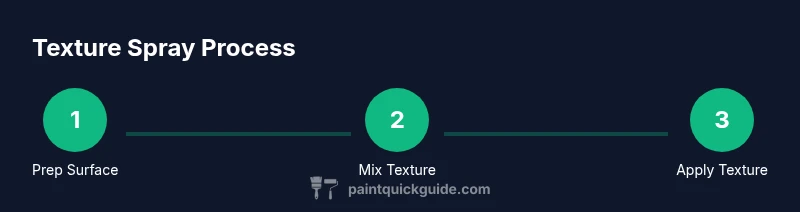
Inspect and plan texture
Walk the space and decide on texture type, patterns, and coat count. Check for repairs, moisture, and surface irregularities. Mark high-visibility areas to guide your spraying path.
Tip: Plan a small primer patch to test texture behavior before full coverage. - 2
Protect and prep space
Cover floors and nearby items with drop cloths, tape off trim and outlets, and ensure adequate ventilation. Wipe down walls to remove dust and oils.
Tip: Use reusable plastic sheeting for easier cleanup and more precise coverage. - 3
Prepare texture mix
Stir the texture paint until evenly blended and free of lumps. If using additives, mix per product instructions and test consistency on a scrap board.
Tip: Test spray on cardboard to dial in atomization and projection. - 4
Prime patches if needed
Apply primer to any patched or glossy areas to improve adhesion. Allow the primer to dry fully before texture application.
Tip: Choose a primer compatible with your texture paint for best results. - 5
Test spray pattern
Spray a small patch to verify distance, fan width, and texture density. Adjust gun settings to achieve the desired texture.
Tip: Keep a steady stance and use a consistent motion during tests. - 6
Spray texture in sections
Start spraying in one corner and work methodically across the wall or ceiling. Maintain a constant distance, overlap passes slightly, and avoid staying in one spot too long.
Tip: Work in grid-like sections to ensure even application. - 7
Assess coverage and adjust
Review the texture in different lighting, checking for evenness and gaps. Apply a light second pass if needed for uniformity.
Tip: Don’t overwork the same area; texture can collapse if repeatedly sprayed too long.
Your Questions Answered
Is spray-on texture paint suitable for beginners?
Yes, with careful prep, testing, and following the product’s instructions. Start on a small patch to learn the spray pattern and how the texture behaves, then scale up to larger areas.
Spray texture can be beginner-friendly if you practice on a patch first and follow the product instructions.
What surfaces can you apply spray texture to?
Interior drywall, plaster, and properly prepared concrete or masonry surfaces are common targets. Surfaces must be clean, dry, and primed if needed to ensure adhesion and uniform texture.
Most drywall, plaster, and similar surfaces work well when prepared and primed properly.
Do I need primer before spraying texture?
Primer isn’t always required, but it improves adhesion on glossy, patched, or repaired areas. Use a bonding primer if the surface is problematic.
Primer helps in challenging areas; follow the surface condition guidance on the product label.
How long does texture take to dry and cure?
Drying time varies with temperature and humidity. Expect several hours to overnight before handling; check the product label for guidance and avoid high humidity during curing.
Drying depends on conditions; plan for several hours and judge readiness by touch.
What maintenance is required for spray equipment?
Rinse with the recommended cleaner immediately after use, disassemble and clean parts, and store dry to prevent corrosion or clogging.
Rinse and clean the nozzle right away, then store neatly to avoid clogs.
Can I remove spray texture if I don’t like it?
Texture can be removed or covered with a new finish, but it’s labor-intensive. Sanding, scraping, or re-drying with a new coat may be needed.
You can remove texture but it’s a laborious job; plan ahead.
Watch Video
Quick Summary
- Plan texture style and surface prep before spraying.
- Maintain consistent distance and motion for even coverage.
- Protect area and follow safety guidelines throughout.
- Test on scrap and patch areas to ensure desired look.