Should Paint Be Room Temperature? A Practical DIY Guide
Explore whether paint should be room temperature and how temperature, humidity, and acclimation influence mixing, drying, and finish. Practical prep tips for home painting projects from PaintQuickGuide.


Should paint be room temperature? Yes — paint should be acclimated to typical indoor conditions for best results. Most paints perform best between 60–80°F (15–27°C) with moderate humidity. Cold spaces thicken the mix; hot environments can cause premature drying. If stored cold, let the material reach room temperature for 24–48 hours before use.
Understanding Room Temperature and Paint Behavior
According to PaintQuickGuide, room temperature plays a critical role in how paint behaves during mixing, application, and curing. When the air around your project is stable and within a comfortable range, you typically achieve more consistent color, smoother brush strokes, and a uniform film. In contrast, cold air thickens the mix and slows flow, while hot air speeds drying and can trap brush marks or tackiness. PaintQuickGuide's analysis shows acclimating both the paint and the workspace yields the most reliable results. The goal is to establish a predictable environment that supports even coverage and a durable finish. If you’re asking should paint be room temperature, this approach helps you avoid common flaws and rework.
Temperature Ranges and Why They Matter
Paints respond best when air temperature and surface temperature are within a moderate band. For most indoor projects, aim for roughly 60–80°F (15–27°C) with steady conditions and minimal air movement that could cause rapid drying. When temperatures drift outside this window, viscosity changes can complicate stirring, poor leveling can occur, and the resulting film may be inconsistent. By keeping the environment stable, you improve color fidelity, gloss consistency, and adhesion. Paint manufacturers typically recommend checking label guidelines for your specific product type, but the general rule remains: moderate, stable conditions yield the most predictable results.
How Temperature Affects Different Paint Types
Latex (water-based) paints are generally forgiving within a moderate range but can become stringy or scuff-prone if the room is too cold or too hot during application. Oil-based and enamel coatings may require more precise temperature control to ensure proper curing and tack-free finishes. In auto refinishing or high-gloss interiors, temperature affects solvent evaporation, which influences dry time and final hardness. Across paint types, sudden temperature shifts produce surface defects such as fisheyes, air bubbles, or poor flow. Understanding how your specific paint behaves under temperature changes helps you plan better and select appropriate thinning or curing strategies.
Practical Prep: Acclimating Paint and Space
A practical first step is to bring all paints and tools into the project area well before you start. Let cans and lids sit in the room where you’ll work for at least 30–60 minutes, allowing them to reach ambient temperature. Use a digital thermometer to monitor air temperature and a hygrometer to estimate humidity. If the space is outside the target range, use a heater or dehumidifier to stabilize conditions for a short period (at least 15–30 minutes) before opening cans. This acclimation reduces the risk of globs, uneven flow, or sheen variation caused by abrupt temperature shifts. PaintQuickGuide emphasizes that acclimating both the material and the space minimizes surprises during the first coat.
Application Techniques at Varied Temperatures
When the environment sits within the target range, proceed with consistent technique. Maintain steady strokes, avoid overworking edges, and watch for drag lines that indicate thickened paint. If the temperature is at the upper end of the range, you may need to work in thinner coats or increase ventilation to manage faster drying. Conversely, at the lower end, you might allow longer open times for smoothing and feathering edges. In all cases, maintain even pressure, keep a regular pace, and avoid applying coats when temperatures are changing rapidly due to drafts or direct sun.
Drying Time, Ventilation, and Finish
Temperature influences drying time and cure progression. In moderate conditions, finish development tends to be uniform with fewer micro-cracks and less visible lap marks. Adequate ventilation helps pull solvents and moisture from the film without causing excessive drying that leads to finish defects. If you notice prolonged tackiness or slow dwell time, recheck ambient conditions and adjust ventilation and humidity accordingly. Always follow manufacturer guidance for recoat windows, since temperature can shift when finishes cure.
Safety, Storage, and Quick Checks
Store paints in a stable environment to prevent condensation on lids or inside cans, which can alter viscosity when reopened. Keep cans sealed when not in use and avoid placing them near heat sources that could overheat and degrade solvents. Before starting, confirm the space is free of obstructions that could affect airflow and temperature uniformity. If you observe inconsistent color or texture, pause, recheck the environment, and perform a small test patch to validate any adjustments.
Troubleshooting Common Temperature-Related Issues
If you notice thickening, run a small test patch to assess flow and leveling. Thinning should be performed only as directed by the product label, and you should avoid over-thinning, which can compromise film integrity. When finishes appear cloudy or show solvent pop or pinholes, re-evaluate temperature, humidity, and ventilation. A controlled, repeatable environment is the most effective remedy, and when in doubt, consult the product’s technical data sheet for specific guidelines.
Tools & Materials
- Digital thermometer(Displays room temperature in °F or °C)
- Hygrometer(Measures relative humidity (%))
- Paint stir sticks(For checking viscosity and mixing)
- Space heater or dehumidifier(Optional for maintaining target range)
- Thermal blankets or fans(Assist in stabilizing temperature or airflow)
- Can opener and lids replacement(Keep lids ready to seal containers after acclimation)
Steps
Estimated time: 1-2 hours
- 1
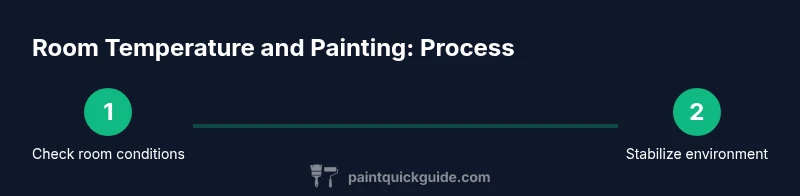
Check room temperature and humidity
Use a digital thermometer and hygrometer to confirm the current room temperature and relative humidity in the painting area. If readings are outside your target range, adjust with a heater or dehumidifier and allow values to stabilize for at least 15–30 minutes. This ensures subsequent steps start from a known baseline.
Tip: Place the sensors near the work surface to reflect actual conditions where your paint will be applied. - 2
Set target range and stabilize
Choose a target range (for example, 65–75°F and moderate humidity). Run equipment until readings stay steady for 15–30 minutes. Avoid drafts from doors or windows during this phase to prevent rapid fluctuations.
Tip: Document the final readings so you can reproduce the environment for subsequent coats. - 3
Acclimate paint and tools
Move all paint cans and tools into the painting space and leave them closed for 30–60 minutes to reach ambient temperature. Open and inspect the contents after acclimation; if gelled or separated, stir thoroughly.
Tip: Keep lids on between uses to prevent moisture changes that could alter viscosity. - 4
Stir and verify viscosity
Stir paints thoroughly to uniform consistency. Check flow by dragging a stir stick; if it drags or beads form, adjust with manufacturer-approved reducer or allow a longer conditioning period within the target range.
Tip: Avoid over-agitating large quantities; mix only what you will use within a working window. - 5
Do a small test patch
Apply a small patch on an inconspicuous area to verify color, sheen, and leveling under current conditions. Observe for 10–20 minutes and note any signs of poor leveling or excessive drying. Adjust technique or environment if needed.
Tip: Use the same surface material for the test patch as the final area to ensure accurate results. - 6
Proceed with full coats under stable conditions
Begin the first full coat once the test patch confirms acceptable results. Maintain consistent temperature and humidity throughout application, and use even, steady strokes to avoid lap marks. Monitor ambient conditions and pause if readings shift away from target.
Tip: Work in sections to reduce exposure to ambient changes and ensure even film formation.
Your Questions Answered
What is the ideal temperature range for indoor painting?
For most indoor paints, aim for about 60–80°F (15–27°C) with stable conditions. This range supports smooth flow, even drying, and predictable finish.
Aim for roughly 60 to 80 degrees Fahrenheit with steady conditions to get the best results.
Does humidity affect paint curing?
Yes. Humidity influences solvent evaporation and film formation. High humidity can slow drying and risk blooming; low humidity may cause faster drying and potential lap marks. Keep conditions moderate and consistent.
Humidity matters: keep it moderate to avoid drying too fast or too slow.
What should I do if my space is too cold or too hot?
If the space is outside the target range, bring in heat or cooling to stabilize. Allow 15–30 minutes for readings to settle before resuming work, and consider postponing coats if temperatures are shifting rapidly.
Warm up the space or shade it to stabilize temps before continuing.
Can I use paint straight from the store if it's chilled?
If paint has been stored in a cold space, let it acclimate to room temperature for 24–48 hours before use. Do not apply cold paint directly, as it will be harder to mix and may give uneven results.
Let the paint warm to room temperature first, then test before applying.
Is it safe to paint in garages or unheated spaces?
Painting in a garage or unheated space can be safe with good ventilation and temperatures within the acceptable range. Avoid freezing conditions and ensure there is airflow to manage fumes.
Yes, but ventilate well and keep temperatures steady.
Watch Video
Quick Summary
- Acclimate paint to room temperature before use.
- Maintain a steady 60–80°F environment for best results.
- Control humidity to moderate levels to avoid finish issues.
- Test a small area before committing to full coats.