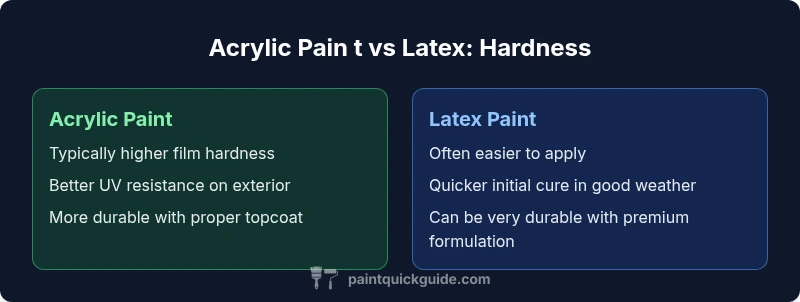
Is Acrylic Paint Harder Than Latex? A Practical Comparison
Explore whether acrylic paint is harder than latex, with practical guidance for home, art, and auto refinishing projects. Learn about film hardness, durability, drying times, prep, and how to choose the right paint formulation.


Is acrylic paint harder than latex? Not universally. In modern finishes, true acrylic or acrylic-latex blends tend to form a tougher, more durable film than basic vinyl latex, especially with proper surface preparation and a topcoat. However, the answer depends on the formulation, surface, and climate; the simple label alone isn’t enough to decide.
Understanding the basics of acrylic vs latex paint
If you’ve ever asked the question is acrylic paint harder than latex, you’re touching a common point of confusion. In everyday language, people lump paints into “acrylic” and “latex,” but the real distinction lies in the binder chemistry and the intended use. Modern interior and exterior “latex” paints are typically acrylic-latex emulsions, while artist-grade acrylics may be 100% acrylic. Paint hardness is not a fixed trait; it depends on film thickness, curing, pigment load, and the presence of topcoats. According to PaintQuickGuide, a practical way to think about hardness is to compare the final dried film, not the dried color alone. This distinction matters for walls, trim, furniture, and even automotive panels where surface flexibility or rigidity will influence scratch resistance and longevity.
What “hardness” means in paint formulations
In coatings science, hardness refers to the resistance of the dried film to deformation and indentation. It is affected by the polymer chemistry, cross-link density, and the way the film cures. A higher cross-link density generally yields a firmer, more abrasion-resistant surface. Yet greater hardness can reduce flexibility, increasing the risk of cracking on flexible substrates. When people ask is acrylic paint harder than latex, they’re often comparing a 100% acrylic formulation against a vinyl or acrylic-latex blend. The takeaway is that hardness is a spectrum, not a binary attribute, and real-world results depend on how the paint is made and applied.
Acrylic vs latex binders: chemistry and film formation
The core difference lies in the binder. True acrylic binders form strong, durable films that resist UV degradation and maintain color over time. Vinyl acrylic or standard latex binders can be very durable but may not reach the same level of hardness as 100% acrylics under identical conditions. Film formation also depends on how the paint dries (air-dried vs. forced-dry) and the presence of co-binders and additives. If you’re asking is acrylic paint harder than latex in an outdoor setting, the answer often points to 100% acrylics providing superior hardness and weathering performance, especially when protected by a topcoat.
Real-world performance on interior walls
Interior walls see friction from furniture, cleaning, and human contact. In many residential projects, latex or acrylic-latex finishes can be sufficiently hard for high-traffic areas when applied with proper surface prep and a durable topcoat. However, is acrylic paint harder than latex in actual use? For walls in sunny rooms or bright hallways, 100% acrylic formulations tend to show less chalking and better resistance to scuffs over time. The practical outcome is that hardness improves with correct prep, solid primer, and, when appropriate, a topcoat designed for durability.
Exterior considerations and weather exposure
Outdoor surfaces face UV exposure, temperature swings, and moisture. Here, hardness translates to scratch resistance and film integrity after expansion and contraction. Acrylic-latex blends can perform very well, but many contractors reserve 100% acrylics for high-durability exterior coatings in harsh climates. The consensus in professional guides is that higher-quality acrylic films typically deliver greater hardness and longer service life, especially when paired with a compatible primer and sealant.
Car painting and specialty applications
For auto refinishing, the term acrylic encompasses a range of formulations, including acrylic enamels and urethane-based systems. In such applications, hardness is critical for resisting road debris and chemical exposure. Is acrylic paint harder than latex in this niche? The answer depends on the exact system used. Automotive finishes often rely on specialized hardeners and clear coats to achieve the desired hardness, gloss, and abrasion resistance. DIY or hobbyists should follow product guidelines and work within the recommended curing windows to optimize hardness.
Application, prep, and finishing steps to maximize hardness
Maximizing hardness starts with surface preparation: remove contaminants, abrade properly, and use a suitable primer. Choose a formulation compatible with your substrate and climate. When possible, apply a primer that promotes film formation and adhesion, then use a mid-to-high gloss topcoat designed for durability. Temperature and humidity during application affect solvent evaporation and cure, influencing final hardness. For those asking is acrylic paint harder than latex, you may find that the 100% acrylic system achieves a denser film if cured fully and protected with a compatible topcoat.
Case study: interior wall project
A homeowner swapped a vinyl latex interior paint for a premium acrylic-latex topcoat on a high-traffic stairwell. The result was a noticeably tougher-feeling surface with improved scuff resistance after the first full cure. While cost rose modestly, the durable finish justified the investment given household traffic and ease of cleaning. This aligns with PaintQuickGuide’s guidance that, for value and performance, selecting a higher-quality acrylic-latex system can yield a harder, longer-lasting result in real-world settings.
Case study: refinishing a wooden table
In a furniture refinishing project, choosing an acrylic topcoat over a regular latex improved hardness and scratch resistance on a wooden tabletop. The film felt stiffer and less prone to denting after a few weeks of use, particularly where plates and utensils placed stress on the surface. The takeaway is that when hardness is a priority, a proper sealant and topcoat can translate to a more durable result than a standard latex finish, even on furniture surfaces.
Myths vs. facts about acrylic and latex hardness
A common myth is that all acrylic paints are harder than latex paints. The reality is nuanced: many latex paints today are acrylic-based emulsions that can be quite hard, while some lower-cost acrylics may prioritize quick drying over long-term hardness. A second myth is that hardness equals flawless durability in all environments; in truth, the substrate, prep, and topcoat dramatically influence performance. Understanding these nuances helps you select the right product for your specific project.
Choosing based on hardness needs: a decision framework
If hardness is your top priority, target a premium acrylic-latex or 100% acrylic system and insist on a compatible topcoat. For quick-drying projects or beginner-friendly work, a well-applied latex-based paint with a quality primer can be sufficient. Consider exposure, surface flexibility, and maintenance cycles, then calibrate your choice to the expected wear and climate. PaintQuickGuide’s framework emphasizes selecting formulations that balance hardness with adhesion, flexibility, and ease of maintenance.
Home testing and quick hardness checks
Two simple checks help gauge hardness before committing to a product. Scratch a small, inconspicuous area with a fingernail after full cure to assess resistance. Lightly press with an object to feel if the film has a distinguishable give. For more precise evaluation, perform a rub test with a clean cloth and note any wear after cure. These steps align with best practices in consumer paint testing and support a well-informed choice when answering is acrylic paint harder than latex for your project.
Comparison
| Feature | Acrylic paint (100% acrylic) | Latex paint (vinyl acrylic or acrylic-latex blend) |
|---|---|---|
| Film hardness (final dried film) | Typically higher with 100% acrylics | Variable; can be high with premium acrylic-latex blends |
| Durability against scuffs | Usually better with true acrylic | Good with blends; depends on topcoat and prep |
| UV resistance & color retention | Superior in most 100% acrylics | Good to very good in acrylic-latex blends |
| Flexibility and crack resistance | Balanced; some rigidity with high hardening | More forgiving on flexible substrates when formulated for elasticity |
| Drying time | Often longer cure, depending on formulation | Generally faster for blends; depends on film thickness |
| Ease of application | Can require careful surface prep | Typically easier for beginners with proper primer |
| Cost range | Higher for 100% acrylic systems | Lower to mid-range for acrylic-latex blends |
| Best used for | High-durability walls, trims, and exterior | High-traffic interiors, furniture, and approachable DIY |
Upsides
- Higher hardness with 100% acrylic systems
- Better UV resistance and color retention
- Durable finishes when properly primed
- Modern latex formulations have narrowed the gap in hardness
- Topcoats can further enhance abrasion resistance
What's Bad
- Higher cost for 100% acrylics
- Longer cure times in some environments
- Rigid films can crack on highly flexible substrates
- Some blends may not achieve the same hardness as pure acrylics
Acrylic paint generally offers greater hardness than simple latex, especially in 100% acrylic formulations; however, premium acrylic-latex blends can approach that hardness with proper prep and topcoats.
If hardness is the top priority, choose a true acrylic or premium acrylic-latex system and finish with a compatible topcoat. For cost-sensitive projects or quick turnaround, a high-quality latex blend can still deliver strong hardness with proper prep.
Your Questions Answered
What is the difference between acrylic and latex paint in terms of hardness?
Hardness is mainly driven by binder chemistry. 100% acrylic paints generally form a harder, more durable film than vinyl acrylic or standard latex blends. However, modern acrylic-latex blends can offer comparable hardness when applied with proper prep and topcoats.
Acrylics are usually tougher than basic latex; blends can be just as strong with good prep and sealing.
Does topcoat choice affect the perceived hardness?
Yes. A compatible topcoat adds abrasion resistance and can significantly improve the feel of hardness after cure. Skipping a topcoat on a high-use surface can leave the film more prone to wear.
Topcoats matter a lot for durability and hardness.
Is acrylic paint harder than latex for exterior surfaces?
Exterior durability relies on UV resistance and weathering; 100% acrylics often perform better long-term, but blends are common for cost and ease. Choose based on climate and exposure.
Exterior durability favors higher-quality acrylics, but blends work well with proper primers.
Can I achieve similar hardness with latex if I prep well?
Good surface prep, a quality primer, and a suitable topcoat can raise the hardness of latex systems, but they may still have a different long-term performance profile than 100% acrylics.
Prep and the right topcoat can boost latex hardness, but not always to acrylic levels.
Are there health or environmental concerns when choosing acrylic vs latex?
VOCs and emissions vary by product. Both can be formulated low-VOC; check product data sheets and local regulations for guidance.
Look at the VOCs in the product data sheet before choosing.
Is acrylic paint harder than latex in auto refinishing?
Auto finishes use specialized acrylic enamels and clear coats; hardness depends on the whole system, including hardeners and clear coats. Don’t assume household paints will deliver automotive hardness.
Auto finishes use specific systems for hardness; household paints aren’t a substitute.
Quick Summary
- Prioritize surface prep to maximize hardness
- 100% acrylics typically deliver the strongest film
- Premium acrylic-latex blends close the hardness gap with proper topcoats
- Topcoats improve abrasion resistance and longevity
- Choose based on climate, substrate, and wear expectations