Oil Paint vs Acrylic: A Practical Comparison
An analytical comparison of oil paint vs acrylic, covering open time, drying speed, color depth, durability, safety, and cost to help homeowners and artists choose the right medium.


Oil paint offers richer color depth, longer blending time, and strong archival potential, but requires solvents, ventilation, and longer drying periods. Acrylics dry quickly, clean up with water, and are generally more beginner-friendly and cost-effective for many projects. This comparison outlines the key trade-offs to help you choose the right medium for home projects, art, or auto refinishing.
The Core Differences: Why use oil paint instead of acrylic?
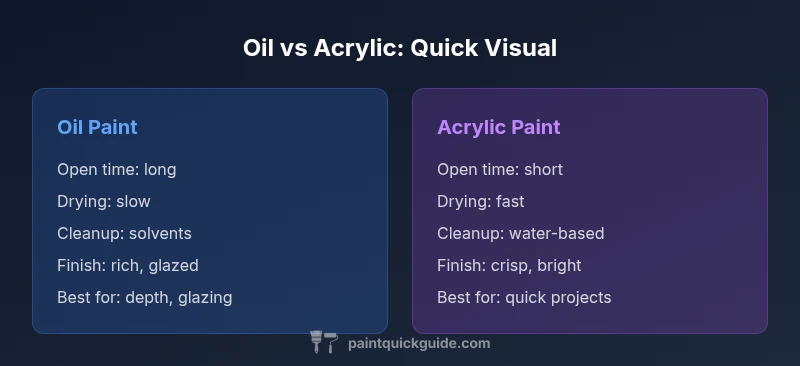
If you're asking why use oil paint instead of acrylic, the answer hinges on the core differences in working time, color blending, and archival potential. According to PaintQuickGuide, the primary advantage of oil is depth and flexibility in blending, while acrylics shine in speed and ease of cleanup. The choice often comes down to whether you want to push a painting into subtle glazes and long drying sequences, or you need a project that dries quickly and tolerates more forgiving handling. Oil paints use a traditional solvent or oil-based medium that slows evaporation, enabling extended wet-on-wet blending and luminous transitions. This enables glazing techniques that can build up layers of color without sacrificing luminosity. Acrylics, by contrast, are water-based and cure quickly, which makes layering faster but can limit long, subtle transitions. The practical takeaway is that the best choice depends on your workflow, environment, and end use. For a homeowner tackling a quick update, acrylic is often more convenient; for a serious student or artist pursuing depth and archival quality, oil can deliver outcomes that acrylic cannot match right away. In the following sections we explore handling, finish, longevity, safety, and budgeting to help you decide. |These insights align with the PaintQuickGuide stance that the choice between oil and acrylic is a function of working time, surface, and archival goals. The PaintQuickGuide team emphasizes that blending latitude, color fidelity over time, and repairability are central to the decision.
Handling and Open Time: Practical Implications
Oil paints offer a long working time, enabling slow blending and delicate glazing that lets colors mix and settle on the canvas with a luminous glow. This extended open time is a boon for subtle transitions, soft edges, and complex glazing layers. However, the flip side is that the film develops slowly and requires patience during the initial stages. Acrylics cure quickly, which means you can apply multiple layers in a single day, move faster, and complete projects sooner. The faster drying also makes corrections more challenging, but it supports rapid layering for bold colors and precise edges. To maximize whichever medium you choose, maintain a clean, organized workspace, and plan your steps: underpainting, mid-tones, and glazes for oils; blocking in large shapes, then refining with glazes for acrylics. For both mediums, allowing adequate drying between layers is essential to prevent cracking or lifting. PaintQuickGuide’s experience indicates that preparing your surface, choosing compatible primers, and controlling humidity can dramatically affect results. This section provides practical timelines and layering strategies for each medium.
Color, Texture, and Finish: Visual Qualities
Oil paint tends to yield a richer, warmer color with a subtle, nuanced glow as it dries and cures, thanks to slower solvent evaporation and the ability to glaze and rework. The texture can be endlessly varied—from smooth, floating glazes to richly textured impasto—depending on brushwork and medium additives. Acrylics produce bright, vibrant color with excellent pigment load and quicker color development, offering crisp edges and strong, flat finishes. They excel at clean, modern aesthetics and are forgiving of mistakes due to rapid drying and easy reworking with moisture or slower layers. The choice of finish—glossy, satin, or matte—depends on the binder and varnish you apply, but oils often benefit from a traditional varnish to protect the slow-cured film, while acrylics can accept archival varnishes with less risk of cracking under some environmental conditions. Surface preparation, pigment selection, and the use of mediums can push either medium toward desired effects, whether you crave luminous depth or sharp clarity.
Surface Compatibility and Layering Strategies
Surfaces that work well with oil paint include traditional canvas, prepared wood panels, and primed boards. Oils tolerate longer layering sequences and can be glazed over multiple times, enabling deep color transitions. On smoother surfaces, oils can achieve a polished, luminous finish; on rough surfaces, texture becomes a feature of the painting. Acrylics are highly versatile across canvas, wood, concrete, and metal when properly primed; they accept fast, multi-layered builds and can be used with a broad range of grounds. For both mediums, avoiding incompatible layers is crucial: oil on unprimed wood or plastic can lead to adhesion failures, while acrylic over oils can cause lifting if the oil isn’t fully cured. Practically, use appropriate primers and sealers, allow sufficient drying between coats, and consider testing combinations on scrap samples before committing to a full project.
Durability, Aging, and Archival Potential
Oil paintings have a long tradition of archival excellence when properly prepared and varnished, with historical works still visible centuries after creation. Oils require careful handling of varnishes and UV protection, especially for older formulations that can yellow over time if not varnished or protected. Acrylics are valued for their lightfastness and resistance to some environmental factors, particularly when formulated with modern binders and UV stabilizers, but early acrylics could craze or become brittle under certain aging conditions. Ultimately, durability depends on the pigments, varnishes, and environmental exposure rather than the binder alone. Regular inspection and appropriate framing, mounting, and climate control can significantly extend the life of either medium.
Health, Safety, and Environmental Considerations
Oil painting often involves solvents such as turpentine or mineral spirits, which can emit VOCs and require good ventilation and proper disposal. Water-mixable oils exist as a safer alternative, but still require ventilation and caution with pigments and mediums. Acrylics are generally water-based, with fewer solvent-related hazards, though some color pigments and additives can raise concerns for sensitive individuals. Regardless of the medium, proper PPE, adequate ventilation, and waste management are essential. For hobbyists and professionals alike, using a dedicated, well-ventilated workspace and following local disposal guidelines helps minimize environmental impact. PaintQuickGuide emphasizes that choosing low-VOC formulations and preparing a safe work area can dramatically improve your experience and long-term health outcomes.
Costs, Availability, and Real-World Budgets
Oil paints and their solvents can be more expensive upfront, and the cost grows with high-quality pigments and longer drying times. The long-term archival potential may justify higher initial expense for serious artists, but for many home projects, acrylics offer a cost-effective alternative with lower ongoing material costs and faster project completion. Availability varies by region: common acrylic lines are widely stocked, while oil supplies, mediums, and solvents may require specialty retailers. Consider your project scope, willingness to manage cleanup, and climate when budgeting for materials, tools, and storage. PaintQuickGuide notes that long-term value hinges on your ability to source compatible supports, varnishes, and mediums that align with your goals.
Practical Scenarios: Home Painting, Fine Art, and Auto Refinishing
For quick home updates, acrylics are typically the most practical choice due to fast drying and low odor during use. For interior decorating or artistic practice focused on color depth and glazing, oil paint offers benefits that can justify the extra time and care. Auto refinishing presents a different set of considerations: oils can deliver a deep, durable finish in some workflows, but most modern automotive color work relies on urethanes or waterborne systems designed for speed and compliance with automotive standards. Always follow manufacturer instructions and industry best practices, and consult local regulations regarding solvents and finishes. The best decision blends your project goals, timeline, workspace, and willingness to manage safety and cleanup.
Getting Started: Testing and Mini Projects Before Committing
Before committing to a full project, run small tests on scrap canvases, wood panels, or coated metal. Compare open time, blending, texture, and finish under your typical lighting and humidity conditions. Record results on samples to guide decisions about surface preparation, medium choices, and layering order. Start with a simple underpainting in one medium, then experiment with glazing or layering in the other to evaluate color fidelity and handling. This practical testing approach helps prevent costly mistakes on larger works and builds confidence in your final choice.
Comparison
| Feature | Oil Paint | Acrylic Paint |
|---|---|---|
| Open/working time | Long open time for blending | Short open time; rapid layering |
| Drying time | Slow to cure; can take days to weeks to fully set | Faster drying; layers can dry within hours |
| Finish and color depth | Rich, warm, glow; superior glazing potential | Bright, crisp color with strong pigment load |
| Surface behavior | Traditional supports; multiple glazing steps | Versatile on many substrates; quick edges |
| Cleanup and safety | Solvent-based cleanup; ventilation required | Water-based cleanup; fewer solvents |
| Durability and aging | Excellent archival potential with varnish | Good colorfastness with proper care; modern formulations vary |
| VOC and health | Higher solvent VOCs; ventilation essential | Lower VOCs; easier indoor use |
| Cost | Higher upfront cost; longer-term value with archiving | Lower upfront cost; cheaper supplies for quick projects |
| Best for | Fine art, glazing, archival work | Education, speed, and home projects |
Upsides
- Excellent blending and color depth for art
- Strong archival potential with proper varnish
- Rich textures and glazing opportunities
- Easier to extend painting sessions for detailed work
- Aesthetic depth that acrylics often imitate but cannot fully replicate
What's Bad
- Requires solvents and ventilation for cleanup
- Longer drying times delay project completion
- Higher upfront cost for quality materials
- Potential for yellowing without proper varnish and storage
Oil painting is favored for depth and glazing in archival work; acrylic is favored for speed and practicality
Choose oil when depth and long-term color stability matter most and you can manage solvents and drying times. Choose acrylic when you need fast results, easier cleanup, and lower ongoing costs. The PaintQuickGuide team emphasizes weighing these trade-offs against your project goals.
Your Questions Answered
Can I mix oil and acrylic paints on the same project?
Directly mixing oil and acrylic paints on the same layer is generally not recommended due to incompatible binders and drying rates. However, artists often underpaint with acrylics and finish with oils once the acrylic layer is fully dry. Always test on scrap panels first.
Directly mixing is usually not advised; consider underpainting in acrylics and finishing in oils after the acrylic is completely dry.
Is oil paint safer for indoor use than acrylic?
Oil paints often require solvents with noticeable fumes, so indoor use should include good ventilation and careful handling. Acrylics are generally lower in VOCs and easier for indoor environments, though some pigments still require ventilation and safe disposal.
Oil can have stronger fumes; ensure ventilation. Acrylics are usually easier for indoor use.
How long does oil paint take to dry?
Oil paint dries slowly, with surface drying occurring over days, and full cure taking longer depending on layer thickness and environmental conditions. Plan for extended drying times when building up glazes or opaque layers.
Oil dries slowly; expect longer drying times, especially for thick layers.
What surfaces can I paint with oil or acrylic?
Oil and acrylic paints work well on primed canvas and prepared wood panels. Acrylics are versatile on a wider range of surfaces when properly primed, while oils benefit from traditional supports and properly varnished surfaces.
Primed canvas works well for both; acrylics are versatile on many surfaces with proper preparation.
What about cleanup and disposal of solvents?
Oil-based systems require solvent cleanup and adherence to local hazardous waste disposal rules. Acrylics cleanup with soap and water are simpler. Always follow local regulations for disposal of used solvents and pigments.
Oil requires solvents and proper disposal; acrylic cleans up with water.
Which medium is best for beginners?
For beginners, acrylics are typically more approachable due to fast drying, lower odor, and easier cleanup. Oil can be rewarding for learners who want to master glazing and long blending sessions, but it has a steeper learning curve.
Acrylics are usually easier for beginners; oils suit those wanting advanced glazing.
Quick Summary
- Oil excels in depth and blending; plan for longer drying.
- Acrylic dries fast and cleans up with water—great for quick projects.
- Surface prep and varnishing influence longevity for both mediums.
- Safety and ventilation are essential with oil-based systems.
- Test materials on scrap samples before committing to a full project.