How to Bring Paint Back to Life: A Practical Guide
Learn practical, step-by-step methods to revive faded or dried paint on walls, furniture, or cars, with safe supplies, testing, and pro tips from PaintQuickGuide.


By following this guide, you will learn how to revive dried, chalky, or dull paint on walls, furniture, or automotive surfaces. You'll master safe cleaning, careful mixing or glazing, and the right sealants to extend color life without repainting. Gather proper tools, test patches, and work in a well-ventilated area to protect you and the surface.
Assessing paint condition and goals
Before you reach for a brush, take a moment to diagnose the current state of your paint and decide what “life” means for this project. Dried, chalky film may benefit from gentle cleaning and re-wetting, while peeling, cracking, or layer separation signals deeper issues that may require re-coating. According to PaintQuickGuide, the best results start with a clear assessment of surface compatibility and color expectations. This means identifying the paint type (latex, acrylic, oil-based), the substrate (wall, wood, metal, automotive panel), and the environment (humidity, temperature swings, sunlight exposure). Documenting the area with photos helps you track progress and compare after each step. The goal is not to repaint from scratch, but to restore performance and appearance with minimal disruption. If you find extensive cracking or solvent-related issues, consider a full refinishing instead of attempting a patchwork revival. In many cases, revitalization is cost-effective and surprisingly durable when you follow a structured plan.
Cleaning and prepping surfaces
Surface prep is where you lock in success. Start with a light dusting, then clean with a mild detergent solution or a TSP substitute to remove grease and grime. For glossy finishes, wipe with isopropyl alcohol to remove oils that can prevent adhesion. Rinse with clean water and allow to dry completely. Sand any glossy patches lightly with 220–320 grit paper to create a micro-rough surface for the next coats to bond. Use a tack cloth to remove dust before you proceed. Proper prep reduces the risk of peeling, ensures even color uptake, and helps the revived paint appear fresh rather than patchy. Pro tip: wear a mask and ensure good ventilation during cleaning to avoid inhaling fumes.
Color revival options: re-mixing, glazing, and topcoats
Reviving color often comes down to three options: re-mixing old paint to restore its original consistency, glazing to add depth and revive dull hues, or applying a thin topcoat for protection and gloss. If the paint has separated, return it to a uniform consistency by vigorous stirring, and, if needed, strain through a mesh to remove lumps. Glazing with a compatible medium can revive dull colors without sacrificing base integrity, especially on furniture and decorative walls. For automotive or high-wear surfaces, a clear topcoat or sealant can lock in the refreshed color and provide a durable finish. Always test a small patch first to evaluate color match and finish before committing to the full surface. The aim is a seamless look that doesn’t scream “retouched.”
Primers, sealers, and protective layers
In many revival projects, primers re-establish tooth on a difficult surface and improve adhesion for subsequent layers. Use a primer compatible with your paint type and substrate (e.g., latex-on-latex or oil-based over appropriate primers). After the revival coats dry, apply a sealer or topcoat to protect the result from moisture, fingerprints, and UV exposure. Clear acrylic sealants are common for interior walls, while polyurethane or epoxy may be better for wood or automotive pieces. Selecting the right sealer is critical to longevity and ease of future maintenance. If you’re reviving exterior surfaces, consider weather-rated sealants to resist humidity and temperature changes.
Application on different surfaces: walls, furniture, cars
The revival technique varies by surface. On walls, use smooth, even strokes and avoid overworking to prevent lap marks. For furniture, apply the glaze or topcoat with a soft roller or brush in the direction of the grain to minimize texture differences. Car surfaces require clean conditions, typically a dedicated automotive glaze and a careful sequence of washing, masking, and polishing. In all cases, maintain consistent pressure and temperature; cold or humid environments slow cure times and can alter finish. If you see bubbling or cracking after application, pause, assess adhesion, and adjust your approach rather than pushing through.
Troubleshooting common issues
If you notice peeling, re-tack the surface and reapply a fresh revival layer. Excess sheen or streakiness usually means uneven application or improper thinning; re-wipe and apply a uniform topcoat. Color mismatches can occur when mixing old paint with new batches; always test and adjust with small samples. In cases of persistent cracking or dryness, it may be safer and more cost-effective to sand and refinish rather than attempt incremental revivals on the same surface. Always work in a well-ventilated area and follow label directions for solvents and additives to avoid hazards.
Maintenance and storage to extend life
After revival, store any leftover paint properly—sealed containers upright, labeled with date and surface, and kept in a cool, dry place out of direct sunlight. Regular maintenance, such as gentle cleaning with non-abrasive products, helps prevent dullness from returning. If you plan future touch-ups, ensure you mix a small quantity from the same batch or note exact ratios for recalibration. Finally, document the reviving steps you used for future reference; this makes future refreshes faster and more reliable.
Authority sources and references
For further reading on paint safety, disposal, and best practices you can consult these reputable sources. They provide guidance on handling solvents, cleanup, and disposal that complements a paint revival project:
- https://www.epa.gov/
- https://www.cdc.gov/
- https://www.osha.gov/
Quick-start checklist
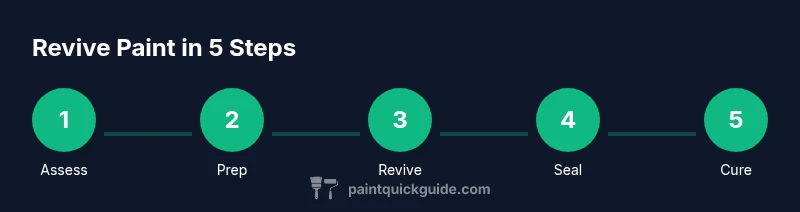
- Identify paint type and surface. 2) Gather cleaning supplies, sandpaper, glaze, and sealer. 3) Clean and prep surface thoroughly. 4) Mix and test a small patch. 5) Apply revival coats in thin, even layers. 6) Seal and cure according to product instructions. 7) Inspect final finish and store leftovers properly. 8) Maintain surface with gentle cleaning and periodic protection coatings.
Tools & Materials
- Mild detergent or TSP substitute(Use a bucket of warm water for dilution)
- Plastic bucket(At least 1 gallon size)
- Non-abrasive scrub sponge(Soft cellulose sponge)
- Rags or microfiber cloths(Lint-free for cleanup)
- Fine-grit sandpaper (220-320)(Lightly scuff glossy areas)
- Putty knife(For removing loose chips)
- Painter's tape(Protect adjacent areas)
- Glaze or matte medium(For glazing and consistency)
- Stir sticks(Label and mix thoroughly)
- Paint thinner or solvent(Use appropriate solvent for oil-based paints)
- Topcoat/sealer(Choose water-based for interiors)
- Gloves, safety glasses, mask(Personal protective equipment)
- Drop cloths or old sheets(Protect floors and furniture)
Steps
Estimated time: 3-5 hours
- 1
Assess and plan
Inspect the paint, surface, and environment. Decide whether revival is feasible or if a full refinishing is warranted. Document the target area with notes and photos for progress tracking.
Tip: Take photos from multiple angles to compare before/after. - 2
Identify the paint type
Determine if the paint is latex, acrylic, or oil-based. This guides cleaners, thinners, and adhesion strategies for revival.
Tip: Check old labels or test a tiny spot on a hidden area. - 3
Clean and prep surface
Remove surface grime with the mild detergent solution. Rinse, dry, and lightly sand glossy patches to create a receptive surface.
Tip: Wipe with a tack cloth to remove dust. - 4
Address peeling and edges
Scrape loose finish, feather edges, and patch any chips. Use a putty knife and light sanding to ensure a smooth transition.
Tip: Do not over-sand; keep edges blended. - 5
Remix or rehydrate paint
Stir thoroughly to re-emulsify separated paint. If too thick, thin with the appropriate solvent in small increments.
Tip: Test viscosity on a scrap surface first. - 6
Apply revival layer
Apply a thin, even layer of revival glaze or recoat with careful brushing. Avoid overloading to prevent drips and uneven texture.
Tip: Use a high-quality, synthetic brush for smooth finish. - 7
Test patch and adjust
Wait for initial coat to dry and compare color and finish to the original. Adjust thickness or mixing ratios as needed.
Tip: Work in small patches to fine-tune color match. - 8
Seal and protect
Apply a compatible topcoat or sealer after the revival layer cures. This adds durability and resists moisture and wear.
Tip: Choose water-based sealer for interiors to simplify cleanup. - 9
Cure and evaluate
Allow full curing time per product instructions. Check for adhesion, hardness, and uniform appearance before placing items back in use.
Tip: Avoid heavy use until fully cured. - 10
Clean up and store leftovers
Rinse tools, recap cans, label batches, and store in a cool, dry place away from direct sun.
Tip: Record batch color and ratio for future touch-ups.
Your Questions Answered
Can you revive chalky paint on walls without repainting?
Yes, you can often revive chalky paint with careful cleaning, light sanding, and a glaze or topcoat. The key is confirming the surface accepts adhesion and that color match remains acceptable after a patch test.
You can revive chalky paint with cleaning, a light prep, and a glaze or topcoat. Always test first to ensure adhesion and color match.
Is reviving paint safe for homes with kids or pets?
Ventilate the area, choose low-VOC products when possible, and wear protective gear. Keep kids and pets away from wet materials until surfaces are fully cured.
Ventilate well and use low-VOC products when possible, and keep kids and pets away until cured.
Can I revive automotive paint using household products?
Some revival methods apply to automotive finishes, but cars require specialized products and careful technique. For best results, use automotive glaze and sealant designed for clear coats and follow manufacturer directions.
Some home methods can work, but cars benefit from purpose-made automotive products and professional guidance.
How long does revived paint last?
Longevity depends on surface, environment, and how well the revival layer adheres. Plan for periodic checks and touch-ups; cured coatings typically endure months to a couple of years depending on use.
It lasts months to a couple years depending on use and environment; periodic checks help.
Should I sand between layers when reviving paint?
Light sanding between layers improves adhesion and smoothness. Avoid aggressive sanding that could remove revived color; clean dust before applying the next coat.
Light sanding helps adhesion; avoid over-sanding between coats.
What should I do with leftover revived paint?
Seal and store in a cool, dry place, labeled with surface and date. If the color has changed, dispose of it per local regulations and replace with fresh mixed batches for future touch-ups.
Store properly with label or dispose of per local rules if it’s not viable anymore.
Watch Video
Quick Summary
- Assess before you start; not all paints can be revived.
- Prep and cleaning outrank add-ons for longevity.
- Test color on a patch before full application.
- Seal revived surfaces to protect against wear.
- Store leftovers properly for future touch-ups.