How to make.paint: A practical DIY guide
Learn how to make.paint safely and affordably with step-by-step methods, pigment options, and pro tips for walls, furniture, and car refinishing. Build your own color and finish with confidence.


You can create your own paint at home by mixing pigments with a suitable binder and a compatible solvent. This approach lets you tailor color, finish, and coverage while reducing waste and costs for walls, furniture, and light auto refinishing. According to PaintQuickGuide, success hinges on using safe ingredients, precise ratios, and thorough mixing to achieve a durable, even coat.
Why making paint can be practical
For many DIYers, learning how to make.paint opens up a world of customization, cost control, and sustainability. By blending pigments with a binder and an appropriate solvent, you can achieve unique colors and finishes that off-the-shelf products may not offer. This approach is especially appealing to homeowners and auto refinishing hobbyists who want to tailor coverage, sheen, and color depth to specific projects. The PaintQuickGuide team notes that when done correctly, homemade paint can deliver results that rival commercial options for certain applications, while avoiding some packaging waste and overbuying. If you’re curious about how to make.paint, start with simple color tests on samples before scaling up, and always prioritize safety and compatibility between ingredients.
Understanding pigments, binders, and solvents
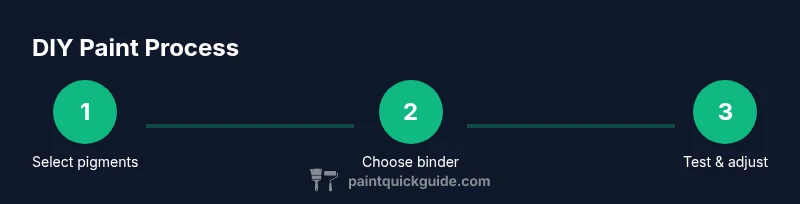
Paint is a three-part system: pigment (the color), binder (the film-forming component that holds the pigment together and to the surface), and solvent (the liquid that adjusts viscosity). In DIY contexts, pigments can come from natural minerals, inorganic pigments, or safe synthetic options. Binders may be water-based emulsions for walls or more robust acrylic or polyurethane systems for rougher surfaces. Solvents vary by binder type: water is common with latex-like bases, while certain automotive or industrial recipes may require specific thinners. When you know how to make.paint, you’ll focus on compatibility (pigment with binder) and a starter ratio that yields good flow, coverage, and drying without excessive odor or added risk. Always dry-test your mix on a small panel to observe color shift and film formation before large-scale use.
Home and auto painting: choosing the right recipe
Recipes differ for interior walls, exterior surfaces, furniture, and automotive panels. For walls and furniture, a water-based binder with a non-toxic pigment mix often provides easy cleanup and low odor. For auto refinishing or metal substrates, you’ll encounter higher-performance binders and possibly crosslinkers to improve durability and chemical resistance. The key is to align the recipe with the surface, expected wear, and environmental conditions. How to make.paint effectively means selecting pigments for hiding power, choosing a binder with appropriate film strength, and adjusting viscosity for your application tool (brush, roller, or spray). Test on a sample board and compare with a small patch on the real surface before committing.
Cost considerations and substitutions
DIY paint projects can be budget-friendly if you plan ingredients carefully and shop for compatible components in bulk. The overall cost depends on pigment purity, binder quality, and the amount you mix. Substituting cheaper pigments or thinner binders can reduce cost but may impact coverage, durability, and color stability. A wise approach is to estimate the required surface area, decide on the desired finish, and then calculate a starter batch to avoid waste. PaintQuickGuide’s analysis suggests that responsible shopping for base binders and safe pigments, paired with small test batches, often yields the best balance of cost and performance.
Common mistakes and how to avoid them
Common missteps include using an incompatible pigment and binder, over-thinning the mix, or skipping surface preparation, which leads to poor adhesion and uneven finish. Always confirm compatibility between your pigment and binder, and follow recommended mixing orders (dry pigments into binder slowly while stirring) to avoid clumps. Insufficient ventilation and rushing through the mixing process can introduce air bubbles or odors. Keep containers clean, label batches clearly, and store in a cool, dry place to prevent spoilage or separation. With careful planning, you’ll learn how to make.paint that meets your project needs and aesthetic goals.
Color and finish options with DIY paints
One advantage of making.paint is the ability to tailor color depth and sheen. Matte, satin, and gloss effects are achievable by adjusting the binder ratio and adding a small amount of leveling agents or gloss modifiers. Consider color-matching with a test card before committing to a full room or panel. You can also experiment with tinting bases or layering colors to create depth and subtle shifts that store well in a dedicated jar. By exploring these finish options, you’ll maximize the value of your DIY paint and avoid the sticker shock of premium branded products.
Tools & Materials
- glass or metal mixing jars(Clear jars with tight lids for color testing)
- digital scale or measuring spoons(Accurate measurements are essential for consistency)
- pigments or pigment concentrates(Choose safe, non-toxic pigments suitable for indoor use)
- binder/emulsion (latex or acrylic)(Select a binder compatible with your surface and environment)
- distilled water or appropriate solvent(Use minimal amounts to adjust viscosity)
- stir sticks and a clean whisk(Stir thoroughly to avoid streaks)
- pH strips or test strips(Optional for ensuring binder stability)
- protective gloves and goggles(Safety first when handling pigments and solvents)
- masking tape and drop cloths(For protecting surfaces during testing and application)
- color chart or reference swatches(Helpful for matching and documenting mixes)
Steps
Estimated time: 45-60 minutes
- 1
Gather ingredients and tools
Collect all required pigments, binder, solvent, and mixing equipment. Organize by batch to avoid cross-contamination and ensure safety data is accessible. Pre-measure all components to speed up the process and reduce waste.
Tip: Label each component with batch name and date to track freshness. - 2
Prepare workspace and safety gear
Set up a well-ventilated area, lay down drop cloths, and wear gloves and goggles. Protect nearby surfaces to prevent staining or contamination. This reduces cleanup time and keeps your project focused.
Tip: Open windows or use a low-odor binder if possible. - 3
Measure and mix pigments
Weigh pigments precisely and add to the binder gradually while stirring. Start with small batches to test color and coverage. Adjust pigment load slowly to avoid oversaturation and streaks.
Tip: Add pigments in small increments and mix thoroughly before adding more. - 4
Adjust viscosity and test
Add water or solvent in small amounts to reach the desired thickness for your tool (brush, roller, or spray). Test on a sample panel and observe flow, coverage, and drying. Repeat adjustments as needed for consistency.
Tip: Aim for a film that is glossy enough to hide texture but not too thick to run. - 5
Document and apply
Record the exact mix ratios and test results for future batches. When satisfied, apply a thin, even coat to your project surface using the appropriate technique. Allow proper drying times and inspect the finish before additional coats.
Tip: Always perform a small test before committing to a large area.
Your Questions Answered
Is homemade paint suitable for interior walls?
Yes, with a compatible binder and careful testing. Choose safe pigments and a binder appropriate for indoor use, and apply in thin, even coats with proper drying time.
Yes, you can use homemade paint on interior walls if you pick the right binder and test first for coverage and odor levels.
Can I use household items as pigments?
Some household materials can be used in small amounts, but you should avoid hazardous substances. Stick to approved pigments or concentrates designed for paints to ensure safety and color stability.
Some household items can be pigment sources in small amounts, but avoid hazardous materials and stick to safe pigments.
What safety precautions are essential?
Work in a well-ventilated area, wear gloves and eye protection, and store chemicals properly. Read product safety data sheets and keep children and pets away from the workspace.
Ventilate the area, use protective gear, and store components safely. Read safety data sheets before use.
How long does homemade paint last?
Shelf life depends on the binder and storage conditions. Seal batches tightly, keep in a cool, dry place, and check for separation or odor before reuse.
Storage and batch sealing matter; always check for separation or smell before using again.
Will DIY paint finish last as long as store-bought?
Durability relies on proper binder choice and surface prep. While high-quality store paints may last longer, a well-made DIY mix can perform well for many projects with correct application.
Durability depends on the binder and prep. A good DIY mix can last, but results vary with technique.
Do I need a primer?
Primers improve adhesion and hide underlying colors or stains. Choose a primer compatible with your binder and surface for best results.
Yes, a primer helps adhesion and coverage; pick one that matches your binder and surface.
Watch Video
Quick Summary
- Plan your recipe before mixing and test on samples.
- Ensure compatibility between pigment, binder, and solvent.
- Safety comes first: use ventilation and protective gear.
- Adjust color and finish with small, measured changes.
- DIY paint can save money when done with care and accuracy.