How Long Does Paint Take to Dry Before a Second Coat? A Practical Guide
Learn how long paint needs to dry before applying a second coat, with latex vs oil-based paints, environmental factors, and a practical step-by-step approach for accurate recoat timing.


Most interior latex paints dry to the touch within 1-2 hours and are ready for a second coat after 4-6 hours under normal room conditions. Oil-based paints take longer—touch drying around 6-8 hours, with recoating typically after 24 hours. Temperature, humidity, and airflow influence these times. Always check the can label for specific manufacturer guidance and perform a small test patch to confirm dryness before applying a full second coat.
Understanding Dry Time and Why It Matters
According to PaintQuickGuide, the concept of dry time is more nuanced than a single clock hour. Dry time describes when the film formed by solvent-based or water-based paint stops transferring to your skin and the air feels dry to the touch. This matters for a second coat because applying new paint over an uncured film can cause wrinkling, color shifts, or trapped solvents. The PaintQuickGuide team emphasizes that 'dry' is not the same as 'cured' or 'recoatable' — many brands specify two milestones: 'dry to touch' and 'recoat time'. In practice, you should treat the recoating window as a range shaped by the paint type, room temperature, humidity, and airflow. By understanding dry time you can plan multi-day projects, avoid wasted effort, and achieve a smooth, durable finish. This guidance covers common latex and oil-based paints used on walls, furniture, and automotive refinishing.
Latex vs Oil-Based: initial dry times
Latex (water-based) paints generally dry to the touch faster than oil-based paints. In typical indoor environments (70°F/21°C, 40-60% humidity), latex can be dry to the touch in about 1-2 hours and recoatable around 4-6 hours. Oil-based finishes are slower, often needing 6-8 hours to feel dry to the touch and about 24 hours before a second coat. These timeframes serve as practical guidelines for planning when you’ll apply a second coat. Remember that dark colors may obscure the true finish until additional coats are applied, and overcoating too early can trap solvents or cause uneven color.
Factors That Affect Dry Time
Dry time is not universal; it shifts with environmental and material variables. Room temperature should ideally be between 65-75°F (18-24°C). Relative humidity above 50% tends to slow drying, while good air movement can speed up solvent evaporation. Surface temperature matters too: a cold wall will dry more slowly than a warm one. The painter should consider air flow, ventilation, and the presence of nearby heat sources. Brand-specific formulations can also affect dry times; always consult the can for a recommended range. PaintQuickGuide’s analysis shows that the same paint can behave differently in different rooms, so expect some variability and plan accordingly.
How to Read the Can Label for Recoat Windows
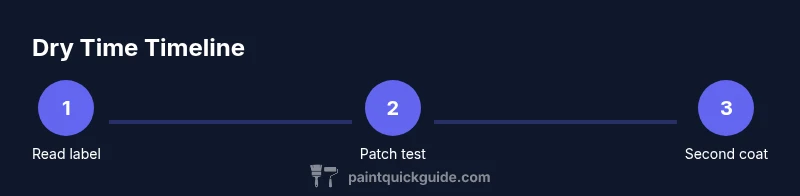
Manufacturers usually include two critical numbers: the dry time and the recoat window. The dry time indicates when the film feels dry to the touch; the recoating window tells you when the next coat will achieve good adhesion without lifting the previous layer. For many latex paints, the recoating window may begin around 4-6 hours, but some brands allow longer intervals. Oil-based paints often require a longer wait. Always read the label and look for a 3- or 4-digit dry time range. If you’re unsure, perform a small test patch to confirm the surface has cured enough to accept another coat without leaving marks.
The Dryness Test: Patch Check
A simple patch test helps verify dryness without guessing. Apply a small amount of paint on an inconspicuous area and wait the manufacturer’s recommended time. Gently press with your fingertip or a clean cloth: if it leaves a smear, it’s not dry; if it feels firm and resists smudging, it’s close to being recoatable. Real-world tests should be conducted in the same environmental conditions as the main project. For consistency, test on a waste piece of drywall or a repainted sample board rather than the final wall.
Step-by-Step Dry Time Check: Quick Test Patches
Perform a dry-time check as part of your workflow. Create a dedicated test patch area and monitor it at regular intervals per the label: at 1 hour for latex, at 6 hours for oil-based, etc. If the patch tests cleanly after the stated interval, you can proceed with the second coat on the main surface. If not, wait longer, improve ventilation, or adjust room temperature to accelerate drying. Conduct tests at least once per coating session to avoid surprises.
Common Mistakes That Extend Dry Time
Hasty recoating, insufficient ventilation, and applying coats in a cold or humid room all extend dry times. Touching paint before it’s dry can pull oils from the surface and create a tacky feel. Don’t rely on color changes alone as an indicator; the surface can appear dry but still be soft beneath the film. Always check both visual and tactile cues and follow the manufacturer’s guidelines.
Safer Tips to Speed Up Dry Time
Prioritize safe methods to speed drying: keep temperatures within the recommended range, boost airflow with a fan (not blowing air directly at the surface), and reduce humidity with a dehumidifier if possible. Avoid heating elements like space heaters aimed directly at the paint, since rapid heat can cause cracking or evaporation of solvents too fast. If you must work in a tight window, plan for a longer cure period instead of forcing a rapid second coat.
Aftercare: Curing and Handling After Second Coat
Remember that “dry to touch” is not the same as fully cured. The surface may feel dry in a couple of hours, but full cure can take days to weeks depending on temperature, humidity, and paint type. During cure, minimize abrasion and avoid cleaning with aggressive chemicals. PaintQuickGuide recommends waiting for the full cure before heavy use, especially on floors or high-traffic areas. If you notice cracking or lifting during cure, consult the label guidance or reach out to the manufacturer’s troubleshooting resources.
Real-World Scenarios: Walls, Cabinets, Exterior Trim
Dry time rules vary by surface and finish. Walls commonly use latex and cure more quickly than glossy exterior trim or cabinets, which may require longer intervals between coats. In kitchens or bathrooms, higher humidity and heat from cooking can extend dry times, while freshly primed surfaces may behave differently than fully painted ones. Treat each project as a separate case and adjust expectations based on the environment, color, and paint type. Documentation of previous coats helps in planning a smooth transition to the second coat.
Planning Your Project with Dry Time Data
Effective project planning uses dry time as a scheduling anchor. Build buffers for days with high humidity or drafty spaces, and set realistic targets for completion. By recording the actual dry-to-touch and recoat times you observe, you’ll refine future estimates. The goal is to align your second coat with the most accurate window, minimizing downtime and ensuring a durable finish that adheres well to the first coat.
Tools & Materials
- Thermometer with humidity gauge(Monitors room conditions for optimal drying (65-75°F; 40-60% RH))
- Ventilation fan or dehumidifier(Promotes air flow and moisture removal)
- Plastic drop cloths(Protects floors and valuables)
- Masking tape and painter's tape(Keeps edges clean during coats)
- Paint can opener(Access paint and mix thoroughly)
- Clean rags or tack cloths(Wipe spills and dust surfaces)
- Small testing boards or sample patches(For dry-time checks away from the main surface)
- Step ladder or stable stool(Safe access to high areas during second coat)
- Water (for latex) or solvent (for oil-based) cleanup(Keep cleanup handy; follow label directions)
Steps
Estimated time: 2-6 hours depending on room size, paint type, and drying conditions
- 1
Check environmental conditions
Before starting, measure temperature and humidity. Ensure the room is within the manufacturer’s recommended range for the paint you’re using. If conditions are outside the optimal band, plan to extend the dry-time window before recoating.
Tip: Aim for 65-75°F and 40-60% humidity for most latex paints. - 2
Read the can for recoat windows
Locate the dry time to touch and the recoating window on the label. Note the stated intervals and consider adding a margin as real-world conditions can slow drying.
Tip: If the label is vague, contact the manufacturer or check online resources for the exact product data sheet. - 3
Prepare the surface and space
Clear the area, cover nearby items, and ensure good ventilation. Wipe surfaces to remove dust that could impede film formation, and prime if needed before painting.
Tip: Dust-free surfaces promote faster, more even drying. - 4
Perform a dryness test patch
Apply a small patch and monitor it according to the can’s timing. Check for a firm feel and no transfer when touched after the recommended interval.
Tip: Use a patch in a less visible area to validate dryness before the main surface. - 5
Decide on second coat readiness
If the patch is dry to the touch and resists smudging, you can proceed with a second coat. If not, wait longer or improve ventilation and temperature.
Tip: Don’t rush; rushing can cause wrinkling or uneven film. - 6
Apply the second coat
Apply the second coat only when dryness is confirmed. Use smooth, even strokes and avoid pressing too hard to prevent pigment-rich patches.
Tip: Keep strokes consistent and maintain a wet edge to minimize lap marks. - 7
Cure and finish considerations
After recoating, allow the film to dry completely and cure as per product guidance before heavy use. The surface may feel dry to the touch before full cure.
Tip: Plan for a full cure period (days to weeks) before high-traffic use.
Your Questions Answered
What does 'dry to touch' mean in paint?
Dry to touch means the paint film feels dry on its surface and won’t smear when touched. It does not guarantee full curing, which can take longer. Use this as the cue to test for recoating, not as the final safety milestone.
Dry to touch means the surface feels dry, but it doesn’t mean the paint is fully cured. Use it as a cue to check a small patch before recoating.
Does temperature affect drying time?
Yes. Higher temperatures generally speed up drying, while cooler or damp conditions slow it down. Humidity also plays a major role, so adjust expectations based on the room’s climate.
Temperature and humidity affect how fast paint dries; warmer, dry air dries paint faster.
Can I speed up drying without risking quality?
You can improve drying by increasing airflow and maintaining a stable temperature within manufacturer recommendations. Avoid using heat sources that rapidly bake the surface, which can cause cracking or uneven film.
Improve airflow and keep temperatures steady; don’t use aggressive heat.
How do I test if a surface is ready for a second coat?
Apply a small patch in a hidden area and wait the label-recommended time. If it dries to the touch and resists smudging, proceed. If it smudges, wait longer and recheck.
Test with a small patch; if it’s not smudge-proof, wait longer.
Should I wait 24 hours after a second coat before use?
Yes, many finishes require 24 hours (or longer) to cure before light use; full cure may take days to weeks depending on conditions and paint type.
Usually give it a day to cure after the second coat, longer if possible.
What if I need to repaint soon after the second coat?
If you must recoat quickly, ensure the surface is thoroughly dry and test a small patch; some products allow rapid revisiting after 4-6 hours for latex, but confirm with the label.
Check the label; some latex can recoat in 4-6 hours, but verify.
Watch Video
Quick Summary
- Plan around dry-time windows tied to paint type and environment
- Use the patch test to verify readiness rather than relying on color alone
- Ventilation and temperature control are crucial for predictable drying
- Do not rush recoating; allow full film formation to avoid issues