Can You Paint and Prime in the Same Day? Practical Guide
Discover whether you can prime and paint in one day, with surface prep tips, product choices, and a safe, efficient workflow for interior projects in 2026.


Yes, you can often paint and prime in the same day, especially on smooth interior walls with fast-drying primers. The key is choosing compatible products, controlling humidity and temperature, and planning surface prep, masking, and clean coats so you don’t trap moisture. The PaintQuickGuide approach emphasizes matching primer and paint to the surface and weather conditions for reliable results.
Can you paint and prime in the same day? When it makes sense
In many interior projects, priming and painting on the same day is feasible and can save time—provided you choose compatible products and keep conditions favorable. Fast-drying primers and water-based topcoats reduce waiting times, but you must respect recoat windows and surface prep. The PaintQuickGuide method emphasizes planning around the substrate and weather, not forcing a finish before the primer has truly cured. This approach works best on clean, sound surfaces with appropriate ventilation and stable temperatures. If you encounter staining, moisture, or heavy texture, extending the plan to two days may yield a more durable result.
- Surface readiness matters more than speed; address cracks, holes, and sheen before priming.
- Always read and follow product labels for recoat times and cure windows.
- Ventilation and dust control are essential to ensure fumes don’t compromise adhesion.
Key factors that affect a same-day plan
Several variables determine whether finishing in one day is practical. Weather plays a major role: high humidity or low temperatures can elongate dry times and trap solvents. Surface type matters too: smooth drywall or plaster responds quickly to primer and paint, while glossy finishes or raw wood may require extra prep. Product compatibility is critical: use a primer designed to bond with your chosen topcoat, and stick to water-based or oil-based families as a matched system. Testing a small area helps verify adhesion and color consistency before committing to a full-day plan. Finally, plan for proper breaks and avoid rushing coats, which can lead to uneven texture, lap marks, or peeling later on.
Primer and paint pairing for speed
For interior work, choose a fast-drying, bonding primer that is compatible with your finish. A latex-based primer with stain-blocking properties is often ideal for walls, while a compatible latex or acrylic enamel topcoat provides a quicker dry-to-touch time than traditional oil-based finishes. Avoid mixing oil-based primers with water-based paints in a way that creates adhesion issues, and always verify the manufacturer's guidance on compatibility. When speed is the goal, apply thin, even coats—thin coats dry faster and reduce the risk of trapping solvents. Using tinted primers can also improve color coverage and reduce the number of coats required.
Surface-specific guidance: walls, trim, metal, and wood
Walls benefit from a clean, dust-free surface and a light skim fill for imperfections. For trim and doors, opt for a semi-gloss or satin enamel with a fast-drying formula to minimize finish time. Metal surfaces should be primed with a rust-inhibiting, bonding primer compatible with your topcoat to prevent corrosion and peeling. Wood surfaces require light sanding, dust removal, and a shellac or latex-based primer to seal knots and prevent tannin bleed. In all cases, ensure the surface is dry, free of contaminants, and adequately ventilated before applying the next coat.
Practical workflow: a one-day plan you can follow
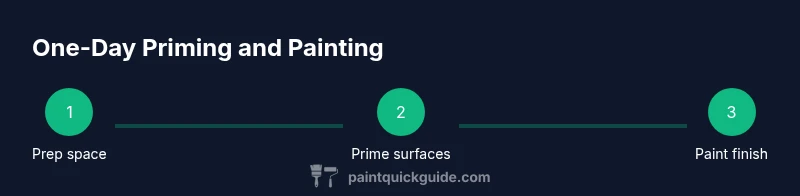
This section outlines a practical day-by-day workflow. Start with a thorough space preparation, then proceed with surface cleaning and repairs. After sanding and masking, apply the primer with consistent, even strokes. Allow the primer to dry per label instructions; if recoat times are short, you can apply the topcoat the same day. Keep coats thin to reduce dry time and avoid sags. If moisture or staining resurfaces, reassess before proceeding to the final coat, as a premature topcoat can trap moisture and lead to adhesion failures.
Tools & Materials
- Fast-drying bonding primer(Water-based preferred; compatible with chosen topcoat)
- Latex/acrylic interior topcoat paint(Low-VOC, satin or eggshell finish recommended)
- Painter's tape(Blue or green painter's tape for clean edges)
- Drop cloths or plastic sheeting(Protect floors and furniture)
- Dust cloths and mild cleaner(Prepare dirty or greasy surfaces)
- Sandpaper (120-180 grit)(Lightly scuff glossy surfaces)
- Sanding block or sanding sponge(Even sanding pressure)
- Paint trays and rollers (4- to 9-inch)(Microfiber rollers for smooth coverage)
- Angled brushes (2-4 inch)(Cut-in edges and corners)
- Ventilation mask (N95 or better)(Protect lungs from fumes)
- Door and window hardware remover or masking for trim(Keeps hardware clean and edges sharp)
- Water bucket and soap(Clean brushes and remove residue)
Steps
Estimated time: Estimated total time: 4-6 hours (surface prep, priming, and first coat; plus dry times between coats)
- 1
Prep the space
Move furniture away from walls, lay drop cloths, and ventilate the area. This reduces the risk of dust settling on wet surfaces and helps you work efficiently in a single day.
Tip: Do a quick walk-through to identify any areas that will require extra masking or sanding before you begin. - 2
Clean and repair surfaces
Wipe down walls to remove grease and dust. Fill small holes or cracks with appropriate filler and allow it to dry before sanding lightly.
Tip: Let filler dry fully to avoid shrinking and uneven texture once painted. - 3
Sand glossy surfaces
Lightly scuff glossy finishes with 120-180 grit sandpaper to improve primer adhesion. Wipe away dust after sanding.
Tip: Wearing a mask helps protect you from sanding dust; use a tack cloth for final dust removal. - 4
Mask edges and protect surroundings
Apply painter’s tape along trim, windows, and outlets. Cover floors and adjacent surfaces to prevent paint splatters.
Tip: Remove tape while paint is still slightly tacky to achieve crisp lines. - 5
Apply fast-drying primer
Roll or brush a thin, even coat of primer. Maintain a wet edge to minimize lap marks and ensure consistent adhesion.
Tip: If staining or knots are present, consider a stain-blocking primer for better coverage. - 6
Apply the first coat of paint
After the primer dries per label, apply a thin coat of paint, focusing on edges first for consistency. Check for uniform color and coverage before proceeding to a second coat if needed.
Tip: Thin coats dry faster and reduce sags; avoid overloading the roller or brush.
Your Questions Answered
Can I prime and paint on the same day for all surfaces?
In many interior cases, yes, especially on smooth surfaces with fast-drying primers and compatible paints. If the surface is rough, stained, or damp, or weather is unsuitable, consider splitting the project into two days to ensure durability.
Yes, you can in many cases, especially on smooth walls with fast-drying products, but skip the same-day plan if the surface is stained or damp.
What surfaces are best for same-day priming and painting?
Interior walls with clean, sound surfaces respond best. Trim and doors can work well with fast-drying enamels, while glossy or resinous surfaces may require extra preparation or a bonding primer.
Clean, sound interior walls are ideal for same-day priming and painting; other surfaces may need extra prep.
Should I mix primer and paint brands on the same day?
Stick to primer and paint within the same product family or as recommended by the manufacturer. Incompatibilities can lead to poor adhesion and failure over time.
Avoid mixing brands unless the label confirms compatibility.
How long should I wait between primer and paint if I’m doing it in one day?
Always follow the product label for recoat times. If the primer dries to the touch and passes the manufacturer’s cure test, you may proceed to painting, keeping coats thin and uniform.
Follow the primer’s label for the exact wait time; don’t rush if it’s not dry.
What are red flags that mean I should stop and split the job?
If the surface remains damp, if adhesion feels weak after initial tests, or if weather will not permit proper drying, stop and schedule a two-day plan. Puddling or streaking is another sign you need more time.
Stop and reassess if surfaces stay damp or adhesion seems weak; weather can ruin a one-day plan.
Watch Video
Quick Summary
- Plan the day with surface prep and drying times in mind.
- Use compatible primer and topcoat to avoid adhesion issues.
- Keep coats thin for faster drying and better finish.
- Follow product label guidance for recoat windows and curing times.