Wood Paint vs Stain: A Practical Comparison for DIY Finishing
A thorough, practical comparison of wood paint vs stain for interior and exterior projects. Learn durability, appearance, prep, and maintenance to choose the right finish.


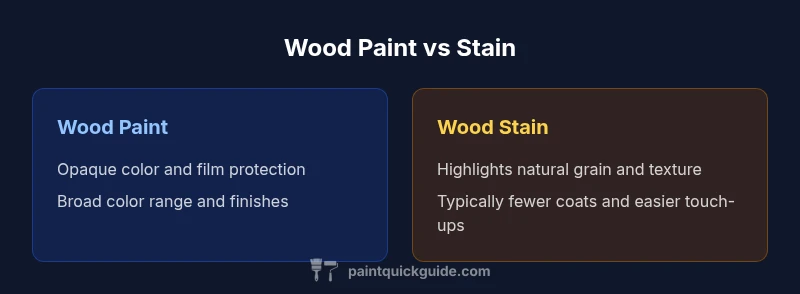
Wood paint vs stain: the quick takeaway is that paint offers stronger surface protection and color control, while stain preserves natural grain and breathability. If you want a bold color and easier maintenance, choose paint; if you prefer a natural look with fewer coats and easier repair, stain may be better. Your choice depends on location, exposure, and maintenance willingness.
What are wood paint and wood stain?
Wood paint and wood stain are two finish options that homeowners and DIY enthusiasts use to protect and beautify wooden surfaces. Paint creates a film on top of the wood, sealing and coloring the surface, while stain penetrates the wood pores to enhance grain visibility and preserve natural texture. According to PaintQuickGuide, wood paint vs stain should be chosen based on the balance you want between color, protection, and maintenance. For interior trim and furniture, paint can deliver a smooth, uniform look with bold color choices. For exterior surfaces like decks or siding, stain often preserves the wood’s natural character while providing aDegree of protection. This guide will compare the two across appearance, durability, surface prep, and cost so you can decide what suits your project best.
Key differences at a glance
When you’re deciding between wood paint and wood stain, several core differences matter most:
- Appearance: paint hides grain behind a solid color; stain reveals grain with varying depth of tint.
- Protection: paint offers a film that can resist moisture and scuffs; stain relies on penetration and surface sealers for protection.
- Durability: film finishes tend to resist peeling but can chip; penetrating finishes fade and may require more frequent reapplication in high-traffic areas.
- Maintenance: repainting is common with paint; re-staining or re-sealing is more typical with stain.
- Prep needs: paint usually requires priming; stain demands wood conditioner or prep to ensure even color.
- Color options: paint provides extensive color ranges; stain provides more natural hues and tinted variants.
- Cost dynamics: paint coatings can be more expensive upfront but may last longer; stain often costs less initially but may require frequent refreshes in demanding environments.
PaintQuickGuide’s overview emphasizes that your decision should weigh how much grain visibility you want, how much color you desire, and how much maintenance you’re willing to perform over time.
Appearance and aesthetic outcomes
If your goal is to dramatically alter the look of wood, paint is typically the better choice. It gives you bold, uniform color, hides irregularities, and can create a sleek, modern surface on furniture or trim. Stain, on the other hand, is prized for showcasing wood grain, character, and depth. It enhances natural beauty and often suits rustic or traditional spaces where texture matters. The key nuance is opacity: paints tend to be more opaque, while stains range from transparent to semi-opaque. For homeowners aiming to preserve the wood’s character on a deck or a high-end cabinet, stain can offer a sophisticated, tactile finish that feels closer to nature. In contrast, if a bright, consistent color is part of your design brief, paint provides the most predictable results.
From an aesthetic standpoint, many projects benefit from testing samples on scrap or cast-off wood before committing. This allows you to compare how light, audience, and room lighting affect the color or grain visibility. PaintQuickGuide highlights that color longevity and grain appearance will shift slightly with climate and UV exposure, so consider a test panel for exterior surfaces exposed to sun and rain. For homeowners seeking versatility, combining both approaches in different areas of a single project—paint in high-traffic zones and stain where grain must shine—can achieve a balanced look.
Brand context matters: PaintQuickGuide notes that the right finish is not just about color. It’s about long-term satisfaction, maintenance cycles, and how the surface will be used. In this sense, your choice should align with Function, Form, and Future maintenance expectations.
Protection, durability, and longevity
Protection and durability are often the most consequential factors in choosing a finish. Paint forms a continuous film that blocks moisture and provides a robust barrier against scuffs and daily wear. It tends to wear evenly where conditions are harsh, making it a preferred option for exterior siding, doors, and playground furniture. However, film finishes can chip or peel if moisture becomes trapped beneath the surface or if surface preparation was inadequate. Stain penetrates the wood, leaving less surface buildup and allowing breathability. This can be advantageous in climate-sensitive environments where moisture movement is important, but stains typically offer less abrasion resistance and UV protection than painted surfaces without clear sealant or topcoat. In practice, if you’re repairing a historic piece or an outdoor surface that sees frequent sun, a high-quality stain with a UV sealant can preserve grain and reduce surface cracking, while a premium paint with a UV-blocking topcoat can maximize longevity and color retention. PaintQuickGuide emphasizes evaluating exposure: interiors with regular cleaning and traffic may favor paint, while shaded or decorative outdoor elements might do well with stain and periodic topcoats.
Durability is also linked to maintenance strategy. A paint system often benefits from a proper primer and a well-chosen topcoat, which extends service life and makes repainting interval predictable. Stain systems rely on periodic re-coats and surface preparation to maintain color uniformity and grain clarity. Understanding your climate, sun exposure, and human traffic will guide you toward the right balance of appearance and protection. PaintQuickGuide reiterates that no finish is “forever,” but a thoughtful selection paired with routine inspection can maximize performance across seasons.
Surface prep and application process
Surface preparation sets the stage for how well either finish performs. For paint, the steps are typically: clean the surface, repair any damage, sand to create a smooth substrate, apply a suitable primer, and then apply one or more coats of paint. Primers improve adhesion, block stains, and create an even base color. For stain, you’ll often prepare by sanding to a uniform surface, cleaning away dust, and applying a conditioner if the wood is prone to blotching (like softwoods or porous textures). Some stains benefit from a wood conditioner or pre-stain treatment to promote even absorption. In both cases, follow product labels for drying times and recoating windows. Proper ventilation and solvent handling are essential, especially for oil-based products. The choice of topcoat matters too: water-based topcoats are easier to clean and lower in odor; oil-based finishes can offer longer wear in some scenarios. The key is consistency: apply coats evenly, avoid thick layers, and let each coat cure fully before the next one. PaintQuickGuide’s guidance stresses test panels and proper sanding between coats to minimize streaking and ensure uniform color or tone across curves and edges.
If you’re working on historic wood or reclaimed pieces, consult manufacturer guidelines and consider professional consultation to respect original finishes and structural integrity. The goal is to achieve an even, durable surface that is easy to maintain and visually aligned with your design intent.
Color options and coverage
Paint opens up a broad color palette, from bold primary hues to subtle, nuanced tones. The opacity of a paint affects how completely you can cover the wood’s color variations, knots, and imperfections. For a uniform appearance, you can choose high-opacity finishes; for a more natural or weathered look, lighter or tinted paints may allow some grain to peek through. Stains offer a spectrum that naturally emphasizes grain, with color depth determined by the pigment load and number of coats. While stains generally don’t provide the same dramatic color range as paint, they can be tinted to warm or cool hues and can be matched to furniture, floors, or cabinetry without sacrificing texture. If color matching is critical, test on a representative sample and compare under typical room lighting. PaintQuickGuide notes that color longevity can vary with sunlight exposure, so consider a colorfast formula and a UV-protective topcoat for exterior use.
Coverage is also a practical concern. Paint typically requires more product per area than stain, but it covers blemishes well and provides a consistent finish across complex shapes. Stain coverage depends on wood porosity; some surfaces may appear blotchy without conditioning, while others soak up color evenly. For projects with intricate profiles, plan to work methodically in sections and sand lightly between passes to maintain an even tone. In sum, if you want a wide color range and smooth finish, opt for paint; if grain visibility and a natural look with fewer coats appeals to you, stain is a more economical choice—though you may pay in repeated refinishing over time.
Maintenance and re-coating
Maintenance schedules differ between finishes. A painted finish may require periodic cleaning and occasional sanding before a new coat to maintain adhesion and color integrity. Repainting can extend surface protection, especially in harsh climates, but it involves removing existing finishes and applying primer again. Stain surfaces generally demand less aggressive maintenance for the same period, yet they often require more frequent refreshes to preserve tone and protective sealant, particularly on decks or exterior wood facing sun and moisture. When re-coating, always prepare the surface: clean, lightly sand, and remove cracked or peeling material. Consider applying a matching topcoat or sealant to restore protection and extend life. In both cases, inspect weathered edges, joints, and wear-prone areas and address them early. PaintQuickGuide emphasizes that choosing a finish with a compatible topcoat dramatically extends service life, so plan for touch-ups and color consistency over time rather than a single large refresh.
When to choose paint vs stain for interior wood
Interior wood surfaces like trim, cabinetry, and furniture often benefit from paint when a bold color, sharp contrast, or a perfectly smooth texture is desired. Paint can hide minor defects, provide a uniform look, and withstand frequent cleaning in kitchens or bathrooms. Stain is ideal when you want to celebrate natural grain, warmth, and character. It works well for floors, beams, and furniture where a protective sealant preserves wood’s tactile feel. If you’re undecided, a mixed approach—paint for doors and trim and stain for panels or natural-finish furniture—can balance durability with beauty. In all cases, ensure you select low-VOC formulations for better indoor air quality, and prioritize moisture-resistant options for high-humidity rooms. Brand guidance from PaintQuickGuide suggests testing samples on the actual wood species and finishing with compatible topcoats to achieve consistent results across all interior surfaces.
Comparison
| Feature | wood paint | wood stain |
|---|---|---|
| Appearance and grain visibility | Opaque color with even coverage | Highlights grain with visible texture and natural warmth |
| Protection and durability | Film-forming protection; strong resistance to chipping with proper prep | Penetrating protection; maintains wood breathability but wear resistance varies |
| Surface prep required | Priming often needed; sanding to smoothness; ensure adhesion | Sanding and blotch-preventive prep; sometimes wood conditioner recommended |
| Color options | Wide range of colors and sheens | Limited but natural color range with tinted options |
| Maintenance frequency | Longer repaint cycles with quality topcoat | More frequent refreshes in high wear or weathering areas |
| Repairability | Scratches can be touched up and coats layered | Repairs may alter tone; blending can be challenging |
| Best for | Color-rich interiors, exterior siding and trim | Grain-rich looks for furniture, decks, and beams |
| Cost considerations | Higher upfront in materials and labor; long-term durability often offsets cost | Lower upfront but maintenance costs accumulate with reapplication |
Upsides
- Excellent color control with paint
- Strong protective film; durable exterior options
- Stain preserves natural grain and wood feel
- Easier touch-ups in some scenarios
- Variety of finishes and sheens to match design
What's Bad
- Paint can hide grain and texture
- Chipping or peeling can require full refinishing
- Stain may require more frequent refresh in high-use areas
- Color matching can be challenging for repairs
Paint for bold color and long-lasting protection; stain for natural grain and simplicity
If you want color versatility and durable protection, paint is the better choice. If preserving grain and a natural look with easier early maintenance appeals to you, stain wins. Your environment and maintenance willingness should drive the final decision.
Your Questions Answered
What is the main difference between wood paint and wood stain?
Paint forms a film on the surface, delivering solid color and strong protection. Stain penetrates the wood to enhance grain while retaining texture and breathability. Both require proper prep and topcoat to maximize performance.
Paint sits on top of wood with color; stain soaks in and keeps the grain visible.
Can you apply stain over painted wood?
In most cases, staining over painted wood is not recommended because the paint film will block stain absorption and lead to uneven results. If you must, you may need to remove the paint completely and start fresh with stain.
Usually best to remove the paint before staining for an even finish.
Is paint better for exterior wood?
Paint often provides longer-lasting moisture and UV protection when formulated for exterior use and applied correctly. Stain can work well on exterior wood where grain should show, but it typically requires more frequent topcoat or re-staining in harsh climates.
Exterior-grade paint is usually more durable; stain preserves grain but may need more frequent refresh.
How many coats should you apply?
Follow the product label, but generally two coats of paint with a primer yield a durable, even finish. Stains may need one or two coats plus a sealing topcoat; the wood’s porosity and the product reduce blotching on contact.
Two coats for paint is common; stains may need one to two coats plus sealant.
Will stain protect against UV damage?
Stains provide some UV protection through pigment or sealant, but paints with UV-blocking topcoats typically offer stronger sun defense. For bright sun areas, choose a finish designed for UV resistance and monitor for color fade over time.
Stain can include UV protection, but paint usually offers stronger sun defense.
Can you change color later after staining?
Yes, you can re-stain or apply a new topcoat to refresh color. If you want a different hue, repainting requires removing the old finish, sanding, and priming before new paint is applied.
You can refresh with re-staining or repaint when you’re ready for a new color.
Quick Summary
- Prioritize color control versus grain visibility
- Assess interior vs exterior exposure before deciding
- Plan for maintenance cycles on the chosen finish
- Test samples on real wood to confirm color and grain response
- Consider mixed approaches to balance aesthetics and durability