What Paint Adheres to Glass: A Practical DIY Guide
Discover the best paints that adhere to glass, plus prep, primers, and application tips for durable glass coatings. A practical guide from PaintQuickGuide.


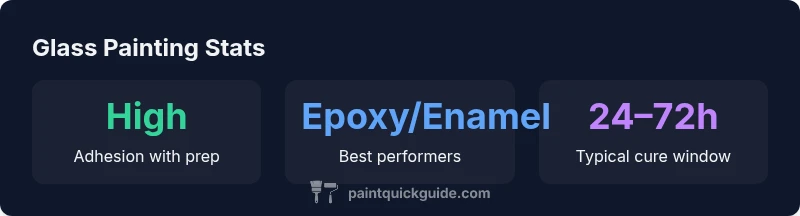
What paint adheres to glass? Enamel-based paints, epoxy coatings, acrylic enamel, and glass-specific paints adhere best when the surface is properly prepped. Start with degreasing, light sanding, and applying a primer designed for glass. Use dedicated glass coatings for extra durability, and always test adhesion on a small area before committing to the full project.
Understanding Glass as a Painting Surface
Glass is a non-porous, smooth substrate that resists coating adhesion unless you create a micro-rough profile and remove oils and fingerprints. For best results, start with a thorough cleaning using isopropyl alcohol or a window-safe degreaser. Allow the surface to dry completely before any abrasion. Lightly scuff the surface with fine-grit sandpaper or a nonwoven abrasive pad to increase surface energy. These steps form the foundation for durable enamel-based and epoxy coatings, reducing the risk of peeling or crazing. Temperature and humidity during application matter; aim for a steady room temperature around 65–75°F (18–24°C) and moderate humidity to promote uniform drying and bonding.
Public-facing coatings on glass benefit from proper substrate preparation, especially when the piece will be handled frequently or exposed to sunlight. A well-prepped surface minimizes failures and ensures the finish remains glossy and intact for longer.
Why Adhesion is a Challenge on Glass
The primary challenge with painting glass is its non-porous nature, which offers little mechanical lock for paint. Any residual oil, dust, or fingerprints act like barriers, causing poor adhesion and premature peeling. Subpar primers or incorrect paint formulations exacerbate this issue. Glass reacts to temperature and UV exposure, which can lead to chalking, cracking, or yellowing if the coating isn’t compatible with the substrate. Selecting enamel-based or epoxy systems designed for glass, paired with a dedicated glass primer, dramatically improves long-term adhesion and surface integrity.
What Paint Adheres to Glass: Choosing the Right Coating
If you’re asking what paint adheres to glass, reliable options include enamel-based paints, epoxy coatings, acrylic enamel, and glass-specific paints. These formulations are designed to bond to smooth surfaces when used with compatible primers. For high-visibility or automotive-grade glass, epoxy-based coatings often deliver superior hardness and chemical resistance. Always verify that your chosen paint lists glass or ceramic surfaces as a compatible substrate, and check the primer compatibility. For clear or transparent glass, consider paints marketed for glass or those with a dedicated glass primer. Always test on a small area first to confirm adhesion and clarity before committing to the full piece.
Surface Prep for Glass
Solid adhesion starts with prep: degrease thoroughly, rinse, and dry. Use a lint-free cloth to remove any streaks. Lightly abrade the surface with 320–400 grit sandpaper or a Scotch-Brite pad to generate tiny surface scratches that help paint grip. Remove all dust with a tack cloth. Apply a glass-priming product designed for the specific paint type you intend to use (water-based enamels vs solvent-based formulas require different primers). Finally, allow the primer to cure per the manufacturer’s instructions before applying paint, ensuring the surface remains clean and dry throughout.
Application Methods and Tools
Choose the application method based on the size and shape of the glass piece. For flat panes, foam brushes, angled brushes, or a short-nap roller can apply even coats. For curved surfaces or windows, spray applications may deliver uniform coverage, but require careful masking and ventilation. If spraying, maintain a consistent distance and use multiple thin coats rather than one heavy coat to avoid runs. Always follow product directions for thinning (if any) and drying times. Maintain good airflow to accelerate curing while avoiding dust deposition on fresh coats.
Curing and Maintenance
Curing is as crucial as application. Do not handle the piece until the recommended cure time has elapsed, typically 24–72 hours, depending on the paint and environmental conditions. Store and cure in a dust- and humidity-controlled environment to prevent surface imperfections. After curing, a protective topcoat or sealant compatible with glass paints can enhance durability, resist UV exposure, and improve cleanup. Regular maintenance includes dusting with a soft cloth and avoiding abrasive cleaners that could scratch the coating.
Alternative Coatings: Glass Paints vs Decorative Coatings
If you need vivid color or a stained-glass aesthetic, consider glass paints designed for crafts or decorative coatings that simulate glass finishes. There are enamel markers, glass paints, and specialty products that replicate etched or stained look without heavy labor. For exterior or sun-exposed pieces, select products with UV resistance and colorfast pigments. Decorative coatings can offer easy touch-ups and simpler removal should you decide to change the design later.
Troubleshooting Common Adhesion Problems
If peeling occurs, assess surface prep, primer choice, and compatibility. Buttons of air under the coating or inadequate curing can cause blistering. Revisit cleaning, lightly sand the peeling area, reprime, and recoat with lighter layers. In cold or humid conditions, drying can be slow, leading to a tacky finish; increase ventilation or relocate to a warmer environment. Always perform a small-area test after any remediation to confirm improved adhesion before continuing.
DIY vs Pro: Costs and Longevity
DIY glass painting is affordable for small projects but durability depends on prep quality and product selection. Epoxy and enamel systems tend to have longer lifespans but require careful ventilation and curing. Professional-grade coatings may offer superior scratch resistance and UV stability but at a higher upfront cost. For high-use surfaces like cabinets with glass panels or vehicle windows, weigh the long-term benefits of premium coatings against labor time and potential rework.
Practical Step-by-Step Quick Start Checklist
- Clean glass with isopropyl alcohol and dry completely. 2) Lightly sand with fine grit and remove dust. 3) Apply a glass-specific primer compatible with your paint. 4) Apply multiple thin coats rather than one heavy coat, allowing proper drying between coats. 5) Cure in a controlled environment per product instructions. 6) Apply a protective topcoat if UV or wear resistance is required. 7) Test adhesion on a small area before full project.
Overview of paint options for glass and their adhesion potential
| Paint Type | Adhesion Potential | Prep Requirement | Best Use |
|---|---|---|---|
| Enamel-based Paint | High with proper prep | Degrease, light sand, primer | Indoor/outdoor glass surfaces |
| Epoxy-based Paint | Very High | Clean, dry surface; proper ventilation | High-traffic or exterior glass |
| Acrylic enamel | Moderate-High | Sand and glass primer | Decorative glass, indoor use |
| Glass-specific paint | Very High | Follow product directions | Decorative and specialty glass |
Your Questions Answered
What paint can I use on glass without etching?
Enamel-based, epoxy-based, acrylic enamel, and glass-specific paints can work on glass when combined with a suitable primer and proper surface prep. Always test first.
Enamel or epoxy paints work on glass, but prep and a glass primer are essential.
Is it necessary to prime glass before painting?
Yes. Prime with a primer designed for glass to improve adhesion, especially if using enamel or epoxy paints. Clean the surface before priming.
Yes, priming helps adhesion on glass.
How long should glass paint cure before handling?
Follow the product label; curing typically ranges from 24 to 72 hours depending on the formulation and environmental conditions.
Check the label; most paints cure in 24 to 72 hours.
Can I spray-paint glass surfaces?
Yes, but use paints and primers designed for glass or that bond well with glass. Ensure proper ventilation and masking to protect surrounding areas.
Yes, with the right primer and glass-friendly paint.
What mistakes reduce adhesion on glass?
Skipping thorough prep, using non-glass primers, applying too thick coats, and painting in high humidity all reduce adhesion.
Skip prep, skip primer, apply coats too thick in humidity.
“Durable glass finishes come from matching paint chemistry to the glass surface and following disciplined prep and cure steps. This approach minimizes peeling and ensures long-lasting results.”
Quick Summary
- Start with thorough surface prep for glass adhesion
- Choose enamel-based or epoxy paints for best results
- Always use a glass primer compatible with your paint
- Test adhesion on a small area before full project
- Follow cure times and ventilation guidelines for safety