Different Paint Types: A Practical Guide for Homeowners and DIY Enthusiasts
Comprehensive guide on different paint types, including water-based, oil-based, finishes, and hybrids. Learn how to choose, prep, and apply for interior, exterior, and automotive projects with practical steps and cost considerations.


Among different paint types, the best choice depends on surface, environment, and finish. For walls, water-based latex (acrylic) paints are versatile and easy to clean, while oil-based options offer durability but odors and longer drying times. Specialty finishes like matte, satin, and gloss change sheen and washability. Always consider prep, VOCs, cleanup, and long-term maintenance when choosing.
Why Different Paint Types Matter
The choice of different paint types determines how surfaces look, hold up, and wear over time. For homeowners and DIY enthusiasts, understanding how water-based, oil-based, and specialty paints interact with surfaces—along with finish options like matte, satin, and gloss—helps prevent premature failures. This section explains the key decision factors, including surface material, indoor vs. outdoor exposure, cleaning needs, and environmental concerns. Throughout, we refer to different paint types as the starting point for a durable, satisfying result in both interior rooms and exterior projects. By learning these distinctions, you can plan with confidence, estimate budget, and map a realistic timeline. PaintQuickGuide's analysis shows that most interior walls benefit from low-odor water-based options, while trim and doors may demand higher-durability finishes in some cases.
Core Categories of Paint
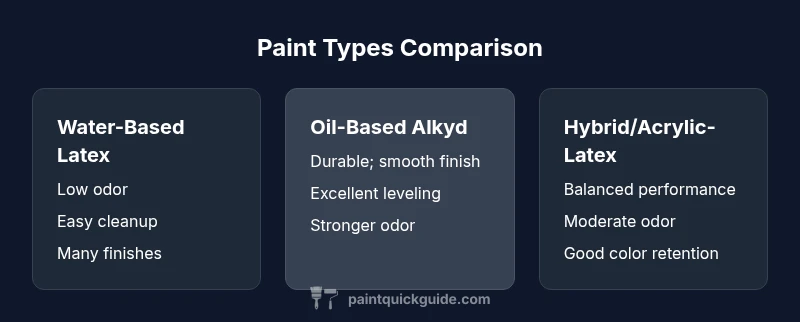
Paint types fall into several broad families. Water-based paints include latex and acrylic formulas prized for low odor and fast cleanup. Oil-based (alkyd) paints offer exceptional durability and leveling but emit stronger fumes and require mineral spirits for cleanup. Hybrid or acrylic-latex blends attempt to combine the best of both worlds, balancing ease of use with durability. Specialty paints cover epoxy, enamel, and elastomeric coatings, often designed for metal, concrete, or exterior use. Understanding these core categories helps you map a project to the most appropriate paint type while recognizing their typical limitations and costs. For the phrase different paint types, the goal is to match performance with expectations across home and car-related projects.
Water-Based vs Oil-Based: Pros and Cons
Water-based latex paints shine in interiors for their minimal odor and easy cleanup; they dry quickly and come in a wide range of sheens. Oil-based paints deliver superior durability, smoother finishes, and stronger stain resistance, but they require solvents for cleanup and emit stronger odors. Practical use cases vary: walls and ceilings benefit from latex; trim and doors often benefit from alkyds; exteriors sometimes favor acrylic-latex blends for weather resistance. Consider drying time, recoat windows, and total cost over the life of the project when weighing these options.
Finish Types and Their Use Cases
Finish determines appearance, cleanability, and the effort required for maintenance. Matte lowers glare and hides surface imperfections but is less washable; satin offers a balanced sheen and resilience; semi-gloss and gloss provide the easiest cleanup and highest durability for kitchens, bathrooms, and trim. For different paint types, your choice of finish should align with traffic levels, cleaning needs, and aesthetic goals. Always test swatches to confirm color and sheen under your lighting.
Specialty Paints and Modern Options
Beyond basic water-based and oil-based paints, specialty options include chalk-type furniture paints, epoxy coatings for concrete floors, and mold-resistant formulations for bathrooms and basements. Consider whether you need water resistance, chemical resistance, or a prolonged decorative effect. When selecting different paint types for furniture or crafts, note compatibility with existing finishes and the required surface preparation. PaintQuickGuide suggests starting with a small test area to confirm adhesion and finish.
VOCs, Health, and Environmental Considerations
Low-VOC and zero-VOC paints reduce indoor air impact without sacrificing performance on most projects. However, some high-durability enamel or oil-based products still carry higher VOCs and stronger odors. Choose products certified for low emissions, ensure adequate ventilation during application, and store unused paint safely away from children and pets. The long-term environmental footprint varies by solvent use, drying chemistry, and lifecycle costs of different paint types.
Indoor Application Scenarios: Living Rooms and Kitchens
For living rooms, a low-odor water-based paint with a washable finish is typically ideal. Kitchens demand scrubbability and stain resistance, often achieved with higher-sheen finishes and durable resins. When tackling different paint types on the same project, plan for controlled transitions at trim lines and use primers to ensure uniform adhesion and color. A test patch on a hidden wall can reveal potential adhesion issues early.
Exterior Painting Essentials
Exterior walls face sun, rain, and temperature cycling. Acrylic-latex blends are popular due to weather resistance and flexibility, but high-durability enamel may be used for trim and accents. Surface prep remains critical: clean surfaces, remove loose paint, repair cracks, and seal joints. In humid climates, choose films with moisture tolerance and UV resistance. Weather windows, staging, and proper caulking are essential components of a successful exterior job using different paint types.
Prep, Primers, and Tool Choices
Preparation is the foundation of long-lasting results. Clean and sand surfaces as needed, repair defects, and select a compatible primer when changing base chemistry or color dramatically. Tools matter: brushes for oil-based paints, rollers for smooth walls, and sprayers for large exterior surfaces. For different paint types, a primer with good adhesion improves coverage and reduces topcoat requirements. Always follow manufacturer instructions for surface compatibility.
Maintenance and Longevity
Different paint types offer varying durability and washability. Routine cleaning with appropriate cleaners can preserve color and sheen. Recoat intervals depend on wear, exposure, and the chosen finish. In high-traffic areas, consider higher-sheen options and periodic touch-ups instead of complete repaints. Document your paint type choices so future projects align with the existing surface chemistry.
Budgeting Time: Drying, Recoat Windows, and Total Cost
Cost and time vary with paint type, finish, and surface. Water-based paints mature quickly, enabling faster project completion but may demand more coats for uniform color. Oil-based products can reduce the number of coats on some surfaces but require longer cure times and solvent cleanup. When planning, factor in consumables like primers, sealers, and brushes, plus potential VOC reduction investments for a healthier indoor environment.
Quick Reference Checklist for Different Paint Types
- Identify surface material and exposure to plan the appropriate base chemistry.
- Choose a finish that balances appearance and washability for your environment.
- Check VOC ratings and ventilation needs for indoor projects.
- Test adhesion and color in a small area before full coverage.
- Follow safety and cleanup guidelines for the chosen paint type.
Feature Comparison
| Feature | Water-Based Latex | Oil-Based Alkyd | Hybrid/Acrylic-Latex |
|---|---|---|---|
| Surface suitability | Interior walls/ceilings; easy prep | Trim/doors; high durability | Interiors and exteriors; balanced performance |
| Durability | Good for most interior walls | Excellent on trim; long-lasting | Solid with wear resistance |
| Odor/VOC | Low odor | Stronger odor | Moderate odor |
| Drying time | Fast to touch | Longer cure times | Moderate |
| Cleanup | Water-based cleanup | Solvent cleanup needed | Water-based cleanup with caution |
| Best For | Living rooms, bedrooms; DIY beginners | Doors, trim, high-traffic surfaces | Interiors and exteriors; versatile |
| Typical price range | Low to mid-cost | Mid-to-high-cost | Mid-range |
Upsides
- Low odor and easy cleanup in water-based finishes
- Wide range of finishes and colors available
- Fast drying and easier recoat schedules
- Excellent adhesion on a variety of substrates with proper prep
- Good balance of performance across many projects
What's Bad
- Oil-based options offer durability but require solvents and stronger odors
- Longer cure times and more challenging cleanup for some paints
- Different paint types may necessitate primers and compatibility checks
- Higher-end finishes can be more costly over time
There is no single best paint type; match to surface, environment, and priorities.
Water-based latex works well for interior walls; oil-based excels on trim and high-traffic areas. Exterior projects often favor acrylic-latex blends; always consider finish, VOCs, and cleanup when choosing different paint types.
Your Questions Answered
What is the difference between latex and acrylic paints?
Latex and acrylic paints are both water-based, but acrylic paints typically have higher solids and better adhesion for challenging surfaces. For most interiors, latex provides ample performance with easier cleanup. Always check the product label for the acrylic content and washability.
Latex and acrylic are both water-based, but acrylics usually offer stronger adhesion and durability on tricky surfaces. For interiors, latex is often enough, with easier cleanup.
Are oil-based paints still worth using today?
Oil-based paints offer superior durability and a smoother finish but come with stronger odors, longer drying times, and solvent cleanup. They remain useful for trim, doors, and high-wear surfaces where exceptional durability is required.
Oil-based paints give durability for trim and doors, but they smell and take longer to dry and require solvents.
Which paint type is best for bathrooms?
Bathrooms benefit from moisture-resistant finishes and washable surfaces. Look for mold- and mildew-resistant formulations in water-based or hybrid paints. A paint with a semi-gloss or satin finish offers easier cleaning without too much glare.
For bathrooms, go with a moisture-resistant, washable finish like satin or semi-gloss in a water-based or hybrid formula.
Do I need primer with different paint types?
Primer is often important when changing color drastically, painting over stains, or using a paint type with poor adhesion on a surface. Even with water-based paints, priming can improve coverage and durability on porous surfaces.
Yes, primer helps with color coverage and adhesion, especially on tricky surfaces or when switching colors.
Can I mix paint types on a single project?
You can mix types for cosmetic effects, but you must not rely on them to bond or protect different substrates. For example, you might apply a water-based topcoat over an oil-based primer, but avoid applying oil-based paints over latex without proper guidance.
Mixing types is risky; you can layer a water-based topcoat over a properly prepared surface or primer, but check compatibility first.
Quick Summary
- Match paint type to surface and environment
- Prioritize low-VOC options for indoor spaces
- Choose finish based on washability and glare
- Plan prep and primers to ensure long-lasting results