How to Tell If Paint Is Oil or Water-Based: A Practical Guide
Learn practical methods to identify oil- versus water-based paint, including label cues, cleanup tests, drying times, odors, and safe at-home tests for home and auto projects.


To tell if paint is oil- or water-based, start with the label for solvent guidance and resin type. Clean-up with water indicates water-based; mineral spirits or naphtha indicates oil-based. Note odor, drying time, and film feel: water-based dries faster with milder fumes, while oil-based finishes cure more slowly and have a stronger solvent smell. Perform a small wipe test if unsure.
What defines oil vs water-based paint
Paints differ primarily by their solvent system, binder chemistry, and end-use behavior. At a practical level, oil-based paints use hydrocarbon solvents such as mineral spirits and cure harder; water-based paints rely on water as the primary solvent and tend to dry faster with more flexible finishes. For DIYers and auto refinishing hobbyists, understanding these basics helps you choose primers, compatibility, and cleanup methods. This section explains the core distinctions and helps you answer the essential question: what makes oil-based paint different from water-based paint, and how can you tell? The phrase how to tell if paint is oil or water based is frequently used by homeowners and pros alike, and it’s a sensible starting point for quick decisions. While there are exceptions, most paints labeled latex or acrylic are water-based, and alkyd or enamel paints are typically oil-based. Note that some modern products blend resin chemistries to balance durability and ease of cleanup, but the underlying solvent difference remains the best initial guide. By recognizing the solvent, drying behavior, and cleanup requirements, you gain a practical framework for selecting compatible topcoats, primers, and for planning maintenance tasks. According to PaintQuickGuide, the label and solvent guidance are the most reliable starting point for identifying paint bases.
Reading the label: what to look for
Labels are your first and most reliable clue. Look for terms such as water-based, latex, acrylic, acrylic alkyd, or alkyd on the can or carton. If the label mentions mineral spirits, turpentine, or a hydrocarbon solvent, that product is usually oil-based. In addition to solvent hints, check the resin type or product category: 'polymer emulsion' or 'acrylic' typically indicates water-based; 'alkyd' or 'oil-based enamel' points to oil-based formulations. If you’re dealing with a spray can, read the Safety Data Sheet (SDS) or technical data sheet (TDS) at the brand’s site to confirm the base. Note that some brands repackage products with similar names (e.g., “premium acrylic enamel”) that can be deceiving; always cross-check the solvent section and the cleanup instructions. Owners, contractors, and hobbyists often ask about drying times; water-based paints may dry to touch within 30 minutes to a few hours, whereas oil-based finishes can require longer cure times. Remember: a label that clearly states water-based, latex, or acrylic is your most direct indicator, but when in doubt, perform the safe tests described below.
Visual and handling cues you can rely on
In many situations you can judge by appearance and handling. Water-based paints usually look more matte or satin and dry to a flexible film. They wash out of brushes with warm soapy water; oil-based paints require mineral spirits or paint thinner for cleanup. The odor can be a strong hint; water-based products tend to have mild or no odor, while oil-based products emit a stronger solvent smell. Touch and smear tests can be telling: if a dried film rubs off onto a cloth with water alone, you’re likely dealing with water-based; if it leaves an oily residue or requires a solvent to wipe away, it is more likely oil-based. Keep in mind that some water-based paints formulated for auto refinishing may behave differently due to urethane or epoxy components, and some oil-based products labeled “alkyd enamel” can appear water-washable when cured. When you consider finish, durability, and cleanup, these cues provide practical guidance beyond the label.
Simple at-home tests you can perform safely
You don’t need fancy equipment to identify the base of your paint. Gather a few common supplies: a clean white rag, water, mineral spirits, acetone, a glass jar, and a small area to test. Test 1: Label-check first, then acclimate the surface with a damp cloth. Test 2: Clean-up test—wipe a small patch with water; if it cleans up and dries without residue, it’s probably water-based. Test 3: Solvent test—apply a tiny amount of mineral spirits on a hidden patch and wipe gently; if it dissolves or wipes away easily, the paint is oil-based. Test 4: Solvent-smell test—open a jar under ventilation and note the odor strength; strong solvent smell supports oil-based identification. Safety tip: wear gloves and eye protection, work in a well-ventilated area, and never mix cleaners. If you’re unsure, apply the test to a scrap piece of wood or metal rather than the finished surface. Document results with notes and photos for future reference.
Cleanup, curing, and how these differences affect your project
Cleanup for water-based paints is typically just soap and water, with brushes rinsed under warm water and air-dried. Oil-based finishes demand solvent cleaning and longer ventilation; brushes should be cleaned with mineral spirits, then washed with soap and water. Drying times vary: water-based paints often feel dry to the touch within an hour, though full cure can take days; oil-based paints may take several hours to days for a full cure. The chemistry behind these differences also affects sanding, recoating intervals, and compatibility with primers. If you’re touching up or applying a second coat, be mindful of recoat times and surface prep requirements specific to each base. Environmental guidelines on volatile organic compounds (VOCs) may restrict solvent use indoors; always follow local regulations and manufacturer instructions. By understanding cleanup and cure behavior, you can plan faster project timelines and safer workspaces.
Practical considerations for common projects: walls, furniture, and cars
For interior walls, water-based paints are usually preferred for easier cleanup, quicker projects, and lower odor. For furniture, both bases exist; water-based acrylics can be more flexible and easier to sand, while oil-based enamels offer superior hardness and a glossy finish. Auto refinishing requires specialized products and safety practices; most contemporary car paints use water-based urethanes or acrylics with clear coats, while older systems included solvent-based lacquers. Always check compatible primers and topcoats; mismatched bases can lead to adhesion problems, peeling, or hazy finishes. When repainting a car, consider professional spray booths and proper respirators due to the hazardous solvents involved. If you’re painting cabinets, water-based products reduce mess and cleanup while still delivering durable finishes. For exterior surfaces, sun exposure and temperature influence curing; follow label guidance for temperature ranges and recoat windows. In short, choose based on project type, user exposure, and cleanup preferences, and you’ll get consistent results.
Special cases: enamels, acrylics, hybrids, and older products
Some paints blur the line between oil- and water-based, especially newer hybrid products that blend resins. Enamels can be oil- or water-based depending on the solvent; acrylic enamels may be water-based; alkyd enamels are typically oil-based but may use modern cleaners. Chalk paints, chalky finishes, and gouache differ in binder chemistry and are not always directly comparable to mainstream wall paints. If you encounter a paint marketed as “all-in-one” or “multi-surface,” inspect the SDS and product datasheets to confirm the base. For paints used on cars, pay particular attention to the base used in the clear coats; even water-based topcoats may require compatible solvents for cleanup. Always conduct label checks, smell tests, and patch tests on inconspicuous areas before committing to a full project. When in doubt, defer to manufacturer guidelines and consider testing on a scrap piece of your project material.
When to call a pro: signs you need expert help
If label information is ambiguous, the product is old or discontinued, or the finish shows inconsistent adhesion, you should seek professional guidance. A pro can run more precise tests and recommend correct primers, sealers, and topcoats. Auto refinishing, in particular, benefits from professional spray equipment, controlled curing environments, and safety protocols. For home projects, a paint store or coatings specialist can help identify bases using SDS data, cross-checks with brand lines, and compatibility testing with existing finishes. Document tests and images, keep a sample patch, and ask for a written recommendation. In some cases, you may be able to mail a sample to the manufacturer for analysis. The goal is to prevent mismatched bases that cause peeling, yellowing, or poor adhesion.
Quick-start decision flow (one-page reference)
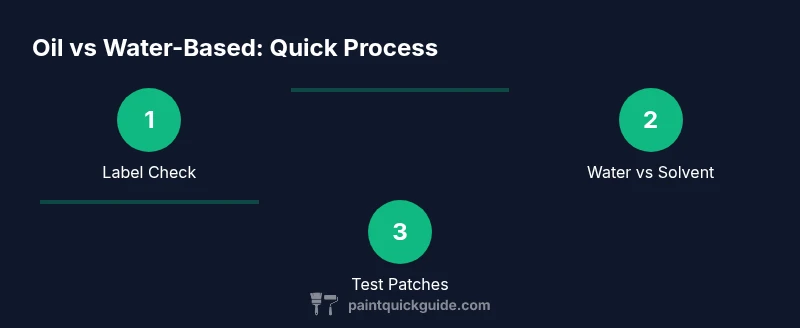
- Step 1: Read the label and search for words like water-based, latex, acrylic, alkyd, or oil-based.
- Step 2: If uncertain, perform a water-cleanup test; wipe with water and observe residue.
- Step 3: If still unsure, perform a solvent test with mineral spirits on a scrap patch.
- Step 4: Check odor and drying time as corroborating cues.
- Step 5: Verify recommended primers and topcoats and plan your project accordingly.
- Quick tip: Always test on scrap material first and wear safety gear. The decision flow helps you quickly decide which topcoat and cleanup approach to use.
- Time estimate: 30-60 minutes for a full test kit session.
Tools & Materials
- White rag or paper towel (lint-free)(Use clean, dry fabric for blotting and wiping tests)
- Water (room temperature)(For cleanup and the water test)
- Mineral spirits or paint thinner(Use outdoors or a well-ventilated area; avoid flames)
- Acetone (nail polish remover) or pure acetone(Handle with gloves; provide ventilation)
- Glass jar or plastic testing cup(Label and seal for solvent tests)
- Clean soap and warm water(For general brush cleaning and final rinse)
- Protective gloves and safety goggles(Prevent skin/eye contact with solvents)
- Marker or tape(Label test patches and record results)
Steps
Estimated time: 40-60 minutes
- 1
Gather and lay out materials
Collect all tools and set up a well-ventilated workspace. Arrange a scrap surface for testing and protect surrounding areas with drop cloths to minimize mess.
Tip: Organize items by test type to avoid cross-contamination. - 2
Check the label first
Inspect the can or container for keywords like water-based, latex, acrylic, alkyd, or oil-based. Cross-check with the SDS for confirmation if the base isn't obvious.
Tip: If the label uses vague terms, proceed with at least two tests for confirmation. - 3
Perform a water cleanup test
Apply a small amount of water to a patch and attempt to wipe; water-based paints should wash away with soap and water and leave little residue.
Tip: Test on a scrap area first to avoid damaging the finished surface. - 4
Conduct a solvent wipe test
Dampen a patch with mineral spirits and wipe gently; if the paint softens or dissolves, it’s likely oil-based.
Tip: Work in a ventilated area and avoid mixing solvents. - 5
Do a smell and dry-time check
Open a fresh container or observe while curing on a test patch: stronger solvent odor and longer dry times point to oil-based, milder odor and faster dry times suggest water-based.
Tip: Odor alone is not definitive; use in combination with other tests. - 6
Document results
Record outcomes with notes or photos, labeling patches as water- or oil-based based on combined evidence.
Tip: Keep patch samples safe for future reference or to show a retailer or pro. - 7
Clean up thoroughly
Rinse brushes with soap and water if water-based; use mineral spirits for oil-based finishes, followed by soap and water to remove residue.
Tip: Dispose of solvent-soaked rags safely per local regulations. - 8
Decide on primers/topcoats
Choose primers and topcoats compatible with the identified base to maximize adhesion and durability.
Tip: If in doubt, consult the manufacturer guidelines or a coatings specialist. - 9
Seal and store test results
Keep records of the patch results, the products tested, and any recommendations for future projects.
Tip: Store instructions and test sheets together with the original container for easy reference.
Your Questions Answered
What is the quickest way to tell if paint is oil or water based?
Start with the label for base and solvent cues. If the label isn’t clear, perform a water cleanup test and a mineral spirits wipe on a scrap patch to confirm.
Check the label first, then test on a scrap patch if needed.
Is latex always water-based?
Most latex paints are water-based, but some blends and hybrids exist. Always verify with the label, SDS, or manufacturer data sheet.
Most latex is water-based, but verify with the product data sheet.
Can you rely on smell to identify the base?
Smell is a useful clue but not definitive. Oil-based products often have a stronger solvent odor; use it with label checks and tests for confirmation.
Smell helps, but don’t rely on it alone.
What should I do if the label is old or unclear?
Rely on practical tests (water cleanup and solvent wipe) and consult the SDS or manufacturer if needed. Patch tests on scrap areas reduce risk.
If the label is unclear, test on scrap and check the SDS.
Does the base affect drying time and cleanup?
Yes. Water-based paints dry faster and cleanup with water; oil-based paints cure slower and require solvents for cleanup. Plan ventilation and safety accordingly.
Base affects how long it dries and how you clean up.
Watch Video
Quick Summary
- Identify base by reading the label first and verifying with tests.
- Water-based paints clean with soap and water; oil-based require solvents.
- Use multiple cues (odor, dry time, cleanup) to confirm base.
- Test on scrap patches before touching finished surfaces.
- Plan primers/topcoats based on the identified base to avoid adhesion issues.