Mastering Paint Sizes: A Practical Guide for Home and Auto Projects
Understand paint sizes, common can options, and how to estimate needs for walls, cabinets, exteriors, and auto refinishing. Learn sizing strategies to save money, reduce waste, and improve color consistency in 2026.


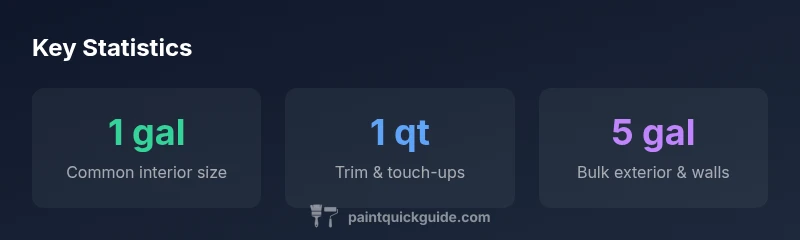
Paint sizes for most DIY tasks cluster around three common containers: 1 quart, 1 gallon, and 5 gallon pails. For walls, a gallon typically covers about 350–400 square feet per coat, while quarts handle trim and touch-ups (roughly 100–125 square feet per coat). For large rooms or exterior work, using a 5-gallon bucket reduces trips to the store and minimizes waste. By planning around these standard sizes, you can estimate needs, control costs, and simplify color matching.
Understanding paint sizes
Paint sizes determine how much material you’ll need, how much waste you’ll generate, and how smoothly a project goes from start to finish. In residential projects, the three most common container sizes are 1 quart, 1 gallon, and 5 gallon pails. These units align with typical room dimensions, wall area, and trim work. The phrase “paint sizes” often crops up when you’re tallying up materials, selecting finishes, or comparing brands in 2026. According to PaintQuickGuide, starting with the right size helps you estimate cans, plan color purchases, and reduce leftovers that end up in the recycling bin. Remember that sizes also influence mixing, tinting, and color consistency across coats.
When you size a project, you’re balancing practicality with accuracy. The goal is to map a room’s surface area to container volumes, while leaving room for primer, multiple coats, and color changes. Small projects shrink to quart-sized purchases; larger walls call for gallons or bulk 5-gallon buckets. By thinking in terms of sizes rather than just liters or ounces, you’ll avoid over-purchasing or underbuying and keep your project aligned with a predictable budget.
Primary can sizes you will encounter
In most home settings, you’ll repeatedly encounter three standard sizes. A quart (32 oz) is ideal for trim, doors, corners, and minor touch-ups. A gallon (128 oz) covers a substantial wall area per coat and is the workhorse for whole-room projects. A 5-gallon bucket (64 quarts) is the go-to for large rooms, exterior surfaces, or multi-room renovation runs where consistent color and fewer trips to the store matter.
To translate these sizes into project planning, remember common coverage estimates: interior walls with smooth surfaces typically align with 350–400 square feet per gallon per coat, while trim areas fall in the 100–125 square feet per quart range. Exteriors and textured surfaces may reduce these figures. Automotive or specialty paints may be sold in smaller containers or bulk bulk packs depending on line and finish; always check the brand’s guidance for those projects.
Conversions help when you’re comparing brands. One gallon equals four quarts or 128 fluid ounces, and a five-gallon bucket equals 64 quarts. If you’re painting a mix of surfaces, you can build a mixed-basket plan using these units and round to practical multiples to minimize leftover material.
How to estimate paint quantity by project type
Estimating quantity starts with surface area and the number of coats. Here’s a practical workflow:
- Measure: Add up all wall areas (length × height) and subtract doors or windows. 2) Decide on coats: Most interior jobs use two coats; exteriors may require three. 3) Look up coverage: Check the brand’s coverage per gallon for the chosen finish (matte, satin, eggshell). 4) Calculate gallons: Gallons needed = (Total wall area ÷ coverage per gallon) × coats. 5) Account for waste: Add 10–15% more to cover mistakes, texture, and color changes. 6) Size selection: Round up to the nearest multiples of your available containers (e.g., 1 gal or 5 gal) to reduce waste and simplify mixing.
Example: A 12'×12' room with 8' ceilings has about 384 sq ft of wall area. With two coats and a coverage of 350–400 sq ft/gal, you’d plan for roughly 2–2.2 gallons per coat. Rounding up to 2 gallons per coat means buying 4 gallons total, but you might choose two 1-gallon cans per coat for easier color matching across walls and trim.
Project-specific sizing: walls, cabinets, exteriors
When sizing for walls, aim for gallons for large surfaces and quarts for trim. For cabinetry, precise color control and smaller panels typically favor quarts or pint-sized containers, especially for color changes and touch-ups. Exterior walls often justify 5-gallon buckets to minimize the number of containers and ensure consistent coverage across rough textures and weathered surfaces. Auto refinishing projects are more nuanced: many finishes come in smaller containers, but large panels may require gallons of the base, plus specific reducers and hardeners per the product line. Always consult the manufacturer’s coverage estimates and consider buying a little extra to account for blending across panels.
By thinking in sizes, you gain clarity on how many cans you’ll need and how much money you’ll spend.
Color changes and primer effects on size planning
Color changes, primer applications, and the presence of dark-to-light transitions can dramatically affect how much paint you use. Primers are often priced per can, but their coverage is different from topcoats. If you’re painting from dark to light, you’ll typically apply an extra coat of primer or additional coats of topcoat, increasing total paint volume. In many cases, you’ll want to adjust quantities upward by 10–20% when planning two-tone projects, surfaces with heavy porosity (new drywall, plaster, or textured walls), or when switching to a gloss finish that highlights coverage differences.
Document your primer use and note any brand-specific recommendations. This practice keeps your project calibrated, minimizes overruns, and supports reliable color replication on touch-ups.
Budgeting and waste: choosing sizes to save money
Selecting paint sizes involves math and strategy. Larger sizes (5 gallons) reduce packaging waste and often cost less per gallon, but they also increase risk of waste if you misjudge your area or end up with colors you don’t use. Conversely, smaller sizes (quarts) limit waste when you’re unsure about a color or handling only small repair jobs, yet they can raise costs per square foot and complicate color matching across different walls. The key is to plan for the entire project, not just the first coat. Consider a blended approach: buy a gallon or two for the main areas and reserve quarts for touch-ups, trim, and color changes. This strategy reduces waste, limits color drift, and keeps the project within budget.
Practical sizing scenarios and examples
Scenario A: A 10' × 12' room with smooth walls, two coats, and a standard ceiling height. Expect roughly 350–400 sq ft per gallon per coat. Plan for 2 gallons for the first pass and 1 gallon for the second pass if you’re changing color. Scenario B: A kitchen with white walls and dark cabinetry. Use quarts for doors and trim; plan 2–3 quarts for trim and several gallons for walls if you’re applying two coats. Scenario C: Exterior siding for a small house with moderate texture. A 5-gallon bulk purchase is common, paired with 1–2 extra gallons for weather-related recoat flexibility. These scenarios illustrate how surface type, texture, and scope influence paint sizes.
Tools to measure and convert sizes
Keep a small calculator or a notes app handy to translate between quarts, gallons, and liters. Useful tools include:
- Tape measure and basic area calculator
- Brand coverage sheets for paints you plan to use
- A simple multiplier for coats and texture factors
- A notepad for tracking quantities per wall or surface
Documenting sizes during the planning phase makes reordering easier and helps you stay within budget.
Size planning checklist: quick reference
- List project surfaces and approximate coats
- Check brand-specific coverage per gallon
- Convert surfaces to gallons and quarts as needed
- Add 10–15% for waste and color changes
- Round up to practical container multiples (1 gal, 5 gal)
- Keep a small reserve for touch-ups and future repairs
- Record final quantities for purchasing and touch-up kits
dataTable": {
dataTable": {
dataTable": {
dataTable": {
Typical can sizes and coverage by project type
| Project Type | Common Can Size | Typical Coverage per Coat | Notes |
|---|---|---|---|
| Interior walls (room) | 1 gallon | 350-400 sq ft | Smooth surfaces; two coats typical |
| Cabinets/trim | 1 quart | 100-125 sq ft | Smaller size helps color control |
| Exterior walls | 5 gallon | 150-350 sq ft | Rough surfaces may reduce coverage |
Your Questions Answered
What are the most common paint can sizes for interior walls?
For interior walls, the most common sizes are 1 gallon for large surfaces and 1 quart for trim and touch-ups. For color changes or small projects, quarts can be convenient, while larger rooms may justify buying in bulk in 5-gallon containers.
Interior walls usually require 1 gallon for walls and 1 quart for trim. For bigger projects, consider a 5-gallon container to minimize trips.
How do I estimate how many cans I need?
Measure total wall area, subtract openings, decide coats, and check your paint’s coverage per gallon. Divide the adjusted area by the per-gallon coverage, then add 10–15% for waste and touch-ups. Finally, round up to the nearest available can size.
Measure area, pick coats, check coverage, add 10–15% for waste, and round up to whole cans.
Do paint sizes differ for cars vs walls?
Yes. Automotive finishes are often sold in quarts or pints and may require special reducers or hardeners. For large panels, gallons can be used, but always follow the product’s guidance.
Auto paints usually come in smaller containers; follow the manufacturer’s guidance for quantities.
What affects coverage besides size?
Surface texture, porosity, color contrast, and application method all influence how far a gallon goes. Porous walls and heavy textures need more coats and paint.
Texture and porosity affect how much a gallon covers; plan for extra coats where surfaces are rough.
Is it better to buy more than I need?
It’s smart to have a little extra for touch-ups, but avoid large overages that won’t match later. Record the exact batch and ensure you keep the same line if possible.
Having a small extra for touch-ups is wise; store the same batch if you can.
“Choosing the right paint sizes isn’t just about coverage; it’s about reducing waste and keeping color consistent across touch-ups.”
Quick Summary
- Plan around standard sizes (1 qt, 1 gal, 5 gal).
- Estimate by area × coats, then add 10–15% for waste.
- Use larger sizes for big surfaces to reduce waste and cost.
- Keep quarts handy for trim and touch-ups to maintain color consistency.