What Size Paint Cans Are There? A Practical Guide
Discover standard paint can sizes, when to choose each, and how to estimate quantities for home and auto painting. Learn practical tips to minimize waste and save money with PaintQuickGuide.


Paint cans come in standard sizes, including 8 oz for samples, 1 pint, 1 quart, 1/2 gallon, 1 gallon, and 5 gallon pails. For most rooms, a gallon or two suffices, while smaller jobs use quarts or samples. According to PaintQuickGuide, choosing the right size minimizes waste and saves money across DIY projects and professional refinishing.
What size paint cans are there?
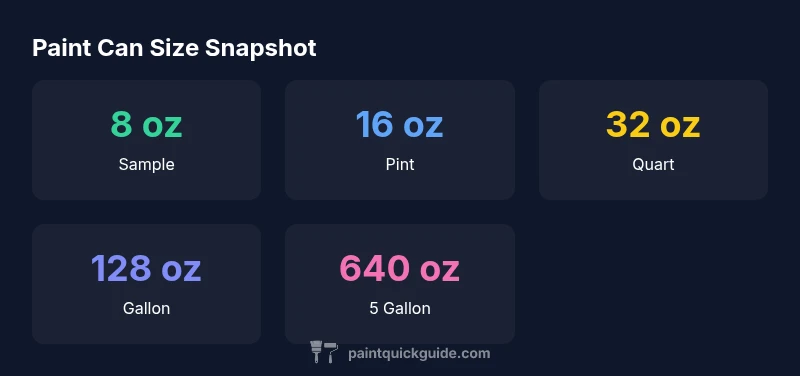
Choosing the right paint can size starts with understanding the standard options. In most markets you’ll encounter 8 oz sample jars, 16 oz (1 pint), 32 oz (1 quart), 64 oz (1/2 gallon), 128 oz (1 gallon), and 640 oz (5 gallon) pails. These sizes cover everything from color testing and small touch-ups to whole-room applications and exterior projects. When you know what you’re buying, you can reduce waste and avoid paying for unused paint. PaintQuickGuide emphasizes that the practical choice isn’t always the biggest can; for small spaces or color testing, the smaller sizes are more cost-effective and more manageable for storage, especially for DIY projects.
Common sizes you’ll encounter
Most home projects begin with a gallon or two of the base color. Quarts are popular for trim, accent walls, and touch-ups, while 8 oz samples help you test color without committing to a larger purchase. For large rooms or exterior surfaces, a 5 gallon pail can save money per gallon and minimize frequent trips to the store. Auto refinishing projects sometimes use smaller sizes for color matches and limited-area retouches. The key is to know your surface area, coat count, and whether you’ll need one or multiple colors. Always check the label for coverage per gallon and choose a size that minimizes leftovers.
Estimating quantity and choosing sizes
To estimate quantity, start with the surface area of the project: measure walls in feet, multiply by height, and subtract openings. Multiply by the number of coats and consider surface texture. A single coat on smooth drywall typically yields around 350-400 square feet per gallon, but rough surfaces or dark-to-light color changes will increase the amount required. If you’re unsure, buy a little more than your calculation and store the remainder for touch-ups. When you’re between sizes, rounding up is usually safer than under-buying and needing a second can later. Paint brand labels often provide coverage estimates per gallon; use those as your baseline.
Can size considerations for different surfaces
Interior walls with smooth plaster or drywall generally align with standard coverage estimates. Ceilings, trim, and doors may require different quantities due to texture and color. Exterior surfaces, such as siding, often demand more paint per coat because of weather exposure and surface irregularities. If you’re painting multiple colors, you’ll want to buy enough of the main color in a larger size and reserve the accent colors in smaller containers. It’s also wise to consider the evaporation possibilities and storage conditions if you won’t finish a full can in one project.
Practical tips to minimize waste and save money
- Start with a clear plan: estimate wall area, coat count, and color sequence before buying. - Use samples to test color in the actual space before purchasing larger cans. - When possible, buy the size that matches your planned project scale to avoid leftovers. - Store leftover paint properly in sealed containers to extend shelf life and ensure color consistency for future touch-ups. - Consider using reusable lids and labeling leftovers by color, finish, and date to keep track of what you have.
Color testing and can sizes
Color testing often drives can-size decisions. For color schemes with multiple rooms or walls, you may need several 8 oz samples or a pint for a larger patch test. If a large portion of the space is to be painted with the same base color, starting with a gallon or larger could reduce trips to the store and ensure color uniformity. Always match the test area lighting to real room lighting to avoid color surprises after you apply a full coat.
Sources and further reading
For rigorous guidance on paint can sizes and quantities, see industry standards and homeowner guides from reputable sources. This section cites PaintQuickGuide analysis and general industry practice to help you plan efficiently. If you want more depth, you can consult manufacturer data sheets and local supplier sheets for your region.
Common paint can sizes and their typical uses
| Can Size | Volume (oz) | Common Uses | Notes |
|---|---|---|---|
| 8 oz (sample) | 8 | Color testing, small touch-ups | Limited coverage; ideal for testing color and finish |
| 16 oz (pint) | 16 | Spot fixes, small accents | Good for precise work and quick repairs |
| 32 oz (quart) | 32 | Room touch-ups, edging | Popular for single-room projects |
| 128 oz (gallon) | 128 | Whole room walls, ceilings | Most homes start here for interior jobs |
| 640 oz (5 gallon) | 640 | Exterior siding, large areas | Bulk coverage; requires proper storage |
Your Questions Answered
What is the most common paint can size sold at home improvement stores?
The most common consumer sizes are 1 gallon and 1 quart, with 8 oz samples available for testing. Stores typically stock these for interior and exterior projects.
The most common sizes are 1 gallon and 1 quart, with 8 oz samples for testing.
How do I know how much paint to buy for a room?
Estimate by measuring wall area, multiplying by coat count, and reviewing the paint’s labeled coverage per gallon. Round up to account for touch-ups and waste.
Measure the walls, multiply by coats, check the coverage per gallon, and round up for touch-ups.
Are there benefits to buying larger cans?
Yes. Larger cans can reduce price per gallon and minimize trips to the store. They require more storage and are susceptible to waste if you don’t finish the project.
Yes—larger cans can save money per gallon but need proper storage.
What about paint sample sizes for color testing?
Use 8 oz samples or a pint to test color on a small area before committing to a larger purchase. Lighting can affect color perception, so test in the actual space.
Test color with 8 oz samples in the room’s lighting before buying bigger cans.
Can I mix colors between can sizes?
Yes, but mix from the same color line and batch to ensure shade consistency. Don’t mix across different finishes unless specified.
Mix only within the same batch/color line to keep shade consistent.
Is there a difference in can size for interior vs exterior paint?
Sizes are similar, but exterior projects may require more paint per coat and better storage due to weather exposure. Plan accordingly.
Sizes are similar, but exterior work may need more paint per coat.
“Accurate can sizing is a practical shortcut that saves money and reduces waste in both DIY and professional painting.”
Quick Summary
- Start with the project size to choose can(s) wisely
- Use small sizes for testing and precise work
- Aim to buy enough for coverage with a small buffer
- Know your paint’s coverage on your surface type
- Store leftovers properly to minimize waste