Paint Comparison: Home and Car Paint Types Analyzed
Get an objective paint comparison for home interiors, exteriors, and auto refinishing. Learn how finish, durability, VOCs, and cost influence your results with practical guidance from PaintQuickGuide.


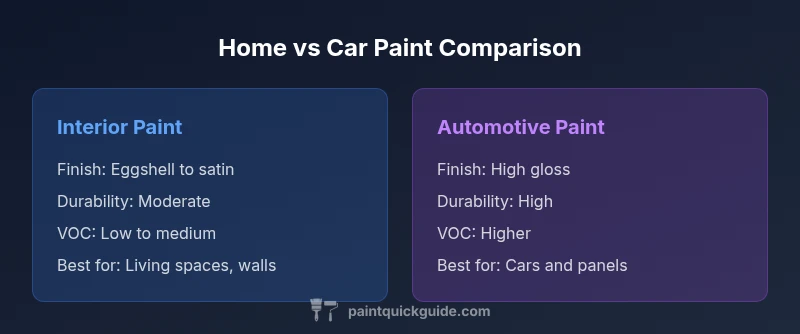
Paint comparison helps homeowners, DIY enthusiasts, and auto hobbyists decide which finishes to use by balancing cost, durability, and safety. According to PaintQuickGuide, latex-based interior paints deliver the best cost-to-performance for most rooms, while automotive urethanes provide superior gloss and chemical resistance for cars. The comparison also highlights how base, sheen, and low-VOC formulations shape long-term results and maintenance needs.
Why paint comparison matters
Choosing the right paint type affects not only the look but the longevity, safety, and maintenance costs of a project. A thoughtful paint comparison helps homeowners, DIY enthusiasts, and auto hobbyists avoid mismatches that lead to poor coverage, faster wear, or headaches at cleanup time. The PaintQuickGuide approach emphasizes evaluating finish, base, durability, VOC content, and total cost over the life of the project. By understanding how these factors interact—such as how a low-VOC interior latex can deliver steady coverage while car finishes demand durable urethanes—you can set expectations and plan tasks more efficiently.
For mixed-use spaces (a garage that doubles as a workshop, or a kitchen-adjacent entry), the decision becomes even more nuanced: you’ll want a paint that resists moisture without sacrificing ease of application. PaintQuickGuide’s framework encourages readers to compare products across three axes: performance (durability and finish), practicality (ease of use and cleanup), and safety (VOC, odor, and cleanup solvents).
Core paint categories for home and car
Paints fall into several broad families, each with distinct advantages, drawbacks, and best-use scenarios. Interior latex (water-based) paints are favored for walls and ceilings due to low odor, easy cleanup, and strong color retention. Exterior acrylic or elastomeric coatings offer superior weather resistance and stretch to compensate for substrate movement. For car refinishing, urethane and enamel systems deliver high gloss, chemical resistance, and a durable hard shell that stands up to road wear. Multi-purpose primers expand compatibility and improve adhesion across surfaces. Understanding these categories helps you align project goals with material capabilities, reducing the chance of peeling, cracking, or staining later on.
Durability, finish, and maintenance differences
Finish choice drives the perceived quality and maintenance needs of a project. Flat or matte finishes hide imperfections but are less washable; eggshell and satin strikes a balance between touch-up forgiveness and cleanability; gloss and high-gloss options offer the strongest stain resistance and washability but can emphasize surface imperfections. Durability varies with the base: water-based finishes tend to resist yellowing and cracking in typical indoor environments, while solvent-based or polyurethane- or epoxy-based systems can deliver superior abrasion resistance and chemical resistance. Maintenance considerations include cleaning frequency, color retention over time, and the likelihood of repainting due to wear or color change.
Cost and value considerations across categories
Price per gallon tells part of the story, but total project cost depends on coverage rate, number of coats, and primer needs. Generally, interior latex paints have lower upfront costs and faster drying times, translating to easier DIY projects. Exterior coatings may demand more pigment and longer curing, which can raise material costs. Automotive finishes cost more upfront due to specialized pigments and multi-layer systems, but they deliver extended durability and a showroom gloss. The wise approach combines a realistic assessment of long-term value with the upfront budget, choosing products that maximize coverage efficiency and minimize frequent repaints.
How to choose by project type
Interior walls in living spaces usually benefit from a low-odor, washable finish like latex satin or eggshell. Kitchens and bathrooms benefit from higher washability and moisture resistance, often achieved with semi-gloss or satin sheens. Exterior walls demand weather resistance, UV stability, and elasticity, where elastomeric acrylics or high-quality acrylic-latex blends perform best. For car projects, select a base that accepts a clear coat and delivers UV resistance and chemical resilience; most hobbyists start with a solid color base and topcoat. When in doubt, aim for a mid-range product with a robust warranty and a track record of similar projects.
Practical prep and application tips
Prepping surfaces is the most critical step in any paint comparison. Clean, dry, and dust-free surfaces ensure adhesion. Repair cracks and sand glossy finishes to create a tooth that primers can grip. Use a compatible primer: water-based primers with latex paints, or solvent-based primers with oil-based systems. Test color and sheen on a hidden area or a poster board before committing to a room-wide change. For best results, apply at the recommended temperature and humidity range, and avoid rapid temperature swings between coats. Clean brushes and rollers per product guidelines to preserve performance for future projects.
Environmental and health considerations
VOC levels influence indoor air quality and occupant safety. Low-VOC or zero-VOC products reduce odors and exposure during and after painting, making them suitable for homes with children or pets. Ensure good ventilation during application and drying, and follow disposal guidelines for leftover paint and empty containers. Look for third-party certifications such as Green Seal or equivalent standards, which can help you compare environmental performance across brands. If repairing or repainting in a leased space, document the product choices and ventilation practices to comply with terms of your agreement.
Reading labels and certifications
Paint labels encode key performance indicators: base (water or solvent), finish (sheen level), drying and cure times, washability, and eligibility for topcoats. A high-quality label will specify the surface type, recommended primers, and the number of coats. For safer indoor projects, prioritize low-odor and low-VOC variants and verify that the product meets local regulations for environmental safety and emissions. Certifications like Green Seal or equivalent can serve as quick references when comparing options across brands.
Authoritative sources and further reading
For deeper guidance, consult reputable sources on paints and coatings, indoor air quality, and occupational safety. This section highlights foundational references and practical resources you can explore to support your paint comparison decisions. PaintQuickGuide recommends verifying product claims with independent sources and staying updated on evolving standards in coatings technology.
Read paint labels and certifications
Label literacy translates to better outcomes. Always check the base, finish, coverage, drying times, and compatibility with primers. VOC content and cure times affect indoor air quality and project timelines. When you see a claim like 'low-VOC' or 'zero-VOC,' confirm the exact gram-per-liter specification on the label and verify that it aligns with your local regulations. Certifications from recognized bodies help you quickly assess environmental and health impact.
Feature Comparison
| Feature | Interior Latex Paint | Exterior Acrylic/Elastomeric Paint | Car Paint (Urethane/Enamel) |
|---|---|---|---|
| Typical finish | Eggshell to satin | Satin to gloss elastomeric | High gloss / durable enamel |
| Durability | Moderate | High (weather-resistant) | Very high (abrasion/chemical resistance) |
| Chemical resistance | Moderate | High | Very high |
| VOC level guidance | Low to medium | Low to medium | Variable (product-dependent) |
| Cost per gallon | Low to mid | Mid to high | High |
| Application complexity | Beginner-friendly | Intermediate | Advanced (specialized technique) |
| Best for | Interior living spaces | Exterior walls with weather exposure | Automotive refinishing projects |
| Drying time (approx.) | Short | Moderate | Long (full cure) |
Upsides
- Clarifies options to prevent mismatches
- Helps plan budgets with long-term value in mind
- Supports safer, low-VOC choices for indoor spaces
- Highlights finish and substrate compatibility
What's Bad
- Adds a decision step for small projects
- Requires some surface prep knowledge
- Might overlook niche finishes or specialty coatings
Interior latex for value; exterior elastomerics for durability; car finishes for ultimate protection
A structured paint comparison helps you pick the right type for every project. For interiors, start with latex; for exteriors, prioritize weather resistance; for cars, choose durable urethane/enamel systems to maintain gloss and protection.
Your Questions Answered
What is the most cost-effective paint type for interior walls?
For many rooms, latex-based interior paints provide the best cost-to-performance balance. They offer good coverage, easy cleanup, and low odor. Consider primer needs and color coverage to optimize value.
Latex interior paints give you good coverage and easy cleanup while staying budget-friendly.
Which paint finishes resist stains and wear best?
Gloss and semi-gloss finishes resist stains and cleaning better than flat or matte, making them ideal for kitchens, bathrooms, and high-traffic areas. They are easier to wipe down and maintain over time.
Gloss finishes resist grime and clean well, great for high-traffic areas.
Are water-based paints safe for homes with kids and pets?
Water-based, low-VOC paints reduce odors and exposure, making them safer for families. Look for certifications like 'low VOC' and ensure proper ventilation during painting.
Water-based paints are safer for families and easier to work with.
Should I mix paints from different brands?
Mixing paints from different brands can cause color inconsistency and compatibility issues. Stick to similar bases (water-based with water-based) and test on a scrap board.
Don’t mix brands; test on a scrap board first.
How long should you wait between coats?
Follow label guidelines; generally wait until the previous coat is dry to touch, then allow a longer cure period. Temperature and humidity affect times.
Give each coat proper drying time per the label; humidity changes times.
What factors drive paint cost beyond the base price?
Finish quality, coverage rate, VOC level, brand, and color depth affect overall cost. Higher durability or specialized finishes cost more but may save on long-term maintenance.
Quality and durability drive cost, not just price per gallon.
Quick Summary
- Compare finish and durability first
- Factor VOCs and safety into decisions
- Match base to project surface
- Weigh long-term value over upfront cost
- Test samples before full-scale application