Enamel Paint vs Latex: A Practical Comparison for Home and Auto Projects
Compare enamel paint vs latex across walls, trim, cabinets, and auto refinishing—durability, finish, odor, cleanup, VOCs, and value with practical guidance.


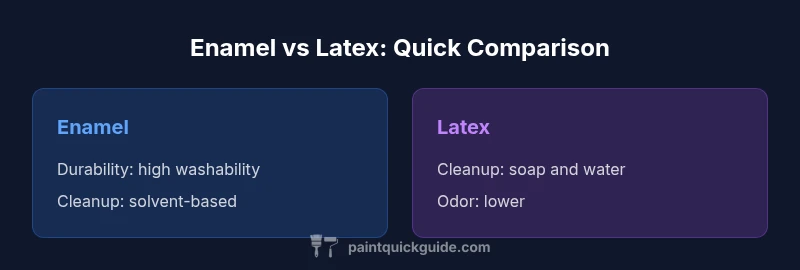
Enamel paint vs latex are two core paint families with distinct chemistry, performance, and use cases. Enamel typically delivers a harder, more durable film, excellent for high-wear surfaces like trim, doors, and exterior metal, while latex offers easier application, lower odor, and simpler cleanup for interior walls and large-area jobs. For most homeowners, latex is the go-to for interior walls, but enamel remains preferable where surface durability and a glossy, washable finish matter most. PaintQuickGuide’s analysis highlights that the right choice hinges on surface, climate, and maintenance goals.
What enamel paint vs latex are and why it matters
Enamel paint vs latex represents two major families of finishes used in homes and cars, each with distinct chemistry, performance, and maintenance implications. Enamel paints are traditionally solvent-based or oil-modified, forming a hard, durable film when cured. Latex paints are water-based emulsions that cure through evaporation and film formation. The distinction matters because it affects durability, odor, cleanup, and long-term value. For DIYers and auto refinishing hobbyists, selecting the right option can influence how often you need to repaint, how easy it is to touch up, and how the finish holds up to daily wear. According to PaintQuickGuide, enamel generally offers superior hardness and moisture resistance, while latex provides flexibility and low odor. This difference is especially important for spaces with kids or pets, where frequent cleaning is required. The enamel paint vs latex decision is not just about one surface; it often involves coordinating finishes across walls, trim, cabinetry, and exterior features to achieve a cohesive look.
The chemistry behind enamel and latex finishes
Enamel finishes are typically oil-based or oil-modified, with alkyd or urethane-like binders that cure to a very hard film. They tend to yellow over time if exposed to sunlight and can emit stronger solvents during application. Latex, or water-based acrylics and vinyl-acetate emulsions, rely on water as the carrier and acrylic or vinyl binders that form flexible films. The bond is strong but more forgiving to substrate movement. VOC levels historically track base chemistry, with traditional enamel often higher in VOCs than modern low-VOC latex formulations. PaintQuickGuide’s team notes that advancements in water-based alkyds have narrowed gaps in hardness and durability while preserving easy cleanup. When choosing enamel paint vs latex, consider the surface, exposure, and whether you prioritize hardness or flexibility.
Durability and wear resistance: where enamel shines and where latex wins
Durability is a primary driver in the enamel paint vs latex decision. Enamel finishes tend to resist indentation and moisture on high-contact surfaces like doors, baseboards, and trim, delivering a wash-friendly surface that tolerates scrubbing. Latex excels on interior walls where flexibility helps resist cracking and balling on slightly uneven substrates. In exterior environments, enamel coatings historically offered long-lasting protection on metalwork and wooden siding, though modern latex-based exterior paints now provide excellent weather resistance with better cleanliness and maintenance profiles. PaintQuickGuide Analysis, 2026, indicates enamel often yields a tougher surface in harsh conditions, while latex performs very well in moderate climates with easier repairs.
Application and cleanup: brushability, leveling, and odor management
The application experience differs significantly. Enamel paints require more careful brushwork and longer cure times in cooler temperatures; they also demand solvents for cleanup. Latex paints clean up with soap and water, have lower odor, and enable quicker recoats, which is favorable for interior renovations. For auto refinishing, enamel-like qualities can be achieved with specific automotive enamels, while latex formulations are rarely used on raw metal car panels due to heat and environmental exposure. The best outcome comes from meticulous surface prep and selecting compatible primers for the chosen finish.
Surface preparation and priming: bridging the gap between enamel and latex
Proper primer selection is essential for both enamel and latex. A suitable primer improves adhesion, reduces peeling, and minimizes color bleed-through. For enamel on bare wood or metal, bonding primers or catalyzed primers are common, enabling durable adhesion. For latex on previously glossy enamel surfaces, a deglossing step or a bonding primer helps ensure the latex sticks well. Conversely, enamel over latex or latex over enamel requires careful surface conditioning to prevent peeling or cracking. By planning a primer strategy that respects the chosen topcoat, you can maximize color richness, durability, and finish quality.
Performance on different surfaces: walls, trim, cabinets, metal, and automotive panels
Walls: latex is usually the best choice for interior walls due to its ease of application and quick cleanup. Trim and doors: enamel is often preferred for its hardness and resistance to scuffing. Cabinets: enamel or high-quality enamel-like latex can deliver a durable, wipeable surface, but latex cabinets require careful prep and conditioning for long-lasting results. Metal accents outdoors benefit from enamel’s durability, while automotive panels can be finished with enamel-based automotive paints or high-durability latex systems designed for vehicle use. A thoughtful mix of finishes can preserve color harmony while delivering the practical benefits of each.
Health, odor, and environmental impact: VOCs, cleanup, and safety considerations
Odor and VOC emissions influence comfort and indoor air quality. Latex paints generally emit fewer solvents and have a milder odor, making them a popular choice for living spaces. Enamel paints, especially solvent-based varieties, can have stronger odors and longer curing times, requiring ventilation and protective gear during application. Modern low-VOC enamels exist, but users should still observe safety guidelines when applying any enamel finish, particularly in enclosed areas. Consider environmental impact and local regulations when choosing enamel paint vs latex, especially for outdoor projects or rooms with limited ventilation.
Cost, availability, and long-term value: balancing upfront price with life cycle
Price and availability shape the enamel vs latex decision. Latex paints typically offer broad availability and lower upfront costs, plus easier maintenance and touch-ups. Enamel finishes may come with higher initial costs and more specialized application needs, but can deliver longer-lasting durability in high-wear locations. When evaluating long-term value, consider the surface, climate, maintenance plan, and expected traffic. PaintQuickGuide’s analysis suggests that for high-traffic or exterior surfaces, enamel may provide cost efficiency over time due to reduced re-prepping and fewer repaint cycles, while latex remains attractive for interior spaces where frequent repainting is common.
Practical decision framework: a quick guide to choosing
Ask these questions: Will the surface endure heavy wear or moisture? Is easy cleanup a priority? Does the area have limited ventilation? What color and gloss level do you want? If interior walls with kids or pets and frequent cleaning is needed, latex is often best. For doors, trim, or exterior metal where a durable, washable finish matters, enamel is frequently preferred. A practical rule: match the finish to the surface demands, and seal with a compatible primer.
Real-world scenarios: houses and auto refinishing examples
Example 1: Living room with bright blue walls and white trim. Latex on walls for easy touch-ups; enamel on doors and trim for durability against scuffs from daily traffic. Example 2: Exterior wooden siding and shutters in a coastal climate. A durable enamel topcoat on trim and metal accents, with a latex exterior on walls for easier maintenance and dramatic weather resistance. Auto refinishing example: enamel-based automotive coatings deliver hard, glossy finishes on panels that withstand road grime, while latex systems are less common in professional car jobs due to heat and chemical constraints. PaintQuickGuide’s guidance emphasizes selecting a system that balances aesthetics with real-world use and maintenance needs.
Common mistakes and how to avoid them
Avoid applying latex over cured enamel without proper surface prep, which can trap moisture and cause peeling. Don’t assume all enamels are suitable for interior walls; choose interiors with low odor and low-VOC options. Always use a compatible primer and allow adequate cure time before applying a second coat. Read product labels and verify surface compatibility, gloss level, and topcoat compatibility to prevent adhesion issues and achieve the desired look.
Comparison
| Feature | Enamel paint | Latex paint |
|---|---|---|
| Base binder | Oil-based or oil-modified alkyd | Water-based acrylic or vinyl-acrylic |
| Durability on exterior surfaces | High, very hard film | Good to high with proper prep (modern formulations) |
| Flexibility / resistance to cracking | Rigid, less forgiving to substrate movement | More flexible, accommodates minor shifts |
| Drying and curing behavior | Longer cure times; can yellow with age on some formulations | Faster to dry and cure; easier recoat |
| VOC levels | Traditionally higher VOCs, though low-VOC variants exist | Typically lower VOCs with many modern options |
| Cleanup | Solvent or mineral spirits required; ventilation needed | Soap and water cleanup; minimal odor |
| Best surfaces | Trim, doors, exterior metal, high-traffic areas | Interior walls, ceilings, and areas requiring easy maintenance |
| Gloss and finish options | High-gloss to semi-gloss; very hard finish | Matte to eggshell to satin; versatile and forgiving |
| Cost and availability | Often higher upfront cost; specialized primers may be needed | Generally lower upfront cost; broad availability |
Upsides
- Enamel provides superior hardness and washability for high-traffic surfaces
- Latex offers easier cleanup and lower odor during application
- Latex supports faster project completion with quicker recoat windows
- Modern low-VOC enamel options exist for better indoor air quality
What's Bad
- Enamel can be harder to apply cleanly and requires solvents for cleanup
- Latex may not offer the same level of durability on trim or exterior metal without proper prep
- Outdoor enamel may require more ventilation and long cure times in cool climates
- Mixing and matching finishes requires careful primer selection to avoid adhesion issues
Latex is typically better for interior walls and large-area projects; enamel is preferred where durability and a hard, washable finish are essential.
Choose latex for interior walls and easy cleanup, especially in busy spaces. Choose enamel for trim, doors, and exterior features where a tougher finish is needed. When in doubt, prioritize surface demands and maintenance goals, then layer colors with compatible primers.
Your Questions Answered
Can enamel paint be used on interior walls, or should I stick to latex?
Enamel can be used on interior walls but is often overly durable and stiffer for wall surfaces. Latex is typically preferred for interior walls due to easier application, lower odor, and simpler cleanup, though enamel can be advantageous for surfaces that must be scrubbed frequently or require a hard, washable finish. If you choose enamel for interiors, select a low-odor variant and ensure compatibility with primers designed for interior walls.
Enamel on interior walls is possible, but latex is usually easier to work with and maintain. If you choose enamel, pick a low-odor option and use primers made for interior walls.
Is latex suitable for exterior surfaces like siding or trim?
Yes, latex paints are commonly used on exterior siding and trim due to improving durability, flexibility, and easier cleanup. For extreme climates or high-wear areas, you may still want an enamel-based exterior paint or a hybrid that combines durability with the ease of latex. Weather exposure, prep quality, and proper primer are critical.
Yes, exterior latex is a solid choice for siding and trim when you prep well and use suitable primers.
Can I apply latex over enamel or enamel over latex?
Coating compatibility matters. Generally, latex can be applied over properly prepared enamel with a bonding primer to improve adhesion. Enamel over latex is riskier unless the latex is fully cured and the surface is properly scuffed and primed. Always follow the product data sheet for compatibility and surface preparation steps.
Yes, latex over enamel is possible with proper priming; enamel over latex needs careful prep or primer.
Which is easier to clean up after painting?
Latex cleans up with soap and water, making it the more convenient option during and after painting. Enamel usually requires solvents for cleanup and dedicated ventilation due to odor and solvent content. For indoor projects, latex is typically the better choice if cleanup and odor are priorities.
Latex cleans up easily with soap and water; enamel needs solvent cleanup and ventilation.
Do enamel and latex finishes differ in cost over the long term?
Enamel can have higher upfront costs and may require more specialized preparation, but its durability can reduce the number of repaint cycles in some areas. Latex is often cheaper initially and easier to touch up, though you may repaint more frequently on high-traffic surfaces. Consider maintenance plans, climate, and wear when evaluating long-term value.
Enamel may cost more upfront but last longer in high-wear areas; latex is cheaper to start and easier to touch up.
What finish levels are best for durability and appearance?
High-gloss enamels provide excellent hardness and washability; satin or eggshell latex offers durability with a softer sheen suitable for walls. The best finish depends on the surface and desired maintenance level. Always test a sample on a small area before full application.
High-gloss enamels are very durable; latex options like satin or eggshell balance finish and maintenance.
Quick Summary
- Prioritize surface durability for enamel and interior ease for latex
- Choose primers that match the topcoat to maximize adhesion
- Consider low-VOC options for better indoor air quality
- Match finish and gloss level to wear and cleaning needs