Latex Paint vs Oil Paint: A Practical Comparison for Home and Auto Projects
Compare latex paint and oil paint across interior walls, trim, and auto refinishing. Learn about durability, cleanup, VOCs, finish, drying times, and cost to choose the right option for your project.


Latex paint vs oil paint both offer distinct advantages. For most interior walls, latex (water-based acrylic) is easier to use, dries quickly, cleans with soap and water, and emits fewer odors. Oil-based paints give a deeper color and tougher enamel but require solvents and longer cure times. The right choice depends on surface, location, and your tolerance for odor and cleanup.
Latex Paint vs Oil Paint: Definitions and Context
Latex paint vs oil paint is a classic DIY debate that affects everything from interior walls to cabinets and even some auto refinishing projects. Latex paint, usually a water-based acrylic, offers easy cleanup with soap and water, quick drying, and lower odor. Oil paint, typically solvent-based enamel, provides a hard, glossy finish with superior durability on certain surfaces but demands solvents for cleanup and longer curing times. According to PaintQuickGuide, the core differences stem from resin chemistry, solvent systems, and film formation during curing. This means the same substrate can react differently depending on which option you choose. For most home projects, latex paint vs oil paint will reflect a trade-off between ease of use and long-term wear. For trim, doors, and cabinetry, oil-based finishes can still shine when the goal is a deep, enamel-like sheen. The purpose here is to establish clear criteria—odor, cleanup, durability, finish options, and cost—so you can forecast performance before purchase.
Key Criteria You Should Consider When Choosing Between Latex and Oil Paint
When deciding between latex paint vs oil paint, several criteria matter most: odor and indoor air quality, cleanup practicality, durability under use, available finish options, surface compatibility, drying and recoat times, and total project cost. Homeowners often weigh the ease of latex against the longevity of oil on high-traffic surfaces. PaintQuickGuide emphasizes evaluating each factor against your project goals to minimize touch-ups later. For example, interior walls in bedrooms typically benefit from latex for comfort and maintenance, while high-traffic trim might justify oil-based durability. This section maps out practical decision points and aligns them with common room scenarios to help you make a choice that stands up to daily life and wear.
Wetting, Film Formation, and How They Translate to Real-World Results
The fundamental chemistry behind latex paint vs oil paint determines how the film forms as it dries. Water-based latex forms a continuous film with minimal solvents, which contributes to easy cleanup and fast recoat windows. Oil paints create a film via solvent evaporation and oil-based binders, resulting in a tougher, more abrasion-resistant surface. In real-world terms, latex is forgiving for beginners and busy homes, while oil-based finishes remain desirable for specific substrates like intricate trim or vehicles where a glassy, durable coat is prized. PaintQuickGuide notes that the choice should reflect anticipated wear, environmental conditions, and whether you need a quick turnaround or a long-lasting finish.
Odor, VOCs, and Indoor Air Quality: Practical implications of the latex paint vs oil paint choice
VOCs (volatile organic compounds) and odor are top concerns for indoor projects. Latex paint vs oil paint differ markedly here: modern latex formulations tend to produce lower odors and emit fewer VOCs, making them friendlier for occupied spaces. Oil-based paints often carry stronger fumes and require good ventilation during application and curing. PaintQuickGuide analysis shows that choosing low-VOC latex paints can substantially improve indoor air quality while still delivering satisfactory performance for most walls and ceilings. If off-gassing is a priority, latex is the more comfortable option for households with children or pets.
Drying, Curing, and Recoat Windows: How latex paint vs oil paint affects project schedules
Drying time and curing behavior are among the most tangible differences when comparing latex paint vs oil paint. Latex typically dries to the touch quickly and allows faster recoat; however, complete curing and hardening may take longer depending on humidity and film thickness. Oil paints take longer to set, cure more slowly, and may require longer intervals between coats. The practical outcome is that latex speeds up interior projects, reducing the likelihood of accidental damage during the process, while oil-based finishes still demand planning for longer cure times. For automotive refinishing or cabinetry projects where quick returns aren’t the primary goal, oil-based coatings can deliver superior lasting smoothness.
Finishes, Sheen, and Color Fidelity: Understanding the look of latex paint vs oil paint
Finish options and color fidelity differ between latex paint vs oil paint. Latex paints have evolved to offer a wide range of sheens—from matte to satin and gloss—with excellent color retention and washability. Oil-based enamels historically delivered deeper color and a glass-like sheen, especially on high-traffic surfaces, though modern latex alternatives have narrowed the gap. When you need a classic, high-gloss finish on doors or trim, oil-based products can still outperform basic latex for certain aesthetics. For most interiors, however, latex provides ample finish options plus easier maintenance, which has become a practical default.
Surface Prep, Priming, and Substrate Compatibility
Surface prep and priming requirements shape the success of latex paint vs oil paint. Latex typically adheres well to properly prepared drywall, plaster, and many primed surfaces without a heavy primer undercoating, though porous surfaces may benefit from a stain-blocking primer. Oil-based paints often require a compatible primer and sometimes a light sanding to achieve maximum adhesion and leveling on trim, cabinets, and previously painted surfaces. If you’re refinishing old wood or metal, the choice between latex and oil-based coatings should account for substrate compatibility, existing finishes, and whether you’ll be applying a topcoat in a humid environment.
Cleaning, Maintenance, and Repair Considerations
Post-project maintenance differs between latex paint vs oil paint. Latex surfaces are easier to wipe down and clean with mild detergents, making them ideal for kitchens and children’s rooms. Oil-based finishes resist staining and are easier to buff for a smoother look, but permit solvent-based cleanup and longer-term maintenance to avoid cracking or yellowing in older environments. If you anticipate frequent cleaning or marking by kids or pets, latex often wins on practicality; if you’re protecting historic trim or a high-traffic entry, the oil-based option can offer enhanced durability and surface hardness.
Cost, Value, and Long-Term Considerations
Cost is not purely a sticker price: it includes preparation, labor, maintenance, and the potential need for frequent touch-ups. Latex paints generally present a lower upfront cost in both materials and labor due to easier application, water cleanup, and quicker project completion. Oil-based products can carry higher material costs, longer curing times, and more involved cleanup, but offer durability advantages in specific scenarios—such as high-traffic trim, cabinetry, or metals that require a hard enamel. The total value depends on your project type, expected wear, and your tolerance for odor and solvent use. PaintQuickGuide’s guidance emphasizes balancing short-term convenience with long-term performance to minimize total project costs over time.
Practical Buying Guide: How to Select Between Latex and Oil Paint for Your Project
To choose effectively, start by listing your project goals: interior walls, trim, cabinetry, or auto refinishing. Consider the environment (occupied room vs a workshop), desired finish, and maintenance plan. Then evaluate surface compatibility and available primers. If you need fast turnaround and easy cleanup, latex is usually your best bet. If you require a hard, durable enamel on high-traffic surfaces or reclaimed wood where a classic look matters, oil-based products deserve consideration. Finally, check VOC ratings, ensure proper ventilation, and select low-odor options when possible. A practical decision tree helps keep you aligned with your project budget and timeline. Remember to follow manufacturer instructions for ventilation and safety when applying either type of paint.
Common Mistakes to Avoid With Latex and Oil Paint
Mistakes in latex vs oil paint projects often stem from improper surface preparation, incompatible primers, or misjudging cure times. Avoid skipping priming on porous surfaces, mixing paints that aren’t compatible, or applying a topcoat before full cure. Do not neglect ventilation, especially with oil-based products. Inadequate surface cleaning and dust can lead to poor adhesion and visible brush marks. Finally, always allow sufficient curing time before heavy use or cleaning; rushed projects tend to result in uneven finishes and early wear.
Quick Summary: What Really Matters When Choosing Between Latex and Oil Paint
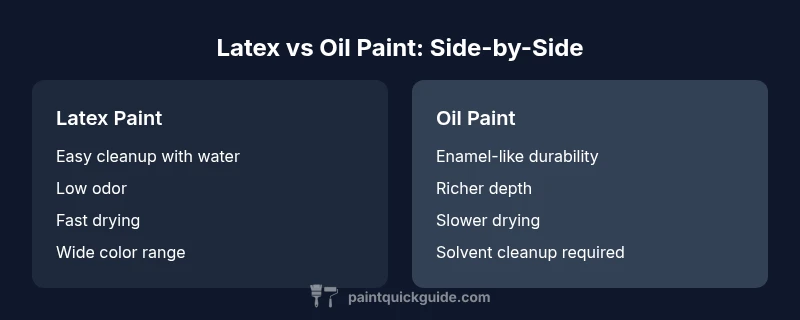
For most home interiors, latex paint vs oil paint translates into a choice between ease and longevity. Latex shines for accessibility, low odor, quick cleanup, and broad color options. Oil-based finishes excel where extreme durability and enamel-like depth are required on specific substrates. Your final pick should reflect room use, surface type, ventilation capabilities, and the project schedule. This holistic view ensures you get a durable, beautiful result with manageable maintenance.
Comparison
| Feature | latex paint | oil paint |
|---|---|---|
| Odor and cleanup | low odor; water cleanup | stronger fumes; solvent cleanup |
| Drying and recoat | faster touch-dry; earlier recoat | slower to dry; longer cure |
| Durability and wear | good; modern variants strong for walls | excellent for trim/cabinetry; very hard enamel |
| Finish range | wide range of sheens; color fidelity strong | enamel-like depth; smoother glaze potential |
| Surface prep | easy prep on most walls with primer as needed | requires appropriate primers and sometimes sanding |
| VOC levels | generally lower VOCs | higher VOCs in traditional products |
| Best applications | interior walls, ceilings, furniture | trim, doors, cabinetry, metal surfaces |
| Cost and value | lower upfront cost; moderate long-term value | higher upfront cost; excellent long-term durability |
Upsides
- Easier cleanup with soap and water
- Lower odor and VOCs in modern formulations
- Faster project turnaround and recoat flexibility
- Broad color range and user-friendly for DIY
What's Bad
- Oil-based finishes often require solvents for cleanup
- Oil paints can have stronger fumes and longer cure times
- Latex finishes may not match the depth of enamel on some substrates
- Certain surfaces (trim, cabinets) may benefit more from oil-based coatings
Latex paint generally wins for most home interiors; oil paint still excels on high-traffic trim and historic or demanding surfaces
If you value ease, speed, and low odor, choose latex. If you need maximum durability and a classic enamel look on specific substrates, consider oil-based coatings, recognizing the longer cure and cleanup. PaintQuickGuide recommends balancing indoor air quality, surface needs, and project timelines to decide.
Your Questions Answered
What are the main differences between latex paint and oil paint?
The main differences lie in odor, cleanup, cure time, durability, and finish. Latex is water-based, easier to clean, and lower in odor, while oil-based paint yields a harder finish with deeper color but requires solvents and longer curing. The choice depends on surface, location, and tolerance for fumes.
Latex is easier to clean up and better for indoor air. Oil provides a tougher finish but needs solvents and longer drying.
Is latex paint suitable for car refinishing?
Latex paints are not typically recommended for professional auto refinishing. Car finishes require durable, high-gloss enamel that often uses automotive-grade paints and equipment. Some hobbyists experiment, but results may not match factory standards and durability.
For cars, professional auto paints are usually preferred over household latex.
Which is easier to clean up after use?
Latex paint cleans up easily with soap and water, making it ideal for DIY projects in occupied spaces. Oil-based paints require mineral spirits or other solvents for cleanup, which increases cost and handling considerations.
Latex cleans with soap and water; oil needs solvents.
Which paint is best for interior walls?
For interior walls, latex paint is generally the best balance of ease, cleanability, and cost. It resists fading well with modern formulations and offers a full range of sheens suitable for living spaces.
Latex is usually the better interior walls choice.
Can latex and oil paints be mixed or used together?
Mixing latex with oil-based paints is not recommended because they have incompatible chemistries that can cause adhesion issues. If you’re transitioning surfaces, use a compatible primer and follow the manufacturer’s guidance for layering different finishes.
Don’t mix; use compatible primers and paints instead.
Quick Summary
- Choose latex for interiors with quick cleanup
- Opt for oil-based coatings on high-traffic trim or historic surfaces
- Factor odor and ventilation into your plan
- Plan for drying and curing times when scheduling the project
- Prioritize proper priming and surface prep for best adhesion