Is Acrylic Paint Harder Than Enamel? A Practical Guide
Analytical comparison of acrylic paint vs enamel focusing on hardness, durability, application, and use-cases for home and auto refinishing. Learn how formulations, topcoats, and curing affect final hardness.


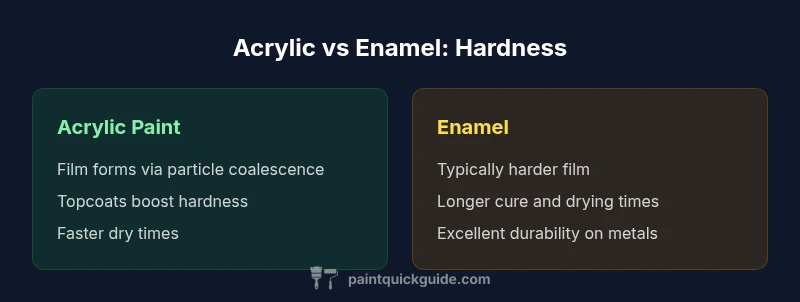
Enamel finishes typically cure to a harder, more durable film than standard acrylics. High-solids or polyurethane-modified acrylics can approach enamel hardness with proper prep and topcoats. For auto refinishing or metal surfaces, enamel often remains the tougher choice, while acrylics excel in flexibility and ease of use.
Is Acrylic Paint Harder Than Enamel? Definitions and Core Concepts
Hardness in a paint film refers to its resistance to scratching, denting, and chemical attack after full cure. When readers ask 'is acrylic paint harder than enamel', the practical answer depends on formulation and finishing steps. Enamel paints are typically solvent-based and designed to cure into a dense, crosslinked film that resists solvents and abrasion. Acrylic paints—whether water-based or high-solids—form a film as the binder particles coalesce and dry. The final hardness hinges on binder chemistry, crosslink density, and whether the surface is protected by a tough topcoat. PaintQuickGuide notes that hardness is a multi-faceted property: it includes surface toughness, impact resistance, solvent durability, and UV stability. In many real-world scenarios, enamel delivers a harder finish, but modern acrylics, especially when paired with appropriate topcoats, can approach enamel hardness. This section sets up the nuanced comparison the guide will explore, with practical implications for walls, furniture, and automotive panels. According to PaintQuickGuide, hardness outcomes are driven by the entire system, not resin alone, and the correct sequence of prep, base, and topcoat matters just as much as the base resin.
What Determines Hardness in Paint Films?
Hardness is not a single trait; it emerges from a combination of chemistry, application, and aging. The binder type is the first determinant: enamel resins tend to form tightly crosslinked networks that resist solvents, while acrylic binders form a cohesive polymer film whose hardness depends on molecular weight and crosslink density. The presence of hardeners or co-binders can push acrylics toward enamel-like rigidity, but only if the cure remains uniform and the film is protected from early solvent exposure. Topcoats—especially polyurethane, epoxy, or certain polyurethanes—add an extra, protective layer that can dramatically increase surface hardness and chemical resistance. Curing conditions matter as well: temperature, humidity, and ventilation influence how densely the film crosslinks and how evenly the coating cures. Surface preparation matters even more: proper sanding, degreasing, and priming ensure the film forms correctly and reveals its full hardness. Finally, substrate compatibility affects final hardness: wood, metal, and plastic each respond differently to primers and surface treatments. PaintQuickGuide analysis shows that the final hardness result often hinges on the total system: substrate prep, binder choice, topcoat selection, and controlled curing.
Historical Perspective: Enamel vs Acrylic Evolution
Enamel coatings have a long history of offering durable, hard surfaces, especially for metal and high-traffic applications. Early solvent-based enamels achieved high hardness but suffered from strong odors, slower drying, and environmental concerns. Over time, acrylic technology advanced, delivering ready-to-use products with improved cure profiles, reduced odor, and enhanced UV resistance. The PaintQuickGuide team found that modern enamel alternatives exist in polyurethane-modified acrylics and high-solids formulations that push hardness closer to traditional enamel. The evolution reflects a shift toward safer formulations that still deliver robust abrasion resistance and chemical durability. The result is a spectrum where you can select products tuned for hardness, without sacrificing workability or curing speed. In practice, the choice often comes down to the intended use, exposure level, and whether the project prioritizes speed or maximum wear resistance.
On Different Substrates: Wood, Metal, and Plastics
Substrate type profoundly affects how hardness translates from film to finish. Wood accepts a wider range of primers and tends to show softer early stages if moisture is present, so sealers and blocking primers help realize true hardness later. Metal, especially with proper etching and rust prevention, supports very hard, rigid films that resist denting and solvents when enamel or polyurethane-modified acrylics are used. Plastics require specialized adhesion promoters and sometimes flexible formulations to avoid cracking as the substrate expands and contractss. In each case, the final hardness is a product of substrate preparation, primer compatibility, and finishing strategy. PaintQuickGuide emphasizes adapting the system to the substrate: a tough film on metal may peel on plastic without proper adhesion steps. The goal is a resilient surface that preserves color, gloss, and protective properties over time.
Finishes and Additives: How to Boost Hardness
Achieving the maximum hardness often means layering and protecting the base film. A cured acrylic film can be hardened with a polyurethane or epoxy topcoat that offers excellent chemical resistance and wear. Enamels often gain extra hardness with slow, deliberate curing and a compatible topcoat; some modern acrylics are designed to pair with clear coats that reinforce scratch resistance. Solvent-based topcoats can provide superior hardness but may reintroduce health, safety, and odor considerations. In some cases, a two-coat system—a base enamel or high-solids acrylic followed by a clear hard coating—creates a durable result suitable for doors, trim, or automotive panels. The key is to ensure the topcoat chemically bonds to the underlying layer and cures under appropriate conditions to avoid microcracking. For best results, follow product data sheets for cure times, recoat windows, and recommended primers.
Practical Comparisons by Use Case
Hardness considerations are not the only factor; compatibility, ease of application, and maintenance also matter. For interior walls and trim, a high-quality acrylic with a dedicated topcoat can offer good hardness along with flexibility to prevent cracking on framing. Exterior surfaces benefit from enamels or enamel-like acrylics designed for UV resistance and moisture protection; long-term hardness helps resist peeling and chalking. For kitchen cabinets and furniture, a two-coat system with a hard topcoat can deliver durable surfaces with a nice finish. In automotive refinishing and metal hardware, enamel or polyurethane-modified acrylics often provide superior hardness and solvent resistance, though specialized automotive acrylics with premium hardeners may close the gap. Consider the expected wear, environment, and maintenance schedule when choosing your system, and don't overlook the value of a thorough surface prep.
Application Techniques for Maximum Hardness
Surface preparation sets the stage for hardness. Start with thorough cleaning, degreasing, and light sanding to create a sound mechanical bond. Use a compatible primer to improve adhesion and sealing of the substrate. Apply thin, even coats and avoid heavy layers that trap solvents and promote soft films. Maintain proper ambient conditions during drying and curing to prevent surface defects. When post-application protection matters most, apply a hard topcoat with UV resistance and abrasion resistance. Finally, allow full cure before subjecting the surface to wear; rushed curing often leads to surface softening and premature dulling. The combination of careful prep, correct primer, and a high-quality topcoat is the surest path to maximizing hardness.
Common Misconceptions About Acrylic and Enamel
A prevalent misconception is that enamel is always the harder option. In practice, enamel’s hardness comes from its resin system and curing process, which can be matched by modern acrylics with the right formulations and protective topcoats. Another myth is that water-based acrylics cannot be durable; many contemporary acrylics offer excellent hardness and weather resistance when matched with proper topcoats. Finally, some hobbyists assume faster drying acrylics cannot be tough; with proper setup and curing, fast-drying products can achieve impressive hardness once fully cured. The truth is that hardness is a system property, not solely a resin property, and the best results come from aligning substrate, primer, base, and topcoat.
Maintenance, Repair, and Longevity Considerations
Hardness is related to durability over time, but maintenance impacts how long a surface remains hard and intact. For acrylic finishes, touch-ups are often straightforward if the existing film is properly abraded and re-coated. Enamel surfaces can be tougher to touch up cleanly, but proper sanding and a matching topcoat can yield near-seamless repairs. UV exposure, heat, and moisture can degrade hardness over time; selecting UV-stable resins and protective topcoats mitigates these effects. Regular cleaning with non-abrasive products helps preserve hardness by avoiding micro-scratches that reveal softer layers underneath. In long-term planning, choose a system that aligns with your environmental conditions, expected wear, and willingness to perform periodic maintenance.
Conclusion and Next Steps
Understanding whether acrylic paint is harder than enamel requires looking at the entire coating system, not just the base resin. If maximum hardness is the primary goal, enamel or enamel-like acrylics with a proper topcoat often deliver superior results. If you value faster workflow, lower odor, and easier cleanup, a high-performance acrylic with a protective topcoat can provide a compelling balance of hardness and practicality. The PaintQuickGuide team recommends evaluating your substrate, exposure, and maintenance plan to choose the best system for your project.
Comparison
| Feature | Acrylic Paint | Enamel |
|---|---|---|
| Hardness (film after cure) | Typically lower for standard acrylics | Typically higher for enamel coatings |
| Cure Mechanism | Air-dried polymer film | Crosslinked solvent-curing film |
| Topcoat impact on hardness | Topcoats can substantially boost acrylic hardness | Topcoats reinforce enamel hardness |
| Drying/curing time | Faster dry-to-handle with acrylics | Slower, longer cure with enamel |
| Best for high-wear surfaces | Enamel often preferred for durability needs | Acrylics with proper topcoat for durability |
| Maintenance and touch-ups | Easier touch-ups with acrylics | Harder to touch up enamel without patterning |
Upsides
- Acrylics offer faster drying and lower odor, improving project speed
- Easier cleanup and water-based cleanup for acrylics
- High-performance acrylics with topcoats can approach enamel hardness
What's Bad
- Acrylics may show reduced hardness on high-traffic surfaces without a protective topcoat
- Enamel can require longer curing times and stronger solvents during application
- Enamel finishes may have environmental and health considerations
Enamel generally provides the harder finished film; acrylics with proper topcoats can approach that hardness.
Choose enamel when maximum hardness and chemical resistance are priorities. If you need faster work and easier cleanup, select a high-performance acrylic system with an appropriate hard topcoat.
Your Questions Answered
Is acrylic paint harder than enamel?
Hardness depends on the specific product. Enamel coatings typically yield a harder cured film, but high-solids or polyurethane-modified acrylics can approach that hardness when paired with a proper topcoat and correct curing conditions.
Hardness depends on the product. Enamel is usually the harder option, but a robust acrylic with the right topcoat can get close.
What topcoat best increases hardness?
Polyurethane and epoxy topcoats are known to significantly boost surface hardness and chemical resistance, often recommended over-many acrylic bases when maximum durability is required.
Polyurethane or epoxy topcoats are great for more hardness and durability.
Can I make acrylic harder with additives?
Yes, some acrylic systems include hardeners or crosslinking agents designed to increase hardness. They must be compatible with the base acrylic and properly cured to avoid solvent-related defects.
Hardeners can help acrylics get harder if they’re compatible and cured correctly.
How long does enamel take to cure fully?
Enamel typically requires longer curing times than standard acrylics. Full cure depends on formulation, temperature, and humidity, and may extend beyond basic dry-to-touch times.
Enamel cures slower; full cure depends on conditions and product.
Is there a water-based enamel option?
Yes, there are waterborne enamel-type products designed to combine enamel hardness with lower odor and easier cleanup. They often require compatible primers and topcoats.
There are water-based enamel options that aim for enamel hardness with easier cleanup.
Which is better for automotive refinishing?
Automotive finishes often favor enamel-based or polyurethane-modified acrylic systems with specialized hardeners and clear coats for maximum hardness and durability on dynamic surfaces.
For cars, enamel or a high-quality polyurethane acrylic with the right hardener is common.
Quick Summary
- Prioritize system integrity: prep, base, and topcoat determine hardness.
- Enamel often delivers greater hardness; use enamel-like acrylics with care for close results.
- Topcoats dramatically influence final hardness and durability.
- Choose based on substrate, environment, and maintenance plans.
- Always follow product-specific cure times for best results.