Acrylic Paint vs Enamel: A Practical Guide for DIYers
A rigorous, objective guide comparing acrylic paint vs enamel across composition, drying times, finishes, durability, prep, and best-use scenarios for walls, furniture, and auto refinishing.


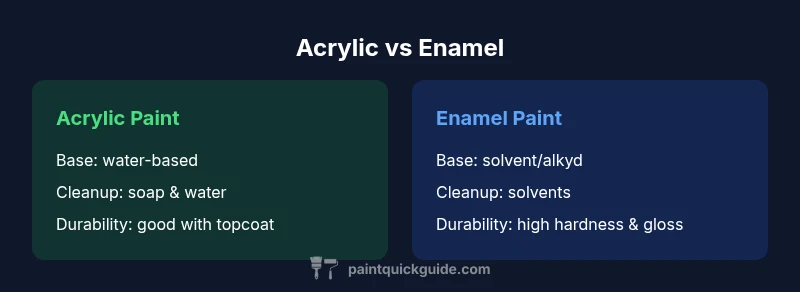
Acrylic paint vs enamel reveals distinct performance profiles: acrylic is water-based, dries quickly, and cleans up with soap and water, making it ideal for walls and crafts. Enamel, usually solvent-based, delivers greater durability and a glossy finish on high-wear surfaces—best suited for furniture, metal, and auto refinishing when conditions permit solvent use. For most DIY projects, acrylic offers ease of use, while enamel provides lasting resilience on exposed surfaces.
Why acrylic paint vs enamel matters for DIY projects
For homeowners and hobbyists, choosing between acrylic paint and enamel is more than a color decision; it determines surface prep, cleanup, odor, drying time, and long-term durability. Throughout this guide, we compare acrylic paint vs enamel in terms of base chemistry, typical use cases, and practical tradeoffs. If you are painting interior walls, countertops, furniture, or light-duty metalwork, the choice will influence not just the finish but maintenance needs over time. The goal is to arm you with a decision framework that aligns with your project scope, environment, and tolerance for odor and cleanup.
What the two paints are made of and how that affects performance
Acrylic paint is a water-based emulsion, typically composed of pigment particles suspended in an acrylic polymer binder. It dries by water evaporation and film formation, yielding clean-up with soap and water and relatively low odor. Enamel paints are traditionally solvent-based or alkyd-based, with a hard resin binder that cures over time as the solvent evaporates. This leads to a tougher surface and often a high-gloss finish, but at the cost of stronger odor and longer cure times. Water-based enamel options exist, designed to balance durability with easier cleanup, but they still differ from standard acrylics in performance and feel.
Drying time, curing, and finish quality
Drying time influences project scheduling: acrylic paints typically cure quickly to touch within minutes to a few hours, allowing rapid second coats and faster project completion. Enamel paints generally require longer cure times to achieve full hardness and chemical resistance, especially on high-traffic surfaces. The finish quality also diverges: acrylics tend to offer a broad range from matte to satin and gloss, with finishes responsive to topcoat choices; enamel coatings, especially traditional alkyds, often settle into a hard, glossy, and very smooth surface that resists marks better over time.
Adhesion, prep, and surface compatibility
Surface prep is critical for both types. For acrylic paints, clean and dry surfaces with a compatible, water-based primer typically suffices. Enamel coatings often require a bonding primer or a sealer, particularly on metals, plastics, or previously glossy surfaces. Porous surfaces such as bare wood or drywall benefit from a primer that enhances adhesion for either system. Sanding between coats is common, but be mindful of the different sanding grits and dust control needs based on the product line.
Durability, cleaning, and long-term performance
Durability depends on the formulation and the surface. Enamel coatings generally resist abrasion and chemical exposure better than basic acrylics, making them suitable for high-use surfaces and areas with frequent contact. However, the durability advantage can be offset by indoor air quality concerns and slower cure times. Acrylic paints, especially when sealed with a compatible topcoat, offer excellent resistance to moisture and are easier to repair or repaint later. The choice often hinges on exposure, maintenance expectations, and the importance of a glossy or matte finish.
Practical guidance by project type: home walls, furniture, and light auto refinishing
For interior walls and craft projects, acrylic is usually the practical choice due to ease of use, low odor, and fast turnaround. When refinishing cabinets, furniture, or metal parts exposed to regular use, enamel coatings—especially durable alkyd or water-based enamel—provide longer-lasting protection and a glossier look. Auto refinishing hobbyists may lean toward enamel or modern urethane systems for superior hardness and chemical resistance, but these choices require proper ventilation and technique. Always test a small area first to confirm adhesion and finish.
Costs, availability, and environmental considerations
Acrylic paints are widely available, affordable, and come in a broad spectrum of colors and sheens. Enamel products tend to be more expensive and may incur higher solvent costs or regulations around ventilation and disposal. Environmental considerations include volatile organic compound (VOC) content, odor, and waste disposal requirements. When budgeting, include primers, topcoats, and any necessary hardeners or thinners as part of the total project cost, and factor in ventilation needs for enamel products.
Common pitfalls and how to avoid them
Lack of surface prep, skipping primers, or using the wrong topcoat can lead to adhesion failures or premature wear. Overly thick coats slow drying and can cause cracks or drips. Inadequate ventilation with solvent-based enamel poses safety risks. Always follow manufacturer guidelines for surface preparation, drying, recoat windows, and curing times. When in doubt, conduct a small test panel to verify adhesion, gloss, and color stability before proceeding to the full project.
Practical decision framework: choosing based on project priorities
If you value quick completion, easy cleanup, and indoor safety, acrylic paint is often the best baseline choice. If you need extra durability, chemical resistance, and a hard glossy finish for high-use surfaces, enamel is typically superior—provided you can manage odor and ventilation. For mixed environments or multi-material projects, consider using enamel on high-wear surfaces and acrylic on walls and decorative pieces, with appropriate primers and topcoats to bridge between systems.
Comparison
| Feature | Acrylic Paint | Enamel Paint |
|---|---|---|
| Base type | water-based acrylic polymer emulsion | solvent-based or alkyd resin (traditional enamel) |
| Drying time | short to touch in minutes, recoats in hours | longer cure times, days for full hardness |
| Finish options | matte to high-gloss with water-based systems | high-gloss commonly; very smooth enamel surface |
| Surface prep | minimal priming; compatible with water-based primers | bonding primers or sealers often required; good substrate bonding needed |
| Cleanup & odor | soap and water cleanup; low odor | solvents or dedicated thinners; stronger odor |
| Durability | good moisture resistance with proper topcoat; flexible film | high hardness and chemical resistance on cured surfaces |
| Best for | interior walls, crafts, decorative pieces | high-use surfaces, metalwork, cabinetry; auto refinishing when appropriate |
| Price range | generally affordable; wide market options | mid-to-high; specialized formulations may cost more |
Upsides
- Fast overall workflow with quick touch-up capability
- Low odor and easier indoor use
- Wide color selection and flexible finishes
- Easy availability and broad product range
What's Bad
- Acrylics can be less durable on high-use surfaces without a topcoat
- Some solvents required for enamel cleanup and odor management
- Curing times for enamel can slow project completion
Acrylic paint is the versatile, easier option for most DIY projects, while enamel excels on high-wear surfaces—choose based on exposure and surface durability.
For interior walls and crafts, start with acrylic. If you need long-lasting durability on doors, furniture, metal, or auto refinishing, enamel is the stronger choice, provided you can manage ventilation and curing requirements.
Your Questions Answered
What are the key differences between acrylic paint and enamel?
Acrylic paint is water-based with quick drying and easy cleanup, while enamel is traditional solvent-based or alkyd-based and offers greater durability and a glossy finish. They differ in odor, cure times, surface compatibility, and maintenance requirements.
Acrylic dries fast and cleans up with water; enamel lasts longer and has a glossy finish, but it can smell and need solvents.
Can I use acrylic paint on metal or wood surfaces?
Yes. Prepare the surface, apply a compatible primer, and finish with a topcoat suited to the chosen paint system. Proper priming improves adhesion and long-term performance on metal and wood.
Yes—prep well and seal with the right primer and topcoat.
Is enamel paint suitable for interiors and walls?
Enamel can be used on walls, but many modern enamel products are solvent-based or specifically formulated water-based enamels. They offer durability but require ventilation and careful cleanup.
Enamel can work on walls if you handle ventilation and cleanup properly.
Which lasts longer, acrylic or enamel?
Longevity depends on formulation and use. Enamel generally provides greater hardness and resistance, while acrylics can reach similar durability with proper primers and topcoats.
Enamel is usually tougher; you can boost acrylic durability with a good topcoat.
How should I prep surfaces before painting?
Clean and dry the surface, sand rough spots, and apply a compatible primer. For enamel, use a bonding primer; for acrylic, a primer compatible with water-based paints helps adhesion.
Prep is key—clean, sand, and prime before painting.
Can I repaint acrylic over enamel or enamel over acrylic?
Yes, but use compatible primers and topcoats, and observe cure times. Test a small area first to check adhesion and finish before broader application.
Yes—just prep and test a patch first.
Quick Summary
- Choose acrylic for ease of use and cleanup
- Opt for enamel when surface durability matters
- Plan surface prep and primer compatibility upfront
- Match finish and odor expectations to your workspace
- Test a small area before full project rollout