Acrylic Paint vs Watercolor: Practical Comparison for Makers
A practical, analytical comparison of acrylic paint vs watercolor, covering drying, opacity, surfaces, techniques, and project suitability for hobbyists and DIY painters.


Acrylic paint vs watercolor presents a practical trade-off between speed, control, and durability. Acrylic dries quickly, accepts layering, and becomes water-resistant when sealed, while watercolor favors translucency, subtle color blends, and tuning washes. For beginners, watercolor can be forgiving, but acrylics reward bold color, fast results, and durable finishes for home projects.
Core Differences in Everyday Use
Across the painting world, acrylic paint vs watercolor shapes daily studio decisions for hobbyists and aspiring artists. The choice largely hinges on project goals, surfaces, and desired look. In practical terms, acrylic paint vs watercolor differ in three core dimensions: drying behavior, opacity and layering, and handling with water. Acrylics are synthetic and dry quickly; they can be built up with bold, opaque layers, then varnished for durability. Watercolors rely on water to control tint and transparency, producing luminous washes that glow from the white of the paper. For many homeowners and DIY painters, this means choosing a medium is less about superiority and more about the finish you want and the surface you plan to use. The PaintQuickGuide team emphasizes that matching media to the project size, ambient light, and storage considerations often yields better results than chasing a universal best. As you explore acrylic paint vs watercolor, consider your preferred workflow first and then test sample swatches to compare outcomes.
Chemistry and Media Behavior
Acrylic paints are synthetic polymers suspended in pigment, usually in an acrylic polymer emulsion. Once applied, solvents evaporate and a water-resistant film remains. Watercolor pigments are water-soluble gums (typically gum arabic) that rely on the paper to hold color. The result is a pigment that dries into a translucent film that remains reactive to moisture to some degree. In an acrylic paint vs watercolor comparison, you see that acrylics offer stability and colorfastness when sealed, while watercolors demand caution to avoid uncontrolled staining. The PaintQuickGuide analysis highlights how each medium responds to moisture, temperature, and layering pressure, helping you anticipate issues like bleed-through, granulation, or color lifting. Understanding these chemical and physical differences helps you predict performance on different surfaces and under varied lighting conditions.
Surfaces, Primers, and Preparation
Your surface choice can make or break an acrylic paint vs watercolor project. Acrylics often work on canvas, wood panels, primed poster board, and even some plastics when you apply a suitable gesso or sealer. Watercolors prefer absorbent papers designed for watercolor use, sometimes with a slight tooth to hold pigment. For best results, prepare surfaces with a light primer for acrylics and a proper sized watercolor paper with appropriate sizing. In both cases, avoid very slick plastics without adhesion promoters. The basic rule is to match the medium to the surface: rough or absorbent surfaces favor watercolors for subtle effects, while smooth, non-porous or primed surfaces favor acrylics for bold color blocks. If you are unsure, test swatches on your intended surface and compare how the acrylic paint vs watercolor behaves under your lighting.
Color Handling, Opacity, and Mixing
In any acrylic paint vs watercolor decision, color handling is central to the finished look. Acrylics offer powerful, dense color even when diluted with mediums, and they hold opaque layers well. Watercolors let you build color gradually, especially with multiple washes, which yields luminous, glassy tones. When mixing, acrylics tolerate a broader array of mediums to alter drying time, sheen, and texture. Watercolors are typically used with a limited palette and rely on water, paper texture, and pigment granulation. Practically, you can achieve a bold, flat field with acrylics and a delicate, luminous glaze with watercolors. The phrase acrylic paint vs watercolor recurs in guides because it captures the core choice between control and spontaneity, as well as surface compatibility. For beginners trying to stay consistent, start with a limited palette in both mediums and compare how the pigment sits on your chosen paper or board. Remember that your paper choice directly affects how transparent or opaque the final result will be.
Drying Time, Reworking, and Longevity
Drying time is a defining factor in the acrylic paint vs watercolor equation. Acrylics cure quickly, allowing rapid layering and revision opportunities, while watercolors dry more slowly and require planning to preserve white paper and avoid muddy blends. Reworkability differs: acrylics can be re-wetted only with care when still wet or covered by glazes, whereas watercolors can often be lifted or rereacted with moisture for extended editing windows. Longevity depends on sealing and storage: acrylics typically require varnish or sealant for UV protection, while watercolors benefit from stable, acid-free papers and proper framing to prevent discoloration. PaintQuickGuide’s analysis suggests photographers and painters who value permanence, bold color, and wall-ready finishes tend to favor acrylic, whereas those who prize luminosity and subtle tonal shifts prefer watercolor’s delicate behavior.
Cost and Value Considerations
Cost and value play a critical role in choosing between acrylic paint vs watercolor for a given project. Acrylic paints generally have lower per-ml costs for basic sets and offer broad color ranges with long shelf life, especially when sealed. Watercolors can be more expensive at the outset if you demand high-quality pans or tubes with vibrant pigments that re-wet smoothly, but pigment economy is strong when you work in washes and limited palettes. Long-term value depends on usage: frequent practice or large canvases with heavy layering can favor acrylics, while occasional practice or small studies may lean toward watercolors due to lighter tool investments and the portability of a compact kit. In both cases, the ultimate cost per finished piece depends on surface choice, brushes, and the level of maintenance you undertake for longevity.
Tools, Brushing, and Setup
A solid acrylic paint vs watercolor setup balances brush selection, palettes, water jars, and surface protection. Acrylics benefit from stiffer synthetic brushes or hog bristles that push paint and hold shape when layering, along with a palette that keeps colors distinct. Watercolors rely on softer brushes with gentle bristles to preserve delicate washes and subtle blends. A dedicated set of watercolor paper, with appropriate sizing, helps prevent warping, while acrylics often need primed panels or gessoed surfaces to avoid adhesion issues. Storage should consider humidity and temperature: acrylic kits store well in a dry space, while watercolors may require open-air drying or humidor-like conditions for pigment stability. The goal is to create a clean, repeatable workflow that minimizes color cross-contamination and keeps your tools ready for the next session.
Techniques and Effects: Layering, Glazing, Washes
Technique choice is central to the acrylic paint vs watercolor decision. Acrylics excel in bold layering, glazing with transparent mediums, and crisp edges on demand, making them ideal for graphic or decorative work. Watercolors shine in glazing, wet-on-wet blending, and luminous washes that reveal the white paper through the pigment. Each medium has a distinct control curve: acrylics reward decisive strokes and rapid progress, while watercolors reward patience, water management, and deliberate color lifts. For students and hobbyists, a practical path is to practice a controlled wash in watercolor and a simple flat wash in acrylic, then compare edge quality, drying behavior, and saturation. Consistency in technique helps you evaluate the acrylic paint vs watercolor results over repeated trials.
Mistakes to Avoid for Each Medium
Mistakes in the acrylic paint vs watercolor journey often stem from misjudging water content, surface priming, and drying times. In acrylic work, adding water too aggressively or overworking a dry layer can dull color and cause cracking; use reliable mediums to adjust viscosity instead. In watercolor, excessive water or overworked layers can cause backruns, blotching, or granulation that you didn’t intend. Proper surface preparation, testing swatches, and keeping a damp palette can help. The best practice is to work small, document outcomes, and incrementally build confidence with both media. PaintQuickGuide recommends documenting color mixes and drying times to track which approach yields the most repeatable results for acrylic paint vs watercolor under your lighting conditions.
Practice Projects: Simple Paths for Both Mediums
To cement your understanding of acrylic paint vs watercolor, start with a simple landscape exercise using bold blocks of color in acrylics and a light wash in watercolor. Progress to a mid-tone underlayer with a glazing step for acrylics, then attempt a lifting technique for watercolor to preserve highlights. Finally, try a mixed approach on a single composition: an acrylic foreground with a watercolor wash background, testing how the two media interact on the same surface. This exercise helps you compare opacity, color mixing, and layering flexibility side by side. Keeping a project log makes it easier to compare results across sessions and refine your technique as you solidify your personal preferences.
Performance on Surfaces: Paper, Canvas, and Boards
Acrylic paint vs watercolor performance varies markedly by surface. Acrylics adhere well to primed canvas, Bristol board, wood panels, and many plastics when properly sealed. Watercolors require high-quality watercolor paper with sizing to prevent excessive curling and to maintain color brightness. On less traditional surfaces, both media may require sealants, primers, or specialized papers to achieve lasting results. The choice of surface impacts color brightness, edge control, and the ease of reworking details. In practice, experiment with a few grades of paper and canvas to determine how the paint behaves, then apply consistent testing methods to compare the two media across materials.
Getting Started: A Practical 3-Way Workflow
If you are new to the acrylic paint vs watercolor choice, adopt a practical three-step workflow: 1) test swatches on your intended surface; 2) create a small composition that uses both media to compare handling; 3) document outcomes and adapt sheet order based on results. This approach helps you quantify differences in opacity, drying time, and lifting strategies. A structured workflow reduces guesswork and builds confidence, enabling you to progress from basic exercises to more ambitious projects. As you grow, you’ll develop a sense for how each medium can fulfill different design goals and storytelling approaches. The PaintQuickGuide team encourages documenting each session to improve your understanding of the acrylic paint vs watercolor dynamic.
Comparison
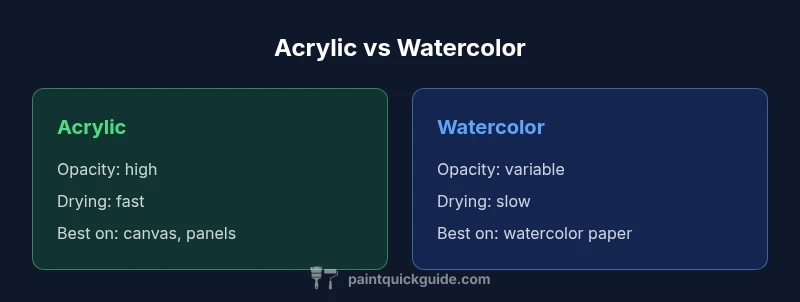
| Feature | Acrylic paint | Watercolor |
|---|---|---|
| Opacity | High to opaque; layers build easily | Transparent to semi-transparent; relies on paper tone |
| Drying Time | Fast-drying; quick layering | Slow to moderate; longer open time |
| Surface Versatility | Canvas, wood, primed boards; some plastics with sealer | Watercolor paper; limited on non-porous surfaces |
| Reworkability | Reworking possible after wet layers; adhesion strong when dry | Liftable when wet; harder to lift after drying |
| Finish and Sealing | Usually varnished; satin to gloss finishes common | No varnish required for some effects; UV/archival care important |
| Cleanup | Water-based; soap and water cleanup | Water-based; pigments can stain brushes and palette |
| Cost per Project | Moderate upfront cost; affordable pigment options | Higher upfront cost for quality sets; good pigment economy with use |
Upsides
- Acrylics dry quickly and support rapid progress
- Strong color adhesion on many surfaces with sealing
- Easy cleanup with water and soap
- Wide color range and permanence when varnished
- Good for bold, graphic styles and mixed-media work
What's Bad
- Permanent mistakes after drying; lifting is difficult
- Can look flat if overworked or over-glazed
- Requires sealing for UV stability and longevity
- Paper can curl without proper support; more preparation needed
Acrylics win for speed and durability; watercolors win for translucency and subtlety
Choose acrylic paint when you need fast results and durable color. Choose watercolor for luminous, delicate washes and spontaneous effects; both workflows have value depending on the project.
Your Questions Answered
Is acrylic paint water-resistant after drying?
Yes, acrylic paint becomes water-resistant once it dries and is typically sealed with varnish or a clear coat. Without sealing, it can still be softened by moisture in some situations. Planning a finishing step is important for longevity.
Acrylics dry to a water-resistant film, but for long-term protection you should seal them with varnish.
Can you lift paint from watercolor after it dries?
Watercolors can be lifted when still damp, and some lifting is possible after drying with special techniques, but it becomes much harder. Lifting is easier early in the process and decreases as the paint dries.
Watercolor lifts best when the paint is still wet; after it dries, lifting is limited.
Are acrylics easier for beginners than watercolors?
Many beginners find acrylics easier because of their opacity, quick feedback, and minimal planning. Watercolors require careful water control and planning to achieve desired translucency and layering.
Acrylics are often easier for beginners, thanks to opacity and forgiving blending.
Can you use acrylics on watercolor paper?
Yes, but you should use a heavyweight paper and consider priming or mounting to prevent warping. For best results, use acrylic-appropriate surfaces like canvas or primed boards for long-term stability.
Yes, with a heavy paper and proper prep, or use primed surfaces for acrylics.
What brushes and tools do I need for both mediums?
A basic starter set for acrylics includes stiffer synthetic brushes and a rinse-friendly palette; for watercolors, softer kolinsky-esque or synthetic brushes with a gentle hold are ideal. Having separate palettes helps prevent color contamination.
Get a basic brush set for each medium; keep them separate to avoid cross-contamination.
Quick Summary
- Acrylics prioritize speed and durability
- Watercolors emphasize translucency and control
- Match surface and project goals to the medium
- Practice with swatches before committing to a piece
- Seal acrylic works for lasting colorfastness