Paint Inside of House Cost: A Practical Budgeting Guide 2026
Discover practical budgeting for painting the inside of a house, including cost ranges by square footage, room type, prep needs, and paint quality. Learn tips to save and plan with PaintQuickGuide Analysis, 2026.


Quick Answer: The typical interior painting cost falls in the range of $2.50 to $4.50 per square foot, with total project prices commonly between $1,000 and $4,000 for standard homes. Costs vary by prep work, number of rooms, ceiling height, and paint quality, with higher-end finishes or extensive repairs pushing prices higher.
What drives interior painting costs in 2026
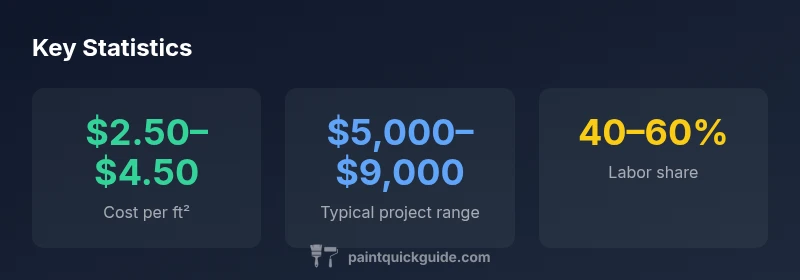
Interior painting costs depend on a mix of surface size, room configuration, and the quality of materials chosen. The per-square-foot rate provides a convenient starting point, but it hides several levers that can swing the final price. According to PaintQuickGuide, typical interior projects fall in the range of roughly $2.50 to $4.50 per square foot when you factor in materials, labor, and basic prep. Larger homes, high ceilings, or walls with extensive repairs add layers of cost. Ceilings often cost more per square foot than walls because they require extra ladders and time. Prep work—patching holes, sanding rough patches, or removing old wallpaper—also drives up the bill, sometimes by 5–20% depending on the condition of the surfaces. Finally, paint quality matters: premium acrylic or enamel finishes, multi-coat systems, and low-VOC formulas can push the price higher. Even with these variables, a well-planned budget should cover prep, primer, two coats, and clean-up.
PaintQuickGuide emphasizes using a clear scope and documented quotes to avoid surprises, which is especially important in active markets in 2026.
How to estimate interior painting costs by square footage
A reliable estimate starts with surface area and a decision on scope (walls only, ceilings, trim). Start with wall area: measure each room’s length and height to estimate square footage. Multiply room length by width to get wall area, then multiply by the number of walls. For many homes, main walls total about 2.0 to 2.5 times the floor area due to hallways and alcoves. Once you have a wall- and ceiling-area estimate, apply a per-square-foot rate (for 2026, use the range 2.50–4.50) and add 15–25% for prep and primer if surfaces are in poor condition. Finally, add 2–3 coats of paint if you require premium finishes. For a typical 2,000 ft² house with two coats on walls, expect a ballpark total around $5,000–$9,000, depending on ceilings and finishes. This method gives you a practical baseline before you invite quotes.
Room-by-room cost considerations
Living areas: Open-plan living rooms with tall ceilings demand more paintable surface; costs commonly fall in the mid to upper range. Bedrooms: Smaller spaces; costs tend to be on the lower end, but multiple bedrooms stack the total. Kitchens and bathrooms: Moisture-prone rooms require mildew-resistant finishes and sometimes more surface prep; cabinets and trim can add to the cost. Hallways and entryways: Long wall runs may increase labor time even if areas are small per room. A practical breakdown by room type (rough estimates) for a standard 2,000 ft² home—likely the most common target—might be: Living Room $400–$1,800; Bedrooms $200–$900 each; Kitchen $350–$1,000; Bathrooms $250–$600; Hallways $150–$500. Use these as starting points; actual quotes will reflect your home’s layout and the number of coats.
Prep, repairs, and surface prep matters
This section is often the difference between a good result and a just-okay finish. Patch holes, fix cracks, and repair damaged drywall before painting. If you skip prep, you may save money upfront, but you’ll incur touch-ups later and the paint finish may wear unevenly. Primer is essential on bare wood or patch repairs; premium primers can improve stain cover and topcoat adhesion, especially in high-humidity rooms. Surface irregularities: skip painting over rough stucco or textured ceilings; instead, plan for skim coats or sanding. Wallpaper removal, varnish stripping, and filling nail holes add to the cost but yield a smoother surface for primer and paint. A thorough prep plan can reduce the number of coats required and extend the life of the finish.
Materials, finishes, and color choices
Paint types affect both cost and performance. Latex acrylic paints are common, easy to clean, and lower in odor; oil-based enamels are durable but require solvent cleanup. Finishes range from flat/matte to eggshell, satin, and semi-gloss; higher-sheen finishes reflect more light but may show imperfections more clearly. Primer selections matter; an effective primer improves coverage and color, reducing the number of top coats. If you are repainting a darker color to a lighter one, plan for an extra coat. Environmental and health considerations matter, with low-VOC formulas costing a bit more but offering better indoor air quality. Budgeting should include primer, painter’s tape, brushes, rollers, and caulk/patching compounds.
Timeline, scheduling, and hidden costs
Project duration depends on room count, surface complexity, and crew availability. On average, a full-house interior repaint can stretch from several days to a couple of weeks, when you factor in drying times between coats. Scheduling with a licensed contractor may introduce lead times; demand typically peaks in spring and early summer. Hidden costs often come from surface issues not visible until prep begins, such as water-damaged drywall or lead paint in older homes. If you have kids or pets, plan for cleanup and containment. Budget an extra 10–15% for contingencies.
Getting accurate quotes: a practical plan
To avoid sticker shock, prepare a clear scope and request written quotes from at least three contractors. Provide room-by-room square footage, desired finishes, and note any repairs needed. Ask for a breakdown of labor vs materials, primer, and any disposal or permit fees. Check references and review the painters’ portfolios. Ensure the bid includes surface prep, two coats of topcoat, and clean-up. A transparent estimate helps you compare apples to apples and reduces the chance of hidden charges.
Typical interior painting cost ranges by room type (rough estimates)
| Room Type | Notes | Estimated Range |
|---|---|---|
| Living Room | Open-plan areas with higher ceilings | $400–$1,800 |
| Bedroom (per room) | Smaller spaces; multiple rooms add up | $200–$900 |
| Kitchen | Moisture-prone; cabinets impact cost | $350–$1,000 |
| Bathroom | Moisture resistance; smaller surface area | $250–$600 |
| Hallway | Long wall runs; labor intensive | $150–$500 |
Your Questions Answered
What is the typical cost to paint the interior of a house?
Most projects cost between $2.50 and $4.50 per square foot, with total house costs commonly ranging from $1,000 to $4,000 for standard homes. The final price depends on room count, ceiling height, prep needs, and paint quality. Getting three written quotes helps you compare apples-to-apples.
Interior painting usually runs $2.50 to $4.50 per square foot; expect $1,000 to $4,000 for a standard home. Get three quotes for a fair comparison.
How does ceiling height affect interior painting costs?
Higher ceilings increase wall area and require more ladders and time, raising labor costs. Some contractors price by square footage including ceilings, while others quote separately for ceilings. Plan for a modest increase if your home has tall or vaulted ceilings.
High ceilings mean more work and a bigger bill, so ask how ceilings are priced in each quote.
Is it cheaper to DIY interior painting than hiring a pro?
DIY can save labor costs, but you’ll invest in materials, tools, and time. Mistakes or improper prep often lead to touch-ups and a poorer finish. For most homeowners, a professional finish with proper prep offers better value and durability.
DIY saves on labor, but you may pay later in touch-ups and time.
Do I need primer for all surfaces?
Primer is essential on bare wood, patched drywall, or when covering dark colors. It improves adhesion and color coverage, often reducing the number of top coats. Skipping primer can lead to color inconsistencies and longer project times.
Primer helps paint look even and last longer; don’t skip it when needed.
What should I look for in a painting quote?
Look for a clear scope of work, itemized costs (labor vs materials), primer and number of coats, surface prep details, and disposal or permit fees. A written warranty or guarantee also adds value. Always verify credentials and references.
Make sure the quote breaks down scope, costs, and timelines clearly.
How long does an interior painting project typically take?
Timeline varies by home size and complexity but usually ranges from several days to a couple of weeks. Drying times between coats and staging must be considered. A well-planned schedule minimizes disruptions.
Most projects take days to a couple weeks depending on size and coats.
“Interior painting costs reflect both material quality and skilled labor; accurate scoping and prep can prevent costly surprises.”
Quick Summary
- Estimate by square footage, adjust for prep and repair
- Expect higher costs with high ceilings and complex layouts
- Choose paint quality wisely to balance cost and longevity
- Get multiple, itemized quotes to compare fairly
- Set aside a contingency of 10–15% for surprises