Paint or Wallpaper: A Practical Side-by-Side Guide
A detailed, objective comparison of paint vs wallpaper, covering cost, durability, design options, installation, and room-specific guidance to help homeowners decide which approach fits their space and budget.


When deciding between paint or wallpaper, weigh moisture, room use, cost, and how often you want to refresh the look. Paint offers lower upfront cost and quick revamps; wallpaper delivers texture and long-lasting style in suitable spaces. This comparison helps you choose based on practicality, room conditions, and design goals.
The Core Choice: paint vs wallpaper
Choosing between paint or wallpaper is a classic interior decision that touches every room. The choice affects not only appearance but also cost, maintenance, and how your space interacts with light and texture. For many homeowners, the decision comes down to practical constraints (moisture, traffic, and renovation schedule) as much as it does to style goals. According to PaintQuickGuide, evaluating these factors begins with room function, humidity levels, and how often you want to refresh the look. The PaintQuickGuide team found that in high-traffic areas like hallways and family rooms, paint often offers faster refresh cycles and easier touch-ups, while wallpaper can deliver instant texture and pattern without frequent repainting. Both options require solid surface prep to deliver a lasting result. This section will compare paint and wallpaper across cost, durability, installation, and design impact, so you can make a decision that fits your budget and lifestyle. Consider lighting, color psychology, and resale value; your final choice should balance how the room feels with how long the result lasts.
The PaintQuickGuide team emphasizes a practical approach: separate design ambitions from structural realities (moisture, wall condition, and renovation pace) to avoid over-investing in a look that won’t hold up under real-world use. The following sections expand on these factors with concrete guidance you can apply in your next project.
Comparison
| Feature | Paint | Wallpaper |
|---|---|---|
| Durability & Wear | Good with proper prep and coats | Excellent with vinyl or heavyweight wallpapers |
| Aesthetic Flexibility | Highly customizable color/finish; easy repainting | Desirable texture and patterns; pattern matching adds complexity |
| Installation Difficulty | DIY-friendly for smooth walls; fast in small spaces | Professional installation often required for seams and matching |
| Maintenance & Cleaning | Easy to clean; scuffs can be touched up | Some wallpapers are washable; seams can trap dust |
| Cost & Time to Complete | Lower upfront cost; shorter project time | Higher upfront cost; longer install due to seams |
| Best For | Frequent color changes; rental or low-maintenance goals | Durable, premium look in low-moisture rooms |
Upsides
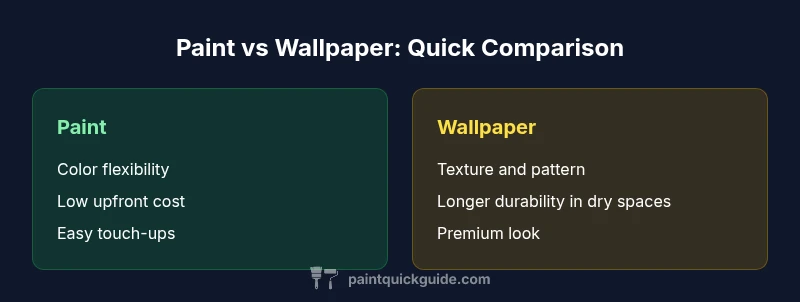
- Greater color and finish flexibility with paint
- Lower upfront material cost and faster project timelines
- Easier touch-ups and repairs with minimal downtime
- Widely available tools and supplies for DIY projects
What's Bad
- Paint requires more frequent refresh to maintain look in high-traffic areas
- Wallpaper can be more expensive and harder to remove later
- Moisture and humidity can compromise wallpaper adhesion; staining risk with paint in bathrooms/kitchens
Paint generally offers better value and flexibility for most homes; wallpaper excels in texture and long-term aesthetics in appropriate spaces
For most homeowners, paint is the default choice due to lower cost and easier maintenance. Wallpaper shines when texture, patterns, or longer-lasting decor is a priority in spaces with controlled humidity. A balanced approach—paint in moisture-prone rooms and wallpaper as an accent—often yields the best overall result.
Your Questions Answered
What is the main difference between paint and wallpaper?
The core difference lies in how the surface looks and behaves over time. Paint adds color and finish to a flat surface and is easily refreshed with a new coat, while wallpaper provides texture and pattern with a longer initial install. The choice depends on room use, moisture, and how often you want to repaint.
Paint changes color with a new coat; wallpaper adds texture and pattern from the start.
Is wallpaper more durable than paint?
Durability depends on how well the surface is prepared and the environment. In dry, low-moisture rooms, wallpaper can last many years with proper care, while painted walls may show scuffs and require repainting sooner in high-traffic areas.
Wallpaper can last longer in the right room, but it’s less forgiving if moisture is present.
Can I paint over wallpaper?
Yes, but it’s not always ideal. You must remove or securely seal textured wallpaper and prime the surface to prevent adhesion issues. Painted over poorly adhered wallpaper can lead to bubbling or peeling later.
You can paint over wallpaper, but prep and priming are crucial to avoid issues.
How long does wallpaper last compared to paint?
Wallpaper longevity depends on wallpaper type and room conditions. In suitable spaces, it can stay visually appealing for many years; paint typically requires refresh intervals aligned with wear and light exposure. The right choice balances expected life with maintenance needs.
Wallpaper tends to last longer in calm environments; paint may need more frequent updates.
Which is easier to clean in kitchens and bathrooms?
Paint with a washable or scrubbable finish is easy to clean, but wallpaper, especially non-vinyl types, can be more sensitive to moisture and cleaning agents. In moisture-prone rooms, choose water-resistant paints or vinyl wallpaper and ensure proper ventilation.
Washable paint is usually simpler to clean; moisture-aware wallpaper options exist, but care is needed.
What factors should I consider for resale value?
Resale considerations include the room’s overall appearance, durability, and maintenance history. Neutral, modern paint schemes can appeal to a broad audience and be refreshed easily, while wallpaper with bold patterns may be a risk for some buyers. Aim for timeless design and easy updates.
Neutral paint schemes are typically safer for resale; bold wallpaper may alienate some buyers.
Quick Summary
- Assess room moisture and traffic before deciding
- Paint offers lower upfront cost and quicker refreshes
- Wallpaper delivers texture and a premium look with durability
- DIY-friendly projects are usually paint-based; wallpaper requires planning
- Consider environmental factors and long-term maintenance when budgeting