How Much Paint for Front Door: A Practical Guide
Estimate front door paint needs with a simple calculator and practical tips—from sizing to coats and coverage. Learn how to measure, factor in priming, and choose the right paint for a durable, even finish.


How to estimate how much paint for front door
If you're aiming to answer how much paint for front door, start with the basics: door size, number of coats, and the paint's coverage rate. According to PaintQuickGuide, the most reliable estimates come from measuring the door area, choosing the number of coats based on color/finish, and using your paint's labeled coverage (usually in square feet per gallon). In practice, you’ll often end up buying a little more to cover edges, trim, and any touch-ups after drying. This article uses a simple front-door scenario to illustrate the math, while keeping the advice practical for homeowners and DIY enthusiasts. The key is to convert your door size to a surface area, multiply by the number of coats, and divide by the paint’s coverage. This approach makes it easy to adapt to unusual doors or finishes and helps you avoid underbuying or overbuying paint when planning a project. The principle remains the same: how much paint for front door depends on area, coats, and coverage—and small adjustments can yield a big savings over time.
Door size and shape: what counts
Door size is the most influential factor in calculating how much paint for front door. A standard residential front door is about 3 ft wide by 6.8–7 ft tall, yielding roughly 20–21 square feet per face. If you plan to paint both faces, you’ll double that area. Don’t forget to account for any panels, glass inserts, or decorative details that may slightly increase the surface area you must cover. For a single, flat door, the basic area is width × height; for a paneled or routed door, estimate by measuring the flat panels and the rails separately, then add them together. When you have a nonstandard door, measure actual dimensions and multiply width by height for each face. This gives you a more accurate starting point for how much paint you’ll need. Remember: the math hinges on area and coats, not just the door’s visual size.
Coatings, primers, and color impact
The number of coats dramatically influences the total paint quantity. A single coat may be enough for already-painted doors with a color similar to the base; but most doors receive two coats or more for full coverage and color depth. If you’re switching from dark to light or vice versa, priming might be necessary, especially on bare wood or stained surfaces. Primer improves adhesion, blocks bleed-through, and helps the topcoat look even. Different paints—latex, oil-based, or specialty finishes—have different suggested coverage rates. For best results, consult the product label, but plan on more paint if you’re covering a dramatic color change or working with porous woods. The PaintQuickGuide rule of thumb: more coats can reduce the risk of showing through and may save you from redoing the job.
Coverage rates and variability across paints
Coverage rates vary by paint type and product quality. A typical interior- or exterior-grade latex paint might cover about 350–400 square feet per gallon on smooth, primed surfaces. Oil-based paints often offer similar ranges but may require longer dry times and different priming requirements. Remember that rough or textured doors, primer-sealing, or multi-panel doors reduce effective coverage. Ventilation and weather conditions can influence drying, which indirectly affects how many coats you’ll want to apply in a practical timeframe. When estimating how much paint for front door, start with the manufacturer’s coverage rate, then adjust upward for porosity, trim, and edge parts that can soak up more paint. By planning for a modest excess, you avoid mid-project runs to the store and ensure a clean, uniform finish.
Getting practical: estimating by example
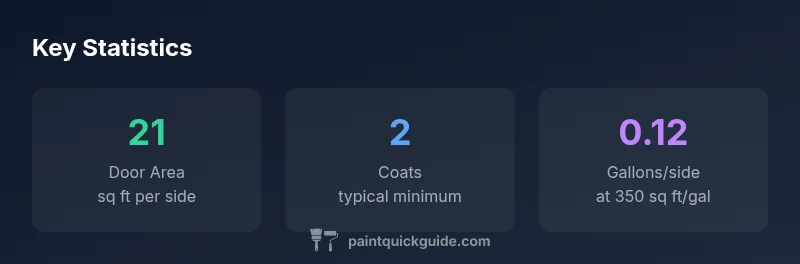
Let’s walk through a typical front door scenario to illustrate how to estimate how much paint for front door. Suppose you have a standard 3 ft × 7 ft door and you plan two coats with a paint rated at 350 sq ft per gallon. The surface area per side is 3 × 7 = 21 sq ft. For two coats, you multiply by 2: 42 sq ft of coating. Then divide by coverage: 42 ÷ 350 ≈ 0.12 gallons per side. If you’re painting both sides, multiply by 2 to get about 0.24 gallons. In practice, you’ll want to round up to whole gallons to cover edges and potential porosity, eye-shot alignment, and ensure you don’t run short mid-coat. This example demonstrates the math and highlights why many homeowners end up buying a gallon or two to be safe. It’s a compact scenario, but the same math applies to larger doors or additional panels and trims. The result: base calculation is simple, but real-life factors push you toward planning a little extra.
Step-by-step workflow: prepping, priming, and painting
A clean, dry surface is the foundation of a durable finish. Start by removing hardware and sanding lightly to knock down any gloss. Wipe with a damp cloth to remove dust, then allow the door to dry completely. If switching from a dark to a light color or moving from bare wood, apply a suitable primer and let it dry fully before painting. When applying the topcoat, use smooth, even strokes with a high-quality brush or a small foam roller for flat surfaces. For doors with panels, work into crevices carefully to avoid runs. Between coats, follow the paint’s recommended recoat time and inspect for thin spots. If you’re using spray equipment, follow safety guidelines and use drop cloths to protect surrounding areas. Proper surface preparation and controlled application are the keys to a professional-looking finish and a realistic estimate of how much paint for front door you actually need.
Tools and materials: brushes, rollers, and sprays
Choosing the right tools affects the finish and the amount of paint you use. A angled sash brush helps with edges and trim, while a small roller provides even coats on flat panels. For intricate doors, a brush-first approach followed by a light roll can minimize wasted paint. If you opt for spray, ensure you have proper ventilation and safety gear, plus masking for adjacent surfaces. Keep paint in a well-ventilated area and clean tools promptly to prevent hardening. Regardless of method, practice on a scrap piece or a test panel to gauge coverage and identify areas that may require extra coats. By selecting appropriate tools and applying even coats, you’ll maximize coverage efficiency and reduce the chances of needing additional paint beyond your initial estimate.
Maintenance, longevity, and re-coating ideas
A well-painted front door can last several years with proper maintenance. Protect the finish by avoiding harsh weather, sleet, or constant sun exposure, which can lead to fading or cracking. Re-coating intervals depend on climate, door material, and paint type. In many cases, two coats plus a protective topcoat can extend the life of the finish. Touch-ups around edges or chips are common; plan for a small amount of extra paint to handle these repairs. When you start planning your next project, think about color choices, finish, and whether a semi-gloss or gloss finish will better resist dirt and moisture. All these considerations impact how much paint you’ll need over the life of the door and how often you’ll repaint, tying back to the original question of how much paint for front door and the long-term value of your investment.
Quick tips to optimize your paint use and save money
- Buy a little extra to account for trim, edges, and waste. Even in a precise calculation, you’ll typically end up using more paint than the bare minimum. - Use a high-quality brush or roller suited for doors to reduce streaks and rework. - If you’re unsure about coverage, apply a test patch on a less-visible area to confirm color and finish before committing to the full door. - Consider a water-based enamel for easy cleanup and durability on exterior doors. - Proper surface prep and primer can reduce the number of top coats needed and save you money over time.