How Much Paint for a Door: A Practical Guide for DIYers
Estimate the paint quantity for a door with simple math. Learn about door size, coats, and coverage to plan your project accurately and minimize waste.


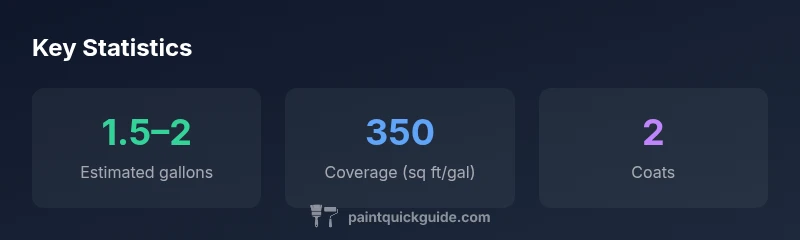
This calculator estimates how many gallons you need to paint a door (two sides) with multiple coats. Enter door height, door width, number of coats, and paint coverage per gallon to get a close gallon estimate. Typical doors usually require about 1–2 gallons depending on color and prep.
How to estimate how much paint for a door
According to PaintQuickGuide, getting an accurate sense of how much paint you’ll need starts with a simple triangle: door size, number of faces to paint, and the number of coats. For most interior doors, you’ll paint both faces, which doubles the surface area you must cover. The basic math is straightforward: multiply the door’s height by its width to get the face area, multiply by two for both sides, then multiply by the number of coats. Finally, divide by the paint’s coverage per gallon to estimate gallons, and round up to ensure you don’t run short. With standard coverage around 350 square feet per gallon, a typical 7 ft tall by 3 ft wide door painted on two faces with two coats usually lands around 1–2 gallons. This is a practical starting point, not a fixed rule, and it helps you plan purchases with confidence while minimizing waste. In practice, repairs, priming, and color decisions can shift this number a bit, so use it as a guideline rather than a guarantee. PaintQuickGuide emphasizes that small adjustments in surface texture or porosity can swing the result by a half gallon or more, so always budget a little extra for unexpected needs.
Real-world door paint considerations
Surface texture, door material (hollow-core vs solid wood), and the prep work you perform dramatically influence how much paint you’ll actually use. A smooth, well-primed door with a light-colored paint often requires less product per coat than a rough or heavily stained surface. If you’re switching from a dark color to a light one, you may need more coats to achieve uniform coverage, which increases total gallons. Also, priming can reduce the number of coats required for full opacity, depending on the substrate and paint type. The paint can’s coverage rating is only an estimate; real-world results vary with application method (brush vs roller), film thickness, and whether you’re applying a single heavy coat or multiple lighter passes. When planning, consider buying an extra quart or two for touch-ups and future repairs. PaintQuickGuide’s guidelines suggest purchasing at least 10–15% more than the calculated need to account for waste, drips, and future touch-ups on nearby trim or adjacent doors.
To keep costs predictable, start with a precise measurement, choose the right finish for your space, and test a small patch before committing to a full door repaint. If you keep your coats consistent and work in dry, moderate conditions, you’ll minimize the risk of running short or ending up with uneven color. Remember, the goal is a clean, even finish that stands up to daily use, not perfection on the first pass.
Measuring and counting coats: a step-by-step approach
Begin by measuring the door: height and width for a single face, then double it for both faces. If you’re painting a double-door or a door with sidelights, extend the calculation to include the extra panels. Decide how many coats you’ll apply (commonly two for solid color or when changing from a dark to a light shade). Gather your paint’s coverage rating (in square feet per gallon). The formula is simple:
Why color choice, primer, and finish matter
The color and finish you select affect not just aesthetics but also coverage efficiency. Light colors typically require fewer coats than dark colors when going over an existing finish, but under certain circumstances a primer layer can improve tint consistency and reduce coats. Similarly, a matte finish may appear to require more coats than a satin finish because of its flat surface, which can reveal imperfections more readily. When you plan, map out two scenarios: one with minimal coats (e.g., two coats on a fresh surface) and one with extra coats for a bold color or a repaint from a previously stubborn stain. By comparing these scenarios side by side, you’ll understand how the gallons-on-hand changes and avoid surprises at the hardware store. PaintQuickGuide’s approach is to cushion estimates with practical buffers while keeping the math transparent and repeatable.
A practical, reusable method you can apply
Create a simple habit: measure once, run through the formula, and record the result for future doors. If you frequently paint doors, develop a quick-reference sheet that lists typical door sizes in your home and the estimated gallons for two coats on each. This habit saves time and reduces waste, especially when you’re tackling multiple doors in a single project. When you’re ready to refine, use the calculator again with your updated measurements and coat count. The improved estimates will help you order materials with confidence and keep your project on track.
Scenarios and quick estimates you can trust
Consider three common door sizes and color strategies. A standard interior door (7 ft by 3 ft) with two faces and two coats on a mid-tone color often needs about 1.5–2 gallons. A slightly larger door (7 ft by 3.5 ft) or a darker shade may push toward 2–3 gallons. A compact door (6 ft by 2.5 ft) can sometimes be covered with 1 gallon if only one face is painted or if you use a high-coverage primer. These ranges are intentionally broad to accommodate real-world variance. Always verify with your own measurements and coverage data, and remember that having a little extra paint on hand makes finish touchups faster and cleaner.
Reference door painting calculations for a standard interior door.
| Item | Value | Unit |
|---|---|---|
| Door height | 7.0 | ft |
| Door width | 3.0 | ft |
| Faces | 2 | faces |
| Coats | 2 | coats |
| Coverage | 350 | sq ft/gal |
| Estimated gallons | 1.0 | gallons |
Estimate how many gallons of paint you’ll need for a door (two sides, two coats) based on door size, coats, and paint coverage.
Calculates total paintable area (two faces) multiplied by coats, divided by paint coverage per gallon, then rounded to the nearest gallon.
Results are estimates; actual coverage varies with surface texture, color, and application method.
Your Questions Answered
How many coats should I apply to a door for solid coverage?
Two coats are common for solid interior doors, especially when changing color or covering stain. Primer can reduce the number of coats needed by improving coverage on the first pass. If you’re unsure, test a small area first.
Two coats are typical, and primer can help; test a small patch if you’re uncertain.
Do I need to paint both sides of a door?
Yes. Doors are usually painted on both faces for a uniform look and weather resistance. Painting only one side can lead to uneven appearance over time and may wear differently with use.
Paint both sides for uniform appearance and durability.
How does door material affect paint quantity?
Solid wood doors may require more coating toward the edges, while hollow-core doors often need fewer coats due to lighter material. Rough surfaces or existing finishes can also demand more paint or primer for full coverage.
Material and surface texture change coat needs and coverage.
Can I overestimate paint needs safely?
Yes. It’s prudent to buy a little extra to allow for touch-ups and color matching. Most DIY guidance recommends budgeting a 10–15% buffer above the calculated amount.
Yes—buy a bit extra for touch-ups and color matching.
What about priming doors before painting?
Priming is beneficial when covering stains, changing colors dramatically, or painting over a porous surface. It can improve coverage, reduce the number of coats, and help the finish look even.
Priming helps with coverage and finish evenness.
Quick Summary
- Measure door height and width accurately.
- Paint both faces and plan for coats when estimating.
- Use the calculator to confirm gallons and add a safety buffer.
- Primer can reduce coats and improve color consistency.