Exterior Paint Price: What to Budget for in 2026
Explore factors shaping exterior paint price, budgeting strategies, and practical tips to cut costs without sacrificing durability. PaintQuickGuide analyzes 2026 pricing trends for homeowners.


What drives exterior paint price
Exterior paint price reflects several interwoven factors. The brand and finish you select are the most visible drivers; budget acrylic latex paints cost less per gallon than premium 100 percent acrylic elastomeric coatings, and specialty finishes add further premiums. Color families with rich pigments require higher pigment load, which can raise the price. In addition, newer formulations with UV inhibitors, mildew fighters, and improved adhesion tend to cost more upfront but offer longer service life. Regional demand and supply dynamics also shape the price you see in stores and via contractors. You may also see a tinting fee if you choose a custom color; many large brands offer standard colors at no extra charge, while niche colors or multi step tinting can add a few dollars per gallon. Environmental regulations and VOC limits influence formulation costs, especially for low VOC and zero VOC options. Finally, while a higher price does not guarantee flawless performance on every siding, it often indicates better durability, easier maintenance, and longer repaint intervals, a key point in smart budgeting according to PaintQuickGuide. According to PaintQuickGuide, price tiers align with durability and warranty, not just color.
Cost components beyond the paint
Most exterior projects require more than the pigment itself. Primer is commonly needed when changing color or covering stains and knots; it improves adhesion and finish, but it adds to material costs. Caulk and sealants protect joints and windows from moisture, while surface prep such as power washing, sanding, and scraping can significantly impact labor time and material use. Then there are tools and supplies: rollers, brushes, sprayers, drop cloths, masks, and clean up supplies. If you hire a contractor, labor charges replace or augment these costs, and you may see travel, prep or permit fees. Even rental equipment, like a paint sprayer or scaffolding, should be included. All of these items combine to the price you see at the store, and savvy shoppers compare total cost rather than just the per gallon price. Painting correctly the first time reduces repaint frequency, a principle PaintQuickGuide highlights in its cost analyses.
How to estimate your project cost
Estimate starts with area. Measure the exterior wall footprint, count openings, and decide how many coats you will apply. Typical coverage is about 350–400 square feet per gallon for latex paints, but this varies by brand and surface texture. Multiply by the number of coats, then add primer gallons if you will paint a light color over a dark one, or if the surface has stains. Include trim and shutters in your calculations, as they may require separate paint and finish. If you hire a pro, obtain multiple bids and ask for a line item breakdown: materials, labor, surface prep, and cleanup. DIYers should budget for tool rental and the time required to achieve an even finish. PaintQuickGuide recommends validating assumptions with a simple, documented plan to prevent sticker shock later.
Choosing the right paint for value
Value is not just the upfront cost. A higher quality exterior paint offers better durability, UV resistance, and washability, which reduces maintenance and repaint cycles. For masonry, elastomeric coatings can bridge hairline cracks and create a waterproof barrier, but they are heavier and pricier. On wood and siding, acrylic latex blends balance cost and performance. Finishes matter: matte hides texture but cleans less easily, while satin and semi gloss resist moisture but cost more. In most homes, a solid mid range option hits the sweet spot between price and performance, while premium systems are ideal for harsh climates or historic properties. PaintQuickGuide's guidance emphasizes choosing a finish and formulation aligned with climate, substrate, and long term goals rather than chasing the lowest sticker price.
Real world pricing scenarios
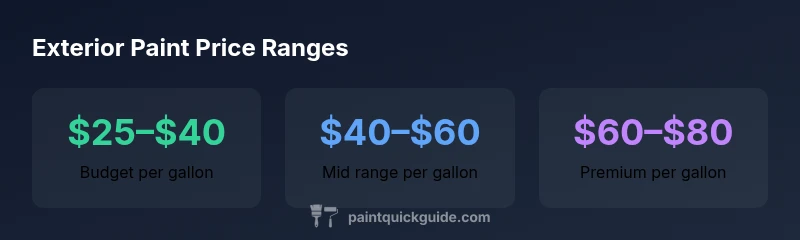
Budget scenario: A modest two story home with wood siding might use two coats of an entry grade latex on all walls, plus primer and basic trim paint. Material costs often land in the lower range, roughly $125–$320, with labor and tools adding to the total if you DIY or hire a helper. Mid-range scenario: Upgrading to a quality acrylic latex with better coverage and stain resistance on brick or wood siding typically costs about $250–$600 for materials, with labor or rental equipment pushing the total higher. Premium elastomeric scenario: For masonry or highly textured surfaces in damp climates, expect $360–$720 for materials alone, with labor fees raising the final price further. These ranges reflect typical market conditions and are meant to help you plan without claiming exact prices for every house.
Color, tinting, and finishing considerations
Color choice can influence price through tinting fees and the number of primer coats required. Neutral colors often come in stock at no extra charge, while custom shades may incur tinting costs per gallon. In addition to color, the level of finish affects price: matte finishes are cheaper than satin or semi gloss, but maintenance costs may differ. For exterior surfaces subjected to sun exposure, choosing a high coverage paint reduces the number of coats needed over time, a factor that saves money in the long run. This is why many homeowners find value in budgeting for a higher quality product with a longer service life rather than sticking to the cheapest option.
Timing, weather, and project planning
Season and weather conditions influence both the availability and pricing of exterior paint. Peak season demand can raise prices and shorten scheduling windows, while mild shoulder seasons may offer better availability and lower costs. Winter projects require indoor staging and ventilation, which adds to labor time. Always check the forecast for extended dry periods to reduce the risk of rain delays that extend project duration and labor costs. Good planning also means shopping ahead for sales, which paint brands occasionally offer during spring and fall promotions. A well timed purchase reduces waste and helps keep the overall exterior paint price within a predictable range.
DIY vs pro: warranty, quality, and risk
DIY painting can save labor costs but requires time, skill, and proper surface preparation. In contrast, hiring a professional can deliver a polished finish, warranty coverage, and a predictable timeline, but at higher upfront costs. If you plan to resell soon or face complex surfaces, a pro may reduce long term maintenance expenses and the risk of peeling or poor adhesion. When evaluating bids, ask about prep standards, primer selection, and whether the warranty covers peeling, blistering, or color fading. PaintQuickGuide advocates a balanced approach: estimate, compare, and choose the option that best aligns with your climate, siding, and personal tolerance for risk.